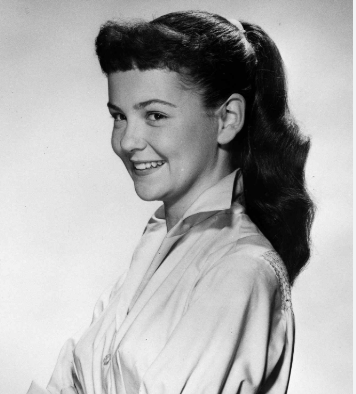
Shelley Fabares, the actress and singer whose career stretched from child model to teen idol to two-time Emmy nominee, has died at 82. She passed away Saturday in Los Angeles, surrounded by her family, including her husband of more than four decades, actor Mike Farrell. Her family confirmed the news in a statement to the Associated Press, and tributes have been landing steadily ever since from people who grew up with her on television, on the radio, and later, watching her steal scenes on “Coach.”
Here’s everything confirmed so far about her passing, along with a full look back at a career that quietly touched nearly every decade of American television since the 1950s.
Quick Facts: Shelley Fabares
| Category | Details |
|---|---|
| Full Name | Michele Ann Fabares (professionally known as Shelley Fabares) |
| Date of Birth | January 19, 1944 |
| Place of Birth | Santa Monica, California |
| Date of Death | Saturday, August 22, 2026 |
| Place of Death | Los Angeles, California |
| Age at Death | 82 |
| Profession | Actress, singer, voice actress |
| Best Known For | “The Donna Reed Show,” “Coach,” “Johnny Angel,” Elvis Presley films |
| Breakout TV Role | Mary Stone on “The Donna Reed Show” |
| Music Career Highlight | No. 1 hit single “Johnny Angel” (1962) |
| Later TV Role | Christine Armstrong on “Coach” (1989–1997), two Emmy nominations |
| First Husband | Record producer Lou Adler (married 1964) |
| Second Husband | Actor Mike Farrell, married since 1984 |
| Aunt | Actress Nanette Fabray |
How Shelley Fabares Died
According to the statement her family gave to the Associated Press, Fabares died on Saturday, August 22, in Los Angeles. No cause of death has been released. Fox News reported the same detail her family shared, noting she was surrounded by her loved ones when she passed.
Her family did not offer a medical explanation, and as of this writing no outlet has published one either. What they did share was a warm, personal statement rather than a clinical one, describing her as a source of love, strength, laughter and comfort to everyone who knew her. They spoke of her as a devoted wife, a cherished stepmother, a daughter, sister, niece, aunt, and loyal friend, and said her warmth and generosity left a mark on the people around her.
That kind of statement, focused entirely on who she was at home rather than a list of credits, tells you something about how the Fabares-Farrell family wanted this moment to be remembered. Her family closed their tribute by saying they would remember Shelley for her kindness, loyalty, wit, courage, and beautiful spirit, adding that they would miss her not only as a performer but as the extraordinary person she was in their everyday lives.
Fabares had reportedly been in poor health for a short period before her death, according to AOL’s coverage of the news, though specifics of any illness were not disclosed publicly by the family.
A Career That Started Before She Could Read
Long before most people knew her name, Shelley Fabares was already working. Born Michele Ann Fabares on January 19, 1944, in Santa Monica, she was put in front of a camera for modeling work at just three years old. That early start opened doors most children never see — modeling led to dance training, dance training led to acting work, and by the time she reached her teenage years she was already a working television and film actress with real credits behind her name.
Her family had show business in its blood. Her aunt was actress and singer Nanette Fabray, a Tony-winning performer and one of the more recognizable television faces of the 1950s in her own right, giving young Shelley a front-row seat to the industry long before she stepped fully into it herself.
Mary Stone and the Role That Made Her Famous
Fabares’ first true breakthrough came when she was cast as Mary Stone, the teenage daughter on the beloved family sitcom “The Donna Reed Show.” The series, which followed an idealized American household led by Donna Reed’s character, became one of the defining family sitcoms of its era, and Fabares’ portrayal of Mary — sweet, a little mischievous, growing up in real time in front of the audience — made her one of the most recognizable teenagers on American television.
She stayed with the show for its full run, playing Mary from age 14 through 19, years she later described as enormously important to her, both as a performer and as a young woman coming of age largely on camera. In a 1993 interview with the Los Angeles Times, she reflected on that stretch of her life, saying those years shaped her in ways she carried for the rest of her career, and she spoke warmly of Donna Reed herself, calling her a genuinely extraordinary woman to work alongside.
It was during her time on “The Donna Reed Show” that producers realized Fabares could sing as well as act, a discovery that would send her career in an entirely different direction almost overnight.
Growing Up in Front of America
What made Fabares’ time on “The Donna Reed Show” so unusual, even by the standards of child and teen actors, was how visibly she matured across the series. Audiences didn’t just watch Mary Stone go through a few seasons of a sitcom — they watched a teenager grow into a young woman over five years, on camera, in real time, in a way that mirrored what was happening in millions of American households watching at home. That kind of parasocial closeness, long before the term existed, is a big part of why so many viewers who grew up with the show describe Fabares less like an actress they watched and more like someone they remember from their own adolescence.
The show itself was enormously popular during its run, part of a wave of idealized family sitcoms that defined early television, alongside programs built around similarly wholesome, aspirational households. Within that crowded field, Fabares’ Mary Stone stood out for feeling genuinely relatable rather than simply decorative — a real teenager with real awkwardness and real charm, rather than a plot device built to deliver a joke and disappear.
“Johnny Angel” and a Surprise No. 1 Hit
In 1962, Fabares recorded “Johnny Angel,” a wistful teenage love song that shot straight to No. 1 on the Billboard Hot 100. The song became a defining piece of early-1960s pop radio, turning Fabares, already a familiar television face, into a genuine recording star as well. For an entire generation of listeners, hearing “Johnny Angel” come on the radio meant hearing Shelley Fabares’ voice, whether or not they connected the song to the actress from “The Donna Reed Show.”
The success of “Johnny Angel” also opened the door to Hollywood’s musical film world, and Fabares went on to co-star opposite Elvis Presley in three films during the 1960s. Sharing the screen with one of the biggest music stars in the world, at a moment when Presley’s film career was at its commercial peak, cemented Fabares as one of the era’s most bankable young stars — someone equally comfortable carrying a scene, a song, or a box-office picture.
Life Beyond a One-Hit Wonder Label
It would have been easy for “Johnny Angel” to become a novelty footnote, the kind of single hit that follows a young performer around as a punchline rather than an achievement. That’s not what happened with Fabares. Instead, the success of the song became a launching pad into a broader entertainment career rather than the peak of it, something that separated her from a long list of early-1960s teen idols who never managed a second act once the hits stopped coming.
Part of that came down to timing — the Presley films kept her visible to moviegoing audiences even as pop radio moved on to new sounds — and part of it came down to her own willingness to keep working steadily in television rather than chasing a music career that had already peaked. That decision, whether deliberate or simply practical, is a big part of why her career still had decades of runway left in front of it.
From Teen Idol to Steady Television Presence
Unlike many performers whose fame was built entirely around a youthful image, Fabares managed the difficult transition from teen idol to durable, respected working actress. Through the 1970s and into the 1980s, she continued taking on television roles, including a notable stretch on “One Day at a Time,” one of the more socially aware sitcoms of its era, where she added to a résumé that already spanned musical stardom and teen-idol film work.
That steady, decades-long presence set her up for what would become the second defining role of her career.
Christine Armstrong and Two Emmy Nominations on “Coach”
From 1989 to 1997, Fabares played Christine Armstrong, the love interest and eventual wife of Craig T. Nelson’s blustery football coach character, on the hit sitcom “Coach.” The role introduced her to an entirely new generation of viewers who had no memory of “The Donna Reed Show” or “Johnny Angel,” and it earned her two Emmy nominations, a testament to just how fully she’d grown as a performer since her days as a teenage sitcom daughter.
“Coach” ran for nine seasons and became one of the more beloved sports-adjacent sitcoms of its era, and Fabares’ Christine — sharp, warm, and more than capable of holding her own against Nelson’s larger-than-life coach character — became one of the show’s most consistently praised elements. For an actress who had already had one full career as a teen star decades earlier, landing a second signature role in her mid-forties was no small achievement.
The dynamic between Christine and Nelson’s Coach Hayden Fox gave the series much of its emotional backbone, balancing the show’s broader locker-room comedy with a relationship storyline that audiences genuinely invested in across nearly a decade of episodes. Fabares brought a groundedness to the role that kept the show’s more chaotic sports comedy tethered to something real, and it’s frequently cited as some of the finest, most mature work of her career — proof that the actress who’d played a wide-eyed teenager decades earlier had grown into a performer capable of carrying an adult, character-driven storyline with just as much confidence.
A Voice Fans Didn’t Always Recognize: Martha Kent
Later in her career, Fabares found an entirely new audience once again, this time without ever appearing on screen. She lent her voice to Martha Kent, Superman’s adoptive mother, across several animated projects, including “Superman: The Animated Series,” “Justice League,” and the 2006 animated film “Superman: Brainiac Attacks.” For a whole generation of younger viewers who grew up on Saturday-morning cartoons rather than 1960s sitcoms, Fabares’ voice — warm, grounded, unmistakably maternal — became their introduction to her work, even if they never knew the name behind it.
It’s a detail that’s been quietly popping up in tribute posts and comment sections since the news of her death broke, with fans expressing surprise at just how many corners of pop culture she’d touched without most of them realizing it was the same performer each time.
Marriages: Lou Adler and Mike Farrell
Fabares married twice. Her first marriage, in 1964, was to record producer Lou Adler, one of the most influential figures in the 1960s and ’70s music industry, a connection that placed her even more directly at the center of the era’s pop culture machine. That marriage later ended, and in 1984 she married actor Mike Farrell, best known for playing B.J. Hunnicutt on “MAS*H.”
Fabares and Farrell remained married for more than four decades, one of the longer-lasting unions in an industry not particularly known for them, and her family’s statement specifically noted that she was surrounded by her loved ones, including Farrell, at the time of her death.
A Serious Health Battle Decades Before Her Death
Long before this week’s news, Fabares had already faced — and survived — a serious medical crisis that reshaped much of her later life. In early 1999, a trip to the emergency room for an esophageal bleed uncovered a much larger problem: she was suffering from progressive liver failure related to autoimmune hepatitis. What followed was a grueling 22-month wait for a donor liver, during which her condition remained precarious.
She finally received a liver transplant in October 2000. Speaking with Cedars-Sinai Medical Center three years later about the experience, she said the ordeal had changed her, and she credited Farrell with being by her side through every part of it. That kind of gratitude, expressed years after the fact rather than in the immediate aftermath, said a lot about how deeply the experience had stayed with her — and how central her marriage was to getting through it.
An Advocate for Alzheimer’s Awareness
Fabares’ public life extended well beyond acting and singing. After her mother, Elsa, was diagnosed with Alzheimer’s disease, Fabares became a visible and committed advocate for research and awareness around the condition. She helped raise funds, gave speeches on the subject, and even testified before Congress about the disease’s impact on patients and families. Her mother died in 1992, but Fabares’ advocacy work continued well beyond that loss, becoming one of the more consistent causes she stayed attached to for the rest of her life.
For a woman whose fame was built on playing wholesome, likable characters on screen, her real-life commitment to a cause that had personally devastated her own family added a layer of depth to her public image that many fans have brought up again in the wake of her death.
Tributes Pouring In
Reaction to the news has been immediate and widespread, with fans and colleagues remembering different chapters of her career depending on when they first encountered her. Some pointed to “Brian’s Song,” others to “The Brian Keith Show,” others still to “One Day at a Time,” and plenty settled on “Coach” as the role that mattered most to them personally. One fan comment circulating online captured a common sentiment perfectly, recalling that hearing “Johnny Angel” on the radio as a first-grader made them feel, however briefly, like the song was being sung directly to them.
That range of responses is itself a small tribute to just how long and varied her career actually was. Very few performers manage to be a teen idol, a chart-topping singer, a leading lady opposite Elvis Presley, a respected sitcom actress twice over, an animated voice actor, and a public health advocate, all within a single lifetime. Fabares did all of it, usually without much fanfare, which may be part of why the outpouring of affection following her death has felt so genuine rather than performative — people weren’t mourning a headline. They were mourning someone who had quietly been part of the background of their lives for decades.
Why This Story Is Dominating Headlines Right Now
A few things explain why the news has spread so fast over the last day:
- She spanned generations of American television almost single-handedly. From 1950s family sitcoms to 1990s workplace comedies to 2000s animated superhero shows, Fabares had a presence in nearly every era of the medium, meaning multiple, very different audiences are mourning her at once.
- The “Johnny Angel” connection. A No. 1 pop hit gives a story a second life outside entertainment-news circles, pulling in music fans and classic-radio audiences who might not otherwise follow television obituaries closely.
- Her marriage to Mike Farrell. As the wife of a “MAS*H” star with his own large and devoted fan base, news of her death naturally reaches an additional, overlapping audience of classic-television fans.
- A personal, non-corporate family statement. Rather than a brief studio press release, her family’s statement was warm, specific, and clearly written by people who loved her, which tends to generate far more genuine sharing than a standard industry announcement.
Her Legacy
It’s tempting, with a career this long, to reduce Shelley Fabares down to a single line — “Johnny Angel” singer, or “Donna Reed Show” daughter, or “Coach” love interest. The truth is she was never really just one of those things. She was a working performer for essentially her entire life, moving through eras of entertainment that most actresses only get to experience one of, adapting each time without ever losing the warmth that made audiences trust her in the first place.
She also lived a full, complicated life off camera — a serious health scare that nearly killed her, a marriage that lasted more than forty years, a personal cause she carried for the rest of her life after losing her own mother to it. None of that made headlines the way her television and music career did, but it’s very clearly the part her family wanted people to know first, based on how they chose to announce her death.
That’s probably the most honest way to remember her: not as a collection of credits, but as someone who managed to stay genuinely likable across nearly seventy years in an industry that rarely lets anyone do that for long.
Frequently Asked Questions
How did Shelley Fabares die? Her family confirmed her death in a statement to the Associated Press but did not disclose a cause of death.
When did Shelley Fabares die? She died on Saturday, August 22, 2026, in Los Angeles, surrounded by her family.
How old was Shelley Fabares when she died? She was 82, having been born on January 19, 1944.
What was Shelley Fabares best known for? She’s best remembered for playing Mary Stone on “The Donna Reed Show,” her No. 1 hit song “Johnny Angel,” her film roles opposite Elvis Presley, and her Emmy-nominated role as Christine Armstrong on “Coach.”
Was Shelley Fabares married? Yes, twice. She was first married to record producer Lou Adler starting in 1964, and later married actor Mike Farrell in 1984, remaining married to him for more than four decades until her death.
Did Shelley Fabares have health problems before her death? Yes. In 1999 she was diagnosed with progressive liver failure caused by autoimmune hepatitis and received a liver transplant in October 2000 after nearly two years on the waiting list.
Is Shelley Fabares related to Nanette Fabray? Yes. Nanette Fabray, the Tony-winning actress and singer, was Shelley Fabares’ aunt.
What charitable causes was Shelley Fabares involved in? She was a longtime advocate for Alzheimer’s disease awareness and research, a cause tied to her own mother’s diagnosis, and testified before Congress on the subject.
Key Takeaways
- Shelley Fabares died Saturday, August 22, 2026, in Los Angeles at age 82, surrounded by her family. No cause of death has been disclosed.
- She first became famous as Mary Stone on “The Donna Reed Show” before scoring a No. 1 hit with “Johnny Angel” and starring in three films alongside Elvis Presley.
- Decades later, she earned two Emmy nominations playing Christine Armstrong on “Coach,” and later lent her voice to Martha Kent in several animated Superman projects.
- She was married to record producer Lou Adler starting in 1964, and to “MAS*H” actor Mike Farrell from 1984 until her death.
- She survived a serious health crisis in 1999 involving progressive liver failure and received a liver transplant in October 2000.
- She was a longtime advocate for Alzheimer’s awareness after her mother’s diagnosis, testifying before Congress on the issue.
Shelley Fabares’ family has asked that she be remembered for her kindness, loyalty, wit, and courage. This article will be updated if further details about her passing or memorial plans are confirmed.