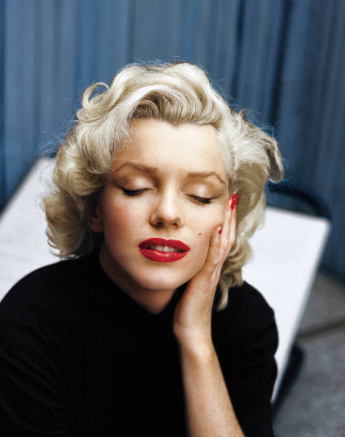
The Hollywood Icon Who Defined Pop Culture: The True Story of Marilyn Monroe
More than six decades after her untimely passing in 1962, Marilyn Monroe remains the undeniable archetype of American glamour, movie stardom, and twentieth-century pop culture. Her golden platinum locks, breathy voice, luminous screen presence, and famous hourglass silhouette continue to captivate audiences around the globe. Yet behind the dazzling studio spotlight, the flashbulbs of Hollywood premieres, and the iconic white dress billowing over a subway grate lay a complex, intensely hardworking, and ambitious woman who fought relentlessly against the rigid constraints of the 1950s studio system.
Born Norma Jeane Mortenson on June 1, 1926, in Los Angeles, California, she transformed herself from an orphaned child living in foster homes into the highest-grossing star of 20th Century-Fox and the most famous woman in the world. During her career, her films grossed over $200 million—equivalent to over $2 billion in modern currency—solidifying her position as an unmatched box-office phenomenon. Beyond her staggering box-office receipts, Marilyn was a pioneer who took on the Hollywood establishment by founding her own independent film production company, studying Method acting at the prestigious Actors Studio in New York, and paving the way for female creative autonomy in an industry dominated by men.
In modern pop culture, discussions surrounding Marilyn Monroe frequently return to her physical statistics, her true dress size, and her revolutionary approach to fitness and beauty. While internet urban legends often falsely claim she was a “plus-sized” woman or a modern size 16, surviving garments from her personal wardrobe, studio costume records, modeling contracts, and official medical files tell a remarkably different story. She possessed a rare, extreme hourglass figure with a tiny waist measuring between 22 and 24 inches, standing 5 feet 5.5 inches tall and weighing between 117 and 120 pounds for the vast majority of her adult life.
Marilyn Monroe Quick Wiki-Style Statistics Table
To understand the woman behind the legend, here is the complete, historically verified biographical and physical profile of Marilyn Monroe:
September 13, 1946)Second HusbandJoe DiMaggio (m.October 1954)Third HusbandArthur Miller (m.
| Biographical & Physical Metric | Verified Historical Details & Statistics |
|---|---|
| Full Birth Name | Norma Jeane Mortenson (baptized Norma Jeane Baker) |
| Legal Stage Name | Marilyn Monroe (legally adopted early 1956) |
| Date of Birth (DOB) | June 18, 1926 (June 1, 1926) |
| Date of Passing | August 4–5, 1962 (aged 36) |
| Place of Birth | Los Angeles General Hospital, Los Angeles, California |
| Resting Place | Westwood Village Memorial Park Cemetery, Los Angeles |
| Barefoot Height | 5 Feet 5.5 Inches (166 cm) |
| Average Body Weight | 118 to 120 lbs (53.5 to 54.4 kg) (Peak: ~140 lbs in 1959) |
| Body Shape / Silhouette | Extreme Hourglass (David Kibbe Soft Dramatic / Romantic) |
| Verified Body Measurements | 36-24-34 in (1945 modeling) / 35.5-23.5-33.25 in (1962) |
| Bra Size | 36D / 34D (Studio tailoring) |
| Waist Size | 22 to 24 Inches (28.5 Inches maximum during 1959) |
| Hip Size | 34 to 36 Inches |
| Natural Hair Color | Naturally Brunette (Dyed Platinum / Peroxide Blonde) |
| Eye Color | Blue |
| Zodiac Sign | Gemini |
| Ethnicity | Caucasian (Irish, Scottish, English descent) |
| Parents | Gladys Pearl Baker (Mother) & Charles Stanley Gifford (Biological Father) |
| First Husband | James Dougherty (m. June 19, 1942; div. |
| January 14, 1954; div. | |
| June 29, 1956; div. January 20, 1961) | |
| Children | None (suffered ectopic pregnancy and miscarriages due to severe endometriosis) |
| Education | Emerson Junior High, Van Nuys High School, Actors Studio NYC |
| Acting Mentors | Lee Strasberg, Paula Strasberg, Natasha Lytess |
| Production Company | Marilyn Monroe Productions (founded December 1954 with Milton Greene) |
| Major Film Hits | Gentlemen Prefer Blondes (1953), The Seven Year Itch (1955), Some Like It Hot (1959) |
| Golden Globe Awards | Best Actress in a Comedy (Some Like It Hot, 1959), World Film Favorite (1953, 1962) |
| Lifetime Career Estate Value | Estimated $30 Million+ posthumous brand equity |
Debunking the Size 16 Myth: The True Physical Dimensions of Marilyn Monroe
Few topics in fashion history have generated as much persistent debate and misunderstanding as the physical body size of Marilyn Monroe. For decades, popular magazines, social media posts, and celebrity commentaries have asserted that Marilyn was a “plus-sized” woman who wore a modern size 12, 14, or 16. This claim is frequently cited by commentators attempting to demonstrate how body standards have shifted over time. However, archival records from costume designers, auction houses, museum exhibitions, and official studio documents thoroughly dismantle this myth.
The confusion stems primarily from a fundamental misunderstanding of historical vanity sizing. In the 1940s and 1950s, American clothing manufacturers utilized an entirely different numerical sizing scale than the one used today. A 1950s clothing label marked “Size 12” or “Size 14” actually corresponded to a modern U.S. Size 4 or Size 6. In addition, women’s garments during the mid-twentieth century were constructed for structured undergarments, including high-waisted girdles and corsets, which cinched the waist while accentuating the bust and hips.
A rigorous examination of surviving garments from Marilyn’s personal wardrobe—preserved in private archives such as The Marilyn Monroe Collection and sold at high-profile auctions like Christie’s 1999 landmark sale—reveals the true physical reality:
- The 1945 Blue Book Modeling Contract: When nineteen-year-old Norma Jeane Dougherty signed her first professional contract with the Blue Book Modeling Agency on August 2, 1945, her official measurements were recorded as 36 inches at the bust, 24 inches at the waist, and 34 inches at the hips, weighing 120 pounds at a height of 5 feet 6 inches. Her agency noted her clothing size as “Size 12″—the 1940s equivalent of a modern Size 4.
- The 1951 Studio Leather Belt: A personal leather belt worn by Marilyn at RKO Studios in 1951 measures exactly 27 inches on the outside when fastened. Worn over layers of clothing, this confirms an underlying waist measurement of 24 inches or less.
- The 1953 Personal Wool Skirt: A tailored wool skirt from her private wardrobe measures 27 inches around the waistband when fastened, fitting snugly on a modern Size 4-6 dress mannequin.
- The 1955 East of Eden Premiere Evening Cape: Custom-designed by George Nardiello in champagne silk brocade, this cape fits a modern dress form with a 33.5-inch bust and 24.5-inch waist perfectly.
- The 1959 Cocktail Dress at Peak Weight: In 1959, while attending an event with husband Arthur Miller shortly after filming Some Like It Hot, Marilyn was at her heaviest weight, weighing approximately 138 to 140 pounds following a pregnancy. Yet when her custom-tailored black silk cocktail dress from that night is placed on a mannequin, her waist still measures a trim 28.5 inches—far smaller than any modern plus-size category.
- The 1962 Happy Birthday Mr. President Dress: When Marilyn performed her famous rendition of “Happy Birthday” for President John F. Kennedy at Madison Square Garden on May 19, 1962, Jean Louis custom-sewed the sheer, rhinestone-encrusted gown directly onto her body. Her official measurements for the dress were recorded as: Bust 35.5 inches, Waist 23.5 inches, and Hips 33.25 inches. By modern apparel standards, she was a true U.S. Size 4 to 6.
- The 1962 Los Angeles Coroner Medical Report: Following her tragic death on August 4–5, 1962, the official autopsy performed by Deputy Coroner Dr. Thomas Noguchi recorded her height at 5 feet 5.5 inches (166 cm) and her weight at 117 pounds (53 kg).
Marilyn Monroe was not a plus-sized woman by historical or modern definitions. She possessed an exceptional, natural, extreme hourglass frame with a high bust-to-waist ratio that gave her the illusion of fuller curves while maintaining an exceptionally tiny waist.
From Norma Jeane Mortenson to Marilyn Monroe: Childhood, Orphanages, and Survival
The glamorous blonde icon who captivated millions was forged in the crucible of an extraordinarily difficult, lonely, and unstable childhood. Born on June 1, 1926, at Los Angeles General Hospital, she was named Norma Jeane Mortenson by her mother, Gladys Pearl Baker. Gladys was a film negative cutter at Consolidated Film Industries and RKO Studios who struggled with severe mental illness throughout her life. The identity of Norma Jeane’s biological father remained a mystery for nearly a century until a 2022 DNA comparison confirmed that he was Charles Stanley Gifford, Gladys’s superior at RKO Studios with whom she had an affair in 1925.
Unable to care for her infant daughter financially or emotionally, Gladys placed two-week-old Norma Jeane in the foster care of Albert and Ida Bolender, a devout Christian couple in Hawthorne, California. Norma Jeane lived with the Bolenders until 1933, believing they were her parents until Gladys occasionally visited and explained the truth. In 1933, Gladys purchased a small home in Hollywood and brought seven-year-old Norma Jeane to live with her. However, the living arrangement was short-lived. In late 1934, Gladys suffered a severe mental breakdown and was diagnosed with paranoid schizophrenia, leading to her permanent institutionalization in state mental hospitals.
For the remainder of her youth, Norma Jeane became a ward of the state and was shuffled between eleven different foster homes, an orphanage, and the homes of various family friends. In September 1935, when she was nine years old, she was placed in the Los Angeles Orphans Home (later known as Hollygrove). Although the orphanage was clean and well-managed, Norma Jeane experienced profound feelings of abandonment, trauma, and loneliness. During her stays in foster homes, she was subjected to emotional neglect and sexual abuse, which caused her to develop a stammer and withdraw into a private fantasy world.
It was during these lonely childhood years that Norma Jeane fell in love with cinema. Foster families frequently gave her small amounts of change to go to the local movie theater, where she would sit for hours watching Hollywood stars like Jean Harlow, Clark Gable, and Joan Crawford on the big screen. The dark theater became her sanctuary, and she resolved that one day she would become an actress.
In 1938, twelve-year-old Norma Jeane found a loving and stable environment when she moved in with Ana Lower, the elderly aunt of family friend Grace McKee Goddard. Living in Sawtelle, Los Angeles, she attended Emerson Junior High School, contributed to the school newspaper, and found emotional comfort in Christian Science services with Ana Lower. However, by early 1941, Ana’s failing health forced Norma Jeane to return to Van Nuys to live with Grace and Erwin “Doc” Goddard.
In early 1942, Doc Goddard’s employer relocated him to West Virginia. Under California child protection laws, the Goddards were prohibited from taking sixteen-year-old Norma Jeane out of state, leaving her facing an immediate return to the orphanage. To prevent this, Grace arranged a marriage between Norma Jeane and their twenty-one-year-old neighbor, James “Jimmy” Dougherty, a worker at the nearby Radio Plane Aircraft factory. On June 19, 1942—just eighteen days after her sixteenth birthday—Norma Jeane left high school and married Dougherty in a quiet ceremony.
While Dougherty treated her kindly, Norma Jeane later recalled feeling bored and unfulfilled during the marriage. When Dougherty enlisted in the U.S. Merchant Marine in 1943 and was deployed to the South Pacific, Norma Jeane moved in with his parents in Van Nuys, marking the beginning of a life-changing chapter.
The Radioplane Factory Discovery and the Blue Book Modeling Years
In 1944, with her husband deployed overseas, eighteen-year-old Norma Jeane Dougherty took a job on the assembly line at the Radioplane Company, a munitions factory in Van Nuys, California. Her daily work involved spraying aircraft parts with fire retardant and inspecting remote-controlled target drones used by the U.S. Army Air Forces.
In late 1944, a fateful encounter transformed her life forever. Photographer David Conover was dispatched to the Radioplane factory by the U.S. Army Air Forces’ First Motion Picture Unit—a military unit commanded by Captain Ronald Reagan—to take morale-boosting photographs of women contributing to the World War II effort. When Conover spotted the striking, dark-haired worker with natural charm and flawless bone structure, he took a series of photographs of her assembling drones.
Although Conover’s factory photos were never officially published by the military, he recognized her extraordinary camera presence and urged her to pursue professional modeling. In January 1945, Norma Jeane quit her factory job and began modeling for Conover and his photography associates. Defying the objections of her deployed husband and his conservative mother, she moved out on her own and signed a contract with the Blue Book Model Agency, owned by Emmeline Snively, in August 1945.
Snively immediately recognized Norma Jeane’s potential for commercial and pin-up photography. Under Snively’s guidance, Norma Jeane made two crucial stylistic transformations: she straightened her naturally curly brown hair, dyed it platinum blonde, and learned the art of soft, radiant camera posing. Working under the modeling pseudonym “Jean Norman,” she quickly became one of the agency’s most ambitious and successful models. By early 1946, at age nineteen, she had graced thirty-three national magazine covers, including Pageant, Laff, Peek, and U.S. Camera.
Her rising fame as a magazine pin-up caught the attention of Hollywood talent scouts. In June 1946, Emmeline Snively helped her sign with an acting agency. After an initial interview at Paramount Pictures led nowhere, she was granted a screen test at 20th Century-Fox by executive Ben Lyon. Impressed by her radiant screen test, studio head Darryl F. Zanuck signed her to a standard six-month contract in August 1946 at $125 per week.
Ben Lyon and Norma Jeane then crafted her iconic stage name. Lyon suggested “Marilyn,” inspired by 1920s Broadway star Marilyn Miller, while Norma Jeane selected “Monroe,” her mother’s maiden name. In September 1946, knowing that Fox preferred unmarried starlets, she finalized her divorce from James Dougherty. Norma Jeane Dougherty was officially gone; Marilyn Monroe was born.
Breakthrough Years: Niagara, Gentlemen Prefer Blondes, and the Birth of a Superstar
Marilyn spent her early years at 20th Century-Fox taking lessons in acting, singing, and dancing while observing film shoots on the backlot. After minor bit parts in Dangerous Years (1947) and Scudda Hoo! Scudda Hay! (1948), Fox dropped her contract. Undeterred, she briefly signed with Columbia Pictures, starring in the musical Ladies of the Chorus (1948), where she sang lead vocals on screen for the first time.
Her real breakthrough occurred in 1950 when talent agent Johnny Hyde negotiated a small but scene-stealing role for her in John Huston’s gritty film noir The Asphalt Jungle. Monroe played Angela Phinlay, the young mistress of a corrupt lawyer. Later that same year, she delivered another sharp, memorable performance as aspiring actress Claudia Caswell alongside Bette Davis in Joseph L. Mankiewicz’s Oscar-winning masterpiece All About Eve.
The critical acclaim from these two roles prompted Fox to sign Monroe to a new seven-year contract in December 1950. Over the next two years, her popularity exploded. Servicemen fighting in the Korean War voted her “Miss Cheesecake of 1951,” and she received over two thousand fan letters a week. She demonstrated her dramatic range in Fritz Lang’s Clash by Night (1952) and the psychological thriller Don’t Bother to Knock (1952), in which she played a disturbed babysitter.
In early 1952, Marilyn navigated a potentially career-destroying scandal with unprecedented savvy. Gossip columnists discovered that she had posed nude for a calendar shot by photographer Tom Kelley in 1949 under the name “Mona Monroe.” While studio executives urged her to deny it, Marilyn took control of the narrative, giving an candid interview explaining that she had been broke, facing eviction, and needed fifty dollars to pay her rent. Her honesty won over the public, turning the scandal into a major publicity triumph that propelled her to top billing.
The year 1953 established Marilyn Monroe as a global phenomenon and 20th Century-Fox’s most valuable asset:
- Niagara (1953): Directed by Henry Hathaway, this Technicolor film noir showcased Marilyn in her first top-billed role as Rose Loomis, a sultry, manipulative wife plotting to murder her husband at Niagara Falls. The film featured her famous 30-second long-shot walk in a tight skirt—the longest walk in cinema history—establishing her signature hip-sway walk.
- Gentlemen Prefer Blondes (1953): Co-starring Jane Russell and directed by Howard Hawks, this musical comedy cemented her iconic screen persona as Lorelei Lee, the naive yet sharp gold-digger. Her performance of “Diamonds Are a Girl’s Best Friend” in a strapless pink silk gown became one of the most famous musical numbers in cinema history, referenced by artists for generations.
- How to Marry a Millionaire (1953): Co-starring Betty Grable and Lauren Bacall, this romantic comedy featured Marilyn as Pola Debevoise, a nearsighted model who refuses to wear glasses in front of men. Shot in ultra-wide CinemaScope, the film was a massive box-office hit, grossing over $8 million.
By the end of 1953, Marilyn was listed among the Top Ten Money-Making Stars in Hollywood and had cemented her place in cinematic history.
The Three Marriages: James Dougherty, Joe DiMaggio, and Arthur Miller
Marilyn Monroe’s romantic life was subject to intense international fascination, media frenzy, and tragic misunderstandings. Throughout her adult life, she sought emotional security, intellectual respect, and a genuine family structure that had eluded her in childhood. She was married three times, each union representing a distinctly different phase of her life.
1. James Dougherty (June 19, 1942 – September 13, 1946)
Her first marriage to James “Jimmy” Dougherty, a local factory worker and former high school football player, was organized when she was just sixteen years old to keep her out of an orphanage. While Dougherty was a caring husband, the union was marked by intellectual incompatibility and traditional expectations. When Dougherty joined the Merchant Marine during World War II, Norma Jeane developed independent ambitions as a pin-up model. Dougherty and his mother strongly disapproved of her modeling career, prompting Norma Jeane to file for divorce in Las Vegas in September 1946 as she signed her first contract with 20th Century-Fox.
2. Joe DiMaggio (January 14, 1954 – October 27, 1954)
Marilyn’s second marriage to retired New York Yankees baseball legend Joe DiMaggio was a sensation, uniting America’s biggest sports hero with Hollywood’s reigning glamour queen. The couple began dating in early 1952 after DiMaggio asked an acquaintance to arrange a dinner date in Los Angeles. On January 14, 1954, they were married in a simple civil ceremony at San Francisco City Hall.
However, the union faced severe strain from the outset. DiMaggio, a conservative man of traditional values, harbored intense jealousy regarding Marilyn’s sex-symbol image and revealing wardrobe. During their Tokyo honeymoon, Marilyn accepted an invitation from the U.S. military to perform for 60,000 troops stationed in South Korea. Her presence caused near-riots among servicemen, aggravating DiMaggio’s discomfort with her fame.
The breaking point arrived in September 1954 on the New York set of The Seven Year Itch. Director Billy Wilder staged the famous scene where wind from a subway grate blows Marilyn’s white halter dress above her waist in front of thousands of spectators and press photographers. An enraged DiMaggio watched from the sidelines, leading to a fierce argument at their hotel. Nine days later, after returning to Los Angeles, Marilyn filed for divorce on grounds of mental cruelty after just nine months of marriage.
Despite their divorce, DiMaggio remained deeply devoted to Marilyn for the rest of his life. When she was institutionalized against her will at the Payne Whitney Psychiatric Clinic in 1961, DiMaggio intervened to secure her release. Following her passing in 1962, DiMaggio organized her private funeral and arranged for fresh red roses to be delivered to her crypt at Westwood Village Memorial Park three times a week for twenty years.
3. Arthur Miller (June 29, 1956 – January 20, 1961)
Marilyn’s third marriage was to acclaimed Pulitzer Prize-winning playwright Arthur Miller, author of Death of a Salesman and The Crucible. The couple had met briefly in 1951 through director Elia Kazan and reconnected in 1955 when Marilyn moved to New York to study at the Actors Studio. The media labeled the union an unexpected match, with Variety famously running the headline: “Egghead Weds Hourglass.”
On June 29, 1956, they were married in a civil ceremony in White Plains, New York, followed by a Jewish ceremony on July 1. Marilyn formally converted to Judaism, demonstrating her deep desire to integrate into Miller’s family. Her conversion was so significant that Egypt temporarily banned all of her films from Egyptian cinemas.
Marilyn stood resolantly by Miller when he was subpoenaed by the House Un-American Activities Committee (HUAC) and investigated by the FBI for alleged Communist sympathies. Despite studio warnings that supporting Miller could ruin her career, Marilyn refused to distance herself from him.
The marriage faced profound tragedy. Marilyn suffered from severe endometriosis, a painful medical condition that caused chronic pelvic pain and led to multiple traumatic miscarriages, including a life-threatening ectopic pregnancy in 1957. Her inability to carry a child to term caused her immense grief, exacerbating her dependence on prescription sleep medications. In addition, Marilyn was deeply hurt when she discovered personal journal entries written by Miller expressing disappointment in their marriage and describing her as a burden. The marriage dissolved during the grueling Nevada shoot of The Misfits (1961), and their divorce was finalized in Mexico on January 20, 1961.
Taking On the Hollywood Studio System: Marilyn Monroe Productions and Method Acting
In late 1953, despite being 20th Century-Fox’s highest-grossing star, Marilyn Monroe was paid significantly less than her male co-stars and female peers. While actors like Jane Russell earned up to $200,000 per film, Marilyn remained bound to her 1950 contract, earning just $1,500 per week. Furthermore, studio chief Darryl F. Zanuck consistently rejected her requests for complex dramatic roles, insisting she stick to playing “dumb blonde” caricatures.
In January 1954, when Zanuck suspended her for refusing to shoot another formulaic musical titled The Girl in Pink Tights, Marilyn decided to take radical action. Following the completion of The Seven Year Itch in November 1954, she abandoned Hollywood and moved to New York City.
Collaborating with celebrity photographer Milton Greene, Marilyn founded her own independent film company, Marilyn Monroe Productions (MMP), in December 1954. She owned 51% of the company, becoming one of the first women in Hollywood history to establish an independent film production banner. MMP was instrumental in breaking the supreme authority of the traditional studio system, proving that stars could negotiate creative freedom and profit-sharing.
While living in Manhattan, Marilyn sought to elevate her craft. She enrolled at the world-renowned Actors Studio, studying Method acting under legendary director Lee Strasberg and his wife Paula Strasberg. Strasberg recognized her raw talent, noting that alongside Marlon Brando, Marilyn was the most gifted student he had ever taught. She immersed herself in literature, reading works by James Joyce, Fyodor Dostoevsky, Walt Whitman, and Samuel Beckett, while undergoing psychoanalysis to process her childhood trauma.
Surprised by her resolve and facing public pressure, 20th Century-Fox conceded after a year-long legal battle. In December 1955, Marilyn signed a landmark seven-year contract with Fox that granted her unprecedented privileges:
- A salary of $400,000 for four films over seven years.
- The absolute right of script, director, and cinematographer approval.
- The freedom to produce independent films through Marilyn Monroe Productions between studio projects.
Her first film under the new contract was Joshua Logan’s adaptation of William Inge’s play Bus Stop (1956). Playing Chérie, an unpolished Ozark saloon singer with a thick southern accent, Marilyn delivered a nuanced, critically praised dramatic performance that proved her extraordinary range. She followed this by producing MMP’s first independent film, The Prince and the Showgirl (1957), co-starring and directed by Sir Laurence Olivier, which earned her a BAFTA nomination and the prestigious Italian David di Donatello Award for Best Foreign Actress.
Critical Acclaim and Golden Globe Triumphs: Some Like It Hot and Beyond
In 1959, Marilyn Monroe achieved the absolute artistic and commercial peak of her career starring in Billy Wilder’s comedy classic Some Like It Hot, co-starring Tony Curtis and Jack Lemmon. Playing Sugar Kane Kowalczyk, a ukulele player and singer in an all-female jazz band during the Prohibition era, Marilyn delivered an immortal comedic performance filled with musical warmth, vulnerability, and effortless timing.
Despite experiencing severe insomnia, anxiety, and pregnancy-related health complications during the San Diego shoot, Marilyn’s work on screen was magical. Her musical renditions of “I Wanna Be Loved by You,” “Running Wild,” and “I’m Through With Love” became instant classics. Some Like It Hot was a massive box-office triumph, grossing over $25 million, and earned Marilyn the Golden Globe Award for Best Actress in a Comedy or Musical in 1960. Today, the American Film Institute ranks Some Like It Hot as the #1 greatest American comedy film of all time.
Her final completed feature film was John Huston’s poignant 1961 modern western drama The Misfits, written specifically for her by her then-husband Arthur Miller. Co-starring Clark Gable, Montgomery Clift, and Eli Wallach, the film featured Marilyn as Roslyn Taber, a tenderhearted divorcee in Reno who forms a deep bond with aging cowboys.
Shot in the sweltering heat of the Nevada desert under intense personal strain, Marilyn’s performance as Roslyn was profoundly moving, raw, and authentic. Director John Huston observed that when Marilyn acted, she reached deep within her own soul to bring genuine emotion to the screen. Though The Misfits received mixed reviews upon its initial release, modern film scholars and critics now regard her performance as the most mature, powerful dramatic work of her career.
Kibbe Soft Dramatic Silhouette Analysis and Marilyn’s Iconic Fashion Legacy
In the world of fashion theory and body-typing frameworks, Marilyn Monroe is universally recognized as the ultimate reference model for David Kibbe’s Romantic / Soft Dramatic body typology. Kibbe’s system classifies individuals based on their underlying skeletal structure, body flesh, and facial features. Marilyn’s physical frame represents the pure embodiment of Romantic softness combined with Soft Dramatic curve dominance:
- Extreme Hourglass Line: Marilyn’s skeleton featured delicate, rounded bones with moderately broad shoulders that tapered sharply into a remarkably narrow waist before curving out into soft, rounded hips. Her bust and hip measurements were almost identical (36-24-34 in 1945; 35.5-23.5-33.25 in 1962), creating an 11-to-12-inch differential between her waist and bust/hips.
- Soft Flesh Distribution: Unlike modern fitness models whose body composition emphasizes angular muscle definition, Marilyn’s body composition retained soft, feminine flesh over a compact, sturdy frame. This gave her skin a luminous, incandescent quality on camera under Technicolor studio lighting.
- Facial Bone Harmony: Her facial structure featured wide-set, expressive blue eyes, high cheekbones, a soft jawline, and a full pout. Studio makeup artist Allan “Whitey” Snyder enhanced her features using strategic contouring, vaseline-based skin prep, arching her dark eyebrows, applying glossy red lipstick, and accentuating her natural beauty mark.
- Style Lines & Wardrobe Choices: Marilyn understood her body lines better than anyone. She favored body-con gowns, halter necks, off-the-shoulder necklines, draped silk, bias-cut satin, and waist-cinching belts designed by legendary studio costume designers like William Travilla, Jean Louis, and Ceil Chapman.
Her most iconic fashion moments remain legendary touchstones in pop culture history:
- The Pink Satin Gown (Gentlemen Prefer Blondes, 1953): Designed by William Travilla, this strapless magenta silk-satin gown with a giant rear bow and black opera gloves defined classic glamour.
- The Subway Grate White Dress (The Seven Year Itch, 1955): Travilla’s cocktail dress made of ivory-colored pleated rayon-crepe featured a plunging halter neck that billowed gracefully around her legs.
- The JFK Birthday Dress (1962): Designed by Jean Louis, this sheer, flesh-toned marquisette gown encrusted with 2,500 hand-sewn rhinestones created the visual illusion of absolute nude brilliance under the spotlight.
Fitness, Weights, and Nutrition: How Marilyn Maintained Her Hourglass Frame
Contrary to popular belief, Marilyn Monroe was decades ahead of her time when it came to physical conditioning, weight training, and morning exercise routines. Long before strength training became popular for women in the 1970s and 1980s, Marilyn recognized that lifting weights was essential for maintaining firm posture, toned shoulders, and a tight core without adding bulk.
In a candid feature interview for Pageant magazine in September 1952 titled “How I Stay in Shape,” Marilyn detailed her daily physical fitness routine:
- Morning Dumbbell Calisthenics: Every morning after brushing her teeth, Marilyn spent ten minutes doing targeted upper-body calisthenics using a set of 5-pound brass dumbbells. She performed chest-opening flyes, arm presses, and overhead arm circles to keep her bustline, shoulders, and chest firm.
- Bodyweight Core & Flexibility Work: She performed leg raises, waist twists, and gentle stretches on her bedroom carpet to maintain flexibility and keep her abdominal wall tight without building thick abdominal muscles that would ruin her 23-inch waist.
- Simple, Protein-Rich Nutrition: Marilyn followed a unique, high-protein diet that prioritized steady energy and muscle preservation over extreme calorie restriction:
- Breakfast: Every morning, before taking a warm shower, Marilyn warmed a cup of whole milk on a hot plate, cracked two raw eggs into it, whipped them together with a fork, and drank it alongside a multivitamin pill. She described it as “the most nourishing, economical breakfast imaginable for a working girl.”
- Dinner: Her evening meals were remarkably simple and clean. She frequently stopped at a local market near her hotel to purchase fresh raw steak, lamb chops, or calf’s liver, which she broiled in an electric oven in her room, pairing it with four or five raw whole carrots. She famously admitted, “I must be part rabbit; I never get tired of raw carrots.”
- Indulgences: Despite her disciplined routine, Marilyn enjoyed occasional sweet treats, notably stopping at Wil Wright’s ice cream parlor in Santa Monica for hot fudge sundaes after her evening acting classes.
Marilyn refused to follow restrictive starvation diets, stating, “I don’t want to be bone thin, and I make it a point to stay the way I want to be.” Her balanced approach allowed her to maintain a healthy weight of 118 to 120 pounds while preserving her signature radiant energy.
The Tragic Final Chapter: The Misfits, Fifth Helena Drive, and Her Enduring Cultural Legacy
In early 1962, following her divorce from Arthur Miller and surgeries for severe endometriosis and gallstones, Marilyn returned to Los Angeles to begin a new chapter. She purchased her very first home—a charming 1920s Spanish-style hacienda located at 12305 Fifth Helena Drive in the quiet neighborhood of Brentwood, Los Angeles. Over the front door, she placed a Latin tile inscription that read Cursum Perficio (“My journey ends here”).
In the spring of 1962, she began shooting a new romantic comedy for 20th Century-Fox titled Something’s Got to Give, co-starring Dean Martin and directed by George Cukor. However, the production was plagued by studio conflict and illness. Marilyn developed severe chronic sinusitis and high fevers, causing her to miss multiple shooting days. Studio executives, facing massive cost overruns from Elizabeth Taylor’s Cleopatra, blamed Marilyn publicly and briefly fired her from the project.
On May 19, 1962, Marilyn made her final major public appearance at Madison Square Garden in New York City, singing “Happy Birthday, Mr. President” for President John F. Kennedy’s 45th birthday celebration. Wearing her jaw-dropping Jean Louis rhinestone dress, she delivered a performance that became an instant piece of global history.
In her final weeks during July 1962, Marilyn was reinstated by Fox with a lucrative new contract, re-shot scenes for Something’s Got to Give, and posed for legendary fashion photographer Bert Stern in a three-day shoot for Vogue known as “The Last Sitting.” She also sat for a famous, reflective interview with LIFE magazine, expressing her hope to be recognized as a serious actress and reflecting on the nature of fame.
Tragically, on the night of Saturday, August 4, 1962, thirty-six-year-old Marilyn Monroe passed away at her Brentwood home. The cause of death was ruled acute barbiturate poisoning (pentobarbital and chloral hydrate), classified by Deputy Coroner Dr. Thomas Noguchi as a probable suicide. The world was plunged into profound shock and grief at the loss of Hollywood’s brightest star.
On August 8, 1962, Joe DiMaggio organized her private funeral at Westwood Village Memorial Park Cemetery, surrounding her crypt with red roses and ensuring her privacy from media circus intrusion.
Marilyn Monroe’s legacy has only grown in stature over the decades since her passing:
- In 1999, the American Film Institute ranked her as the sixth-greatest female screen legend from the Golden Age of Hollywood.
- In 2019, Time magazine honored her on its 100 Women of the Year list for 1954.
- In 2024, the Los Angeles City Council officially designated her Brentwood hacienda at 12305 Fifth Helena Drive as a Historic-Cultural Monument, preserving her home forever.
- In 2026, on the centenary of her birth, prestigious exhibitions at the Academy Museum of Motion Pictures in Los Angeles and the National Portrait Gallery in London celebrated her extraordinary life, artistic agency, and enduring cultural impact.
Marilyn Monroe was far more than a blonde bombshell or a studio creation. She was a courageous, self-made woman who overcame adversity, challenged the Hollywood establishment, redefined female glamour, and left an indelible mark on the world that will endure for centuries to come.