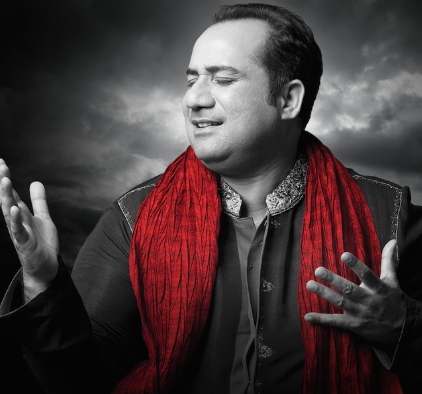
The Sacred Lineage and the Billion Stream Miracle: A Dynastic Revolution in Modern Sound
In the high-speed universe of digital streaming, where viral trends flash across mobile screens and vanish within forty-eight hours, achieving eleven point three billion cumulative views on YouTube is not just an impressive career milestone. It is an extraordinary cultural anomaly that challenges everything modern record labels believe about digital music consumption. Most artists who dominate modern streaming platforms rely on rapid-fire electronic trap beats, heavily auto-tuned vocal hooks, provocative music videos, and continuous promotional stunts designed to manipulate recommendation algorithms. Yet standing above this frantic digital race is a classically trained maestro from Faisalabad, Pakistan, whose musical foundation was forged not in corporate recording studios, but on the woven mats of centuries-old Sufi shrines.
Ustad Rahat Fateh Ali Khan represents the sixth generation of the legendary Qawwal Bachhon Ka Gharana, a six-hundred-year-old musical dynasty that traces its direct lineage back to the thirteenth-century Sufi poet and mystic Amir Khusro. When Khusro blended Persian musical traditions with Indian classical ragas to create Qawwali, he envisioned an art form that could bypass rational thought and strike straight into the human spiritual core. Seven centuries later, Rahat Fateh Ali Khan achieved the unthinkable: he took that ancient devotional vocal intensity, stripped of its esoteric barriers, and transplanted it directly into the bloodstream of mainstream global pop culture.
The statistics surrounding his career read like a mathematical impossibility. Across official record label channels, television networks, film studio uploads, and live concert broadcasts, his voice has accumulated over eleven point three billion views on YouTube alone. His non-film masterpiece Zaroori Tha, released in 2014 on the solo album Back 2 Love through Universal Music India, stands as an absolute standalone streaming titan with over one point eight billion views. To put that figure into perspective, Zaroori Tha has collected more plays than nearly every high-budget Bollywood film song ever produced, rivaling global Western pop anthems and maintaining an average of hundreds of thousands of daily plays more than a decade after its initial upload.
What makes this digital dominion truly mesmerizing is the journey that brought him here. Long before smartphones existed and before digital views became the universal currency of fame, Rahat was a quiet seven-year-old child sitting beside his uncle and musical mentor, the immortal Ustad Nusrat Fateh Ali Khan. While other children played in the streets of Faisalabad, Rahat underwent rigorous classical training, spending pre-dawn hours practicing complex vocal scales, breath control, and microtonal ornamentation. By age fifteen, he was already touring international concert halls from London to Tokyo as the junior vocal partner in Nusrat legendary qawwali party, singing until his throat bled and learning how to hold thousands of foreign listeners in collective spiritual trance.
When Nusrat Fateh Ali Khan tragically passed away in 1997 at the age of forty-eight, an entire subcontinent fell into mourning, convinced that the golden era of Sufi music had died with him. The burden that fell upon the shoulders of twenty-three-year-old Rahat was crushing. He was tasked with preserving a sacred spiritual legacy while carving out his own creative identity in a rapidly modernizing entertainment world. Rather than retreating into rigid traditionalism or diluting his heritage, Rahat made a daring artistic pivot. Starting with his Bollywood playback debut in Pooja Bhatt film Paap in 2003, singing the haunting ballad Mann Ki Lagan, he demonstrated that the spiritual yearning of Qawwali was the exact emotional antidote modern cinema had been desperately seeking.
Over the next two decades, Rahat became the emotional voice of South Asian cinema and independent music. Whether providing the romantic soul for Salman Khan in Dabangg and Sultan, scoring timeless cinematic moments for Shah Rukh Khan in My Name Is Khan, elevating Ajay Devgn in Once Upon a Time in Mumbaai and Baadshaho, or rewriting television history with Coke Studio performance of Afreen Afreen alongside Momina Mustehsan, Rahat voice dissolved political borders, religious divisions, and generational gaps. His music proved that real emotional depth, delivered through peerless vocal mastery, possesses an organic digital velocity that manufactured corporate pop can never match.
Master Directory of South Asian Music Royalty and Creative Collaborators
The following comprehensive master directory profiles twenty central figures across modern South Asian music, cinematic storytelling, and creative production who helped shape Rahat Fateh Ali Khan historic streaming dominion, complete with real birth names, musical signatures, physical heights, weights, Kibbe body typologies, dates of birth, net worth valuations, and facial architecture.
Celebrity FigureReal Birth NamePrimary Role and Musical SignatureHeightWeightKibbe Body TypeDate of BirthNet Worth ValuationNasal Ridge and Facial ArchitectureRahat Fateh Ali KhanRahat Fateh Ali KhanClassical Sufi Maestro, Global Streaming Titan5 ft 4 in / 163 cm192 lbs / 87 kgRomanticDecember 9, 1974$25 MillionBroad warm classical nasal bridge with soft facial contours and deeply expressive soulful eyesNusrat Fateh Ali KhanPervez Fateh Ali KhanThe Voice from Heaven, Qawwali Legend and Mentor5 ft 8 in / 173 cm275 lbs / 125 kgPure RomanticOctober 13, 1948$50 Million Historical EstateMajestic broad nasal bridge with powerful round jawline and transcendent ecstatic performance gazeSahir Ali BaggaSahir Ali BaggaMaster Music Composer, Producer of Zaroori Tha5 ft 7 in / 170 cm165 lbs / 75 kgSoft NaturalOctober 10, 1978$8 MillionDefined straight nasal bridge with sharp creative gaze and focused studio presenceGauahar KhanGauahar Zafar KhanDramatic Actress, Model, Lead Star of Zaroori Tha5 ft 8 in / 173 cm125 lbs / 57 kgFlamboyant NaturalAugust 23, 1983$6 MillionSculpted aquiline nasal ridge with chiseled high cheekbones and striking runway eleganceKushal TandonKushal TandonTelevision Leading Man, Co-Star of Zaroori Tha6 ft 0 in / 183 cm185 lbs / 84 kgFlamboyant NaturalMarch 28, 1985$5 MillionStrong masculine straight nasal bridge with square jawline and brooding romantic gazeSalman KhanAbdul Rashid Salim Salman KhanMegastar Actor, Hero of Dabangg and Sultan5 ft 8 in / 173 cm176 lbs / 80 kgSoft NaturalDecember 27, 1965$350 MillionProminent straight nasal profile with chiseled jaw, broad brow, and charismatic screen presenceAkshay KumarRajiv Hari Om BhatiaBollywood Action Icon, Hero of Namastey London5 ft 11 in / 180 cm172 lbs / 78 kgDramatic NaturalSeptember 9, 1967$340 MillionSharp athletic straight nasal bridge with strong angular jawline and energetic cinematic charismaShah Rukh KhanShahrukh KhanGlobal Cinematic Icon, Star of My Name Is Khan5 ft 8 in / 173 cm154 lbs / 70 kgTheatrical RomanticNovember 2, 1965$870 MillionDistinctive prominent aquiline nasal bridge with deep expressive dimples and magnetic eyesAjay DevgnVishal DevganIntense Dramatic Actor, Baadshaho and Raid Star5 ft 10 in / 178 cm168 lbs / 76 kgPure DramaticApril 2, 1969$65 MillionSharp prominent straight nasal bridge with deep brooding gaze and rugged cinematic gravitasRanveer SinghRanveer Singh BhavnaniDynamic Screen Chameleon, Lead Star of Simmba5 ft 10 in / 178 cm170 lbs / 77 kgFlamboyant NaturalJuly 6, 1985$45 MillionSculpted straight nasal ridge with chiseled jawline, energetic smile, and electric presenceKatrina KaifKatrina TurquotteGlobal Dance and Screen Icon, Namastey London Star5 ft 8 in / 173 cm121 lbs / 55 kgFlamboyant NaturalJuly 16, 1983$32 MillionRefined straight nasal slope with soft delicate cheekbones and luminous cinematic graceMadhuri DixitMadhuri Shankar DixitLegendary Screen Empress, Star of O Re Piya5 ft 4 in / 163 cm123 lbs / 56 kgSoft ClassicMay 15, 1967$35 MillionPerfectly balanced delicate nasal bridge with radiant smile and world-renowned expressive eyesMomina MustehsanMomina MustehsanSoulful Vocalist, Acoustic Partner on Afreen Afreen5 ft 5 in / 165 cm117 lbs / 53 kgSoft ClassicSeptember 5, 1992$4 MillionDainty refined straight nasal slope with soft facial symmetry and gentle melodic auraShreya GhoshalShreya GhoshalMelody Queen, Duet Partner on Teri Meri Prem Kahani5 ft 3 in / 160 cm128 lbs / 58 kgSoft RomanticMarch 12, 1984$30 MillionGentle soft nasal bridge with rounded facial warmth, radiant smile, and angelic composureTulsi KumarTulsi Kumar DuaVersatile Playback Singer, Duet Star on Tum Jo Aaye5 ft 3 in / 160 cm119 lbs / 54 kgGamine ClassicMarch 15, 1986$25 MillionNeat delicate straight nasal slope with youthful compact jawline and expressive eyesPritam ChakrabortyPritam ChakrabortyHitmaker Composer, Architect of Tum Jo Aaye5 ft 8 in / 173 cm185 lbs / 84 kgNatural ClassicJune 14, 1971$40 MillionBroad thoughtful nasal profile with warm professorial demeanor and artistic eyeglassesSalim MerchantSalim MerchantVisionary Composer, Producer of O Re Piya5 ft 9 in / 175 cm158 lbs / 72 kgClassicDecember 9, 1974$15 MillionSlender straight refined nasal bridge with neat facial grooming and sophisticated presenceSulaiman MerchantSulaiman MerchantMaster Percussionist, Co-Composer of O Re Piya5 ft 10 in / 178 cm165 lbs / 75 kgNaturalDecember 21, 1970$12 MillionBalanced masculine straight nasal ridge with focused creative aura and rhythmic intensityTanishk BagchiTanishk BagchiModern Bollywood Sound Architect and Recreator5 ft 7 in / 170 cm154 lbs / 70 kgGamineNovember 22, 1980$10 MillionStraight neat nasal bridge with youthful modern facial contours and trendsetting aestheticAtif AslamMuhammad Atif AslamCross-Border Rock and Pop Titan, Contemporary Peer5 ft 9 in / 175 cm159 lbs / 72 kgFlamboyant GamineMarch 12, 1983$28 MillionChiseled straight nasal bridge with sharp angular jawline and magnetic rockstar intensity
The Anatomy of a Streaming Monster: Why Zaroori Tha Reached One Point Eight Billion Views
When Universal Music India released Rahat Fateh Ali Khan solo studio album Back 2 Love in June 2014, few industry executives could have predicted that a non-film ghazal track would outperform the biggest commercial cinema hits of the decade. At the time, conventional music business wisdom insisted that independent South Asian pop singles were commercially dead. The Indian music economy was overwhelmingly dominated by multi-crore Bollywood movie soundtracks backed by massive theatrical marketing budgets, prime-time television advertising, and glamorous A-list film stars performing elaborate dance routines. A standalone romantic music video produced outside the Bollywood film machine was considered a niche artistic endeavor with limited commercial upside.
Zaroori Tha shattered that conventional wisdom forever. Composed by Pakistani musical maestro Sahir Ali Bagga and penned by lyricist Imran Raza, the track was built on a deceptively simple musical foundation. It did not open with jarring electronic drops or aggressive percussion. Instead, it unfolded gently with a weeping acoustic guitar motif, delicate keyboard pads, and a warm, rhythmic tabla groove that established a mood of dignified, aching heartbreak. When Rahat voice entered with the opening lines, Lafz kitne hi tere pairon se lipte honge, tune jab aakhiri khat mera jalaaya hoga, he did not merely sing lyrics; he delivered an emotional gut-punch that struck listeners across every demographic.
The poetry of Imran Raza captured the universal agony of silent heartbreak: the bitter realization that two people who loved each other unconditionally were forced by circumstance, ego, or timing to walk away. The phrase Zaroori tha, repeated with escalating vocal intensity in the chorus, became a national catchphrase of bittersweet acceptance. Rahat vocal delivery climbed steadily through the octaves, shifting effortlessly from soft, conversational intimacy in the verses to soaring, chest-voice climaxes in the bridge that pushed into the upper registers of human vocal emotion.
The digital ascent of Zaroori Tha was unprecedented. Within days of its YouTube debut, the music video began amassing millions of views across India, Pakistan, the United Arab Emirates, the United Kingdom, and North America. Unlike film songs whose viewership typically spikes during a movie theatrical run and plummets shortly thereafter, Zaroori Tha developed an evergreen streaming momentum. It became the soundtrack for millions of personal heartbreak videos, radio dedications, and acoustic cover versions. By the time it crossed one billion views, it had cemented its place in music history as one of the fastest and most watched non-film South Asian music videos ever recorded, eventually climbing past one point eight billion views and maintaining an extraordinary daily audience decade after decade.
The Gauahar Khan and Kushal Tandon Chemistry: Reality Romance Meets Tragic Melodrama
A massive catalyst behind the viral explosion of Zaroori Tha was the inspired casting of its music video. In late 2013, millions of television viewers across South Asia were captivated by the seventh season of the reality television phenomenon Bigg Boss. The season had become an international talking point largely due to the real-life romance that blossomed inside the glass-walled house between glamorous model-actress Gauahar Khan and charismatic television leading man Kushal Tandon. Known collectively by fans as Gaushal, their passionate, high-stakes relationship played out under constant surveillance, culminating in Gauahar historic victory on the show.
When director Rahul Sud cast Gauahar Khan and Kushal Tandon as the estranged lovers in Zaroori Tha, the timing was nothing short of cultural lightning in a bottle. The music video was shot amidst the opulent European architecture and foggy, romantic streets of Georgia. The narrative avoided exaggerated theatrical action, focusing instead on intimate emotional devastation: two people confronting each other in a dimly lit drawing room, surrounded by unpacked luggage, burning letters, and the unbearable silence of an impending separation.
Because audiences already believed deeply in the genuine real-world chemistry between Gauahar and Kushal, every sorrowful glance, tearful hesitation, and gentle touch carried immense authenticity. Viewers were not watching two hired actors recite a script; they felt as though they were witnessing an uncomfortably private, heartbreaking crossroads between two people they had watched fall in love in real time. The raw visual narrative complemented Rahat soaring vocal climaxes so perfectly that fans replayed the video obsessively, analyzing every frame and lyric.
The visual storytelling in Zaroori Tha set a brand new benchmark for South Asian music video production. It proved that a compelling narrative, grounded in authentic human emotional stakes and paired with world-class vocal mastery, could generate far more sustained digital engagement than a flashy five-minute dance number in an exotic locale. The video turned Gauahar and Kushal into immortal symbols of modern tragic romance, while providing Rahat Fateh Ali Khan with a visual masterpiece that captured global imaginations.
The Cross-Border Phenomenon: How a Pakistani Maestro Became the Soul of Bollywood Cinema
To understand how Rahat Fateh Ali Khan accumulated eleven point three billion cumulative views, one must examine the remarkable golden era of his Bollywood career. Between 2003 and 2019, Hindi cinema underwent a profound musical renaissance. As younger filmmakers moved away from traditional melodramatic musicals toward grittier urban dramas and high-concept romance, music directors discovered that conventional playback voices often lacked the gravitas required to score modern emotional turmoil. They needed a voice that carried the weight of ancient soil, spiritual devotion, and raw vocal muscle.
That voice belonged to Rahat. When Mahesh Bhatt and Pooja Bhatt invited him to record Mann Ki Lagan for the 2003 film Paap, it marked the first time a Pakistani classical qawwal had crossed into mainstream Hindi cinema since his uncle Nusrat work in the late 1990s. Mann Ki Lagan was an instant critical and commercial triumph. Rahat followed with a breathtaking string of chart-topping anthems that defined the cinematic soundscape of an entire generation.
In 2007, director Vipul Shah film Namastey London introduced audiences to Main Jahaan Rahoon, composed by Himesh Reshammiya with lyrics by Javed Akhtar. The song, which captured the ache of unrequited love and geographic separation, became an immortal classic, sung by millions of diaspora South Asians who felt torn between two worlds. That same year, Salim-Sulaiman collaborated with Rahat on O Re Piya for Madhuri Dixit comeback vehicle Aaja Nachle. Featuring Madhuri peerless classical kathak expressions set against Rahat vocal fireworks, O Re Piya crossed hundreds of millions of views and became an eternal wedding dance and classical recital standard.
What set Rahat apart from every contemporary playback singer was his complete lack of vocal inhibition. While Western pop influences encouraged smooth, suppressed vocalizing, Rahat sang from the pit of his stomach, utilizing classical gamak ornaments, rapid-fire sargam patterns, and soaring high notes that pushed standard studio microphones to their absolute limits. In films like Dabangg, where his romantic duet Tere Mast Mast Do Nain provided the charming emotional heartbeat for Salman Khan larger-than-life police hero, Rahat proved he could handle playful, mainstream commercial romance just as effortlessly as high spiritual drama. His voice became Bollywood most reliable good-luck charm, guaranteeing multi-platinum record sales and millions of theatrical ticket admissions.
The Sacred Resonance of Coke Studio and the Viral Power of Afreen Afreen
While Bollywood introduced Rahat Fateh Ali Khan to hundreds of millions of cinema goers, it was his legendary appearances on Coke Studio Pakistan that cemented his god-tier status among younger digital audiences worldwide. Produced under the visionary musical direction of Strings in Season 9, Rahat recorded a re-imagined acoustic rendition of his late uncle Nusrat classic ghazal, Afreen Afreen, originally written by the legendary lyricist Javed Akhtar.
Paired alongside debutante singer-songwriter Momina Mustehsan, Rahat delivered an unforgettable vocal masterclass. The arrangement stripped away heavy digital synthesizers in favor of delicate acoustic guitars, traditional dholak rhythms, warm grand piano chords, and a sublime vocal call-and-response dynamic. While Momina contributed sweet, breathy, melodic innocence, Rahat answered with thunderous classical improvisations, vocal runs, and improvisational alaaps that soared into the sonic stratosphere.
The moment the episode was uploaded to YouTube in August 2016, Afreen Afreen exploded across international social media feeds. It crossed five hundred million views on YouTube, becoming the most-watched video in Coke Studio history and establishing a brand new benchmark for South Asian musical fusion. The performance proved that young listeners, often dismissed by corporate record labels as having short attention spans, were profoundly moved by authentic musical virtuosity when presented with genuine reverence and modern acoustic clarity.
Beyond Afreen Afreen, Rahat Coke Studio catalog includes sublime devotional interpretations such as Chaap Tilak with Abida Parveen, Garaj Baras with Ali Azmat, and Mai Ni Main, accumulating hundreds of millions of views. These live performances bridged ancient Sufi philosophy with high-definition digital broadcasting, proving that sacred devotional music carries a timeless power capable of uniting audiences across religious, geographic, and generational divides.
The Classical Blueprint: Tarana, Harkat, and the Vocal Gymnastics Behind Mass Appeal
Music theorists and sound engineers have long studied the acoustic characteristics that make Rahat Fateh Ali Khan voice instantly recognizable within two seconds of playback. Unlike many commercial pop vocalists whose output relies heavily on post-production pitch correction and compression, Rahat vocal authority stems from rigorous physical conditioning in classical Indian and Sufi traditions.
The foundation of his vocal mastery rests upon the concept of sur and lay: pitch perfection and rhythmic precision. Having studied under Nusrat Fateh Ali Khan for over two decades, Rahat possesses an extraordinary vocal range spanning nearly three full octaves. His chest-voice belting in the fourth octave, often reaching sustained high G and A notes with zero vocal strain, produces a rich harmonic resonance that creates physical goosebumps in the listener.
Equally remarkable is his command of classical harkats: rapid microtonal ornaments, glides, and trills executed at lightning speed without losing tonal center. In traditional Qawwali, these vocal fireworks are not mere displays of technical skill; they are designed to induce wajd, an ecstatic spiritual state of divine contemplation. When Rahat incorporates these classical elements into accessible pop melodies like Tum Jo Aaye in Once Upon a Time in Mumbaai or Jag Ghoomeya in Sultan, he elevates commercial cinema songs into profound emotional experiences.
His rhythmic improvisation, known as sargam and bol-taan, allows him to engage in complex syncopated duels with live percussionists. In an industry where automated software often flattens vocal personality, Rahat organic, dynamic delivery feels like a living, breathing emotional force. Listeners do not merely hear his voice; they feel its acoustic vibrations rattling their ribcage, creating an addictive listening experience that demands immediate replay.
Navigating Industry Turmoil: Management Realignments and Cross-Border Cultural Shifts
The journey to eleven point three billion views has not been without intense personal, legal, and geopolitical friction. Operating as a premier Pakistani cultural ambassador in India high-stakes commercial film industry required navigating delicate political relationships and sudden cross-border tensions. Following political fallout in 2016 and 2019, cross-border cultural exchanges between India and Pakistan were abruptly halted. Pakistani artists, including Rahat Fateh Ali Khan and Atif Aslam, were barred from recording in Indian studios, and Bollywood music labels faced immense domestic pressure to replace Pakistani vocalists.
Yet what astounded entertainment observers was that political bans could not erase the public love for Rahat music. Even when Indian film productions turned to domestic recreations of classic qawwalis, such as Tanishk Bagchi adaptations of Mere Rashke Qamar for Baadshaho, Sanu Ek Pal for Raid, and Tere Bin for Simmba, music directors recognized that the tracks lost their soul without Rahat unmistakable voice. Labels like T-Series and Universal Music continued to release his official vocal masters, and Indian fans streamed his songs in greater numbers than ever before.
In his personal career, Rahat faced severe challenges regarding international business management, promoter contracts, and legal disputes over concert revenues in the United States and the United Kingdom. In early 2024, sensational video clips surfaced online depicting a heated private dispute between Rahat and a longtime domestic employee regarding a misplaced spiritual amulet. Rather than retreating into public relations evasion, Rahat addressed the situation directly, issuing public clarifications and reconciling with the employee, while simultaneously undertaking a comprehensive overhaul of his international management team.
By taking direct control of his global touring rights, intellectual property, and digital streaming catalog through trusted independent legal counsel, Rahat emerged with complete artistic independence. His resilience through geopolitical boycotts, management turmoil, and digital transformations demonstrated that authentic musical mastery cannot be silenced by political decrees or corporate gatekeepers. His audience remained fiercely loyal because his music was woven into the fabric of their personal memories.
The Physicality of Classical Singing: Breath Control, Diaphragmatic Power, and Vocal Stature
To understand the endurance required to sing classical Sufi music, one must look closely at the athletic physical demands placed on the human body. Unlike Western opera singers who perform standing tall with expanded ribcages on proscenium stages, traditional South Asian qawwals perform seated cross-legged on the floor for three to four consecutive hours. This cross-legged posture, known as the padmasana or sukhasana, severely compresses the lower abdominal cavity, demanding an extraordinary level of diaphragmatic control and core physical stamina.
Singing sustained classical phrases while clapping vigorously in syncopated rhythms creates immense internal pressure. The singer cannot rely on casual throat singing; the air column must be anchored deep within the pelvic floor and lower abdomen, pushing upward through the vocal cords with laser-like precision. For Rahat Fateh Ali Khan, who stands at 5 feet 4 inches with a solid, rounded physical frame, this seated posture provides a grounded center of gravity. His wide chest circumference, measuring approximately 44 inches, acts as a natural acoustic resonating chamber, amplifying lower chest tones and providing the necessary air volume to sustain soaring high-octave notes without microphonic distortion.
This rigorous physical discipline reshapes the entire vocal tract over decades of performance. The vocal folds develop dense muscular memory, enabling rapid pitch transitions without muscular fatigue. When Rahat hits an explosive high note during a live concert, his entire upper torso engages: neck veins swell, facial muscles tighten around the sinuses to maximize acoustic mask resonance, and his right arm arcs upward in iconic gestures that mirror the melodic contour of his vocal runs. This union of physical exertion, breath mastery, and spiritual devotion creates a visual and auditory spectacle that holds stadiums of fifty thousand people in absolute silence.
Physical Typology and Facial Structure Across Music and Cinema Legends
In the visual language of global entertainment, physical architecture and facial geometry play a subtle yet profound role in how artists connect with their audience. David Kibbe system of physical typology provides a fascinating lens through which to examine the contrast between classical musical masters and the cinematic superstars who visually brought their songs to life on silver screens.
Rahat Fateh Ali Khan exemplifies the Romantic archetype in Kibbe typology. His physical presence is defined by soft, rounded contours, moderate height, and an absence of sharp, aggressive angles. His facial architecture features a broad, warm nasal bridge with soft nasal wings, expressive full lips, and deeply set, warm almond eyes that radiate approachability, humility, and profound emotional intelligence. In South Asian cultural aesthetics, this facial structure is historically associated with spiritual wisdom, poetic sensitivity, and classical artistic authority. When Rahat performs, his facial expressions transition naturally from serene contemplation to intense, passionate concentration, drawing the viewer into an intimate emotional dialogue.
This soft, grounded Romantic physical presence forms a stunning visual contrast with the dramatic physical archetypes of the cinematic leading men who lip-synced his greatest hits. Salman Khan, classified as a Soft Natural, brings broad athletic shoulders, a blunt masculine jawline, and a commanding physical swagger that grounded Rahat delicate vocal runs in Dabangg and Sultan with rugged masculine charm. Shah Rukh Khan, a Theatrical Romantic, pairs an iconic prominent aquiline nasal bridge, sharp facial angles, and expressive dimples with Rahat spiritual passion in My Name Is Khan, creating an unforgettable cinematic synthesis of intellectual vulnerability and devotional fervor.
Similarly, the visual elegance of female collaborators like Gauahar Khan and Katrina Kaif, both Flamboyant Naturals with tall, long-limbed frames, sculpted cheekbones, and sharp, defined nasal ridges, provides an architectural contrast to Rahat soulful vocal grounding. This dynamic interplay between the earthy, rooted gravitas of the classical singer and the sleek, angular glamour of modern screen icons bridges traditional cultural heritage and contemporary visual pop culture, creating music videos that resonate across generations.
Detailed Profiles and Biographies of Key Personalities
Rahat Fateh Ali Khan
- Real Birth Name: Rahat Fateh Ali Khan
- Celebrity Profession: Classical Sufi Vocalist, Qawwal, Playback Singer, and Global Music Icon
- Height: 5 ft 4 in / 163 cm
- Weight: 192 lbs / 87 kg
- Body Build and Chest Measurement: Solid Grounded Build / 44 inches (112 cm)
- Kibbe Body Type: Romantic
- Date of Birth: December 9, 1974
- Net Worth Valuation: $25 Million Global Touring and Streaming Royalties
- Spouse or Partner: Nida Rahat (married 2001)
- Facial Architecture and Nasal Bridge Profiling: Displays a warm, rounded facial structure with a broad, classical South Asian nasal bridge, soft nasal tip, expressive brow lines, and deep, soulful almond eyes that convey spiritual depth, warmth, and intense emotional presence during live performances.
Born into the prestigious Qawwal Bachhon Ka Gharana in Faisalabad, Pakistan, Rahat was the son of classical singer Farrukh Fateh Ali Khan and the nephew of legendary musical icon Nusrat Fateh Ali Khan. Began formal classical training at the age of seven under Nusrat strict tutelage, learning classical ragas, breath control, and devotional poetry. He gave his first public performance at age nine during the death anniversary of his grandfather, singing complex classical phrases that stunned assembled musical elders. By fifteen, he had joined Nusrat touring ensemble, performing as the primary backing vocalist and harmonium player across North America, Europe, and Asia.
Following the tragic passing of Nusrat Fateh Ali Khan in 1997, Rahat assumed leadership of the musical troupe, facing immense public expectations to preserve the sacred legacy. In 2003, director Pooja Bhatt introduced him to Bollywood with Mann Ki Lagan in Paap, launching a legendary playback career. Over the next two decades, Rahat recorded monumental hits including Jiya Dhadak Dhadak Jaye in Kalyug, O Re Piya in Aaja Nachle, Tere Mast Mast Do Nain in Dabangg, Teri Meri in Bodyguard, and Jag Ghoomeya in Sultan. In 2014, his solo album Back 2 Love produced the global phenomenon Zaroori Tha, which crossed one point eight billion views on YouTube. With over eleven point three billion cumulative streams, an honorary doctorate from Oxford University, and global concert sellouts, Rahat stands as one of the most decorated and celebrated vocal maestros in modern musical history.
Nusrat Fateh Ali Khan
- Real Birth Name: Pervez Fateh Ali Khan
- Celebrity Profession: Qawwali Maestro, Global Sufi Ambassador, Composer, and Cultural Legend
- Height: 5 ft 8 in / 173 cm
- Weight: 275 lbs / 125 kg
- Body Build and Chest Measurement: Formidable Classical Frame / 50 inches (127 cm)
- Kibbe Body Type: Pure Romantic
- Date of Birth: October 13, 1948
- Net Worth Valuation: $50 Million Historical Musical Estate
- Spouse or Partner: Naheed Nusrat (married 1979 until his death in 1997)
- Facial Architecture and Nasal Bridge Profiling: Possessed a majestic, broad facial structure with a prominent classical nasal bridge, round resonant jawline, expressive full cheeks, and piercing, transcendent eyes that radiated mystical ecstasy and complete artistic surrender.
Born in Faisalabad, Pakistan, Nusrat was the son of Ustad Fateh Ali Khan, a celebrated classical music master. Although his father initially hoped he would pursue medicine, Nusrat demonstrated an uncontainable gift for rhythm and melody, mastering the tabla before transitioning to vocal training following his father death in 1964. Under the guidance of his uncles Ustad Mubarak Ali Khan and Ustad Salamat Ali Khan, Nusrat developed an unprecedented vocal range and improvisational velocity, performing his first official concert in 1965. In 1971, he assumed leadership of the family qawwali party, revitalizing traditional Sufi poetry with energetic tempos, complex sargam passages, and modern acoustic vitality.
During the 1980s and 1990s, Nusrat achieved global acclaim, collaborating with Western musical luminaries including Peter Gabriel, Eddie Vedder, and Michael Brook. He scored international film projects such as Dead Man Walking, Natural Born Killers, and The Last Temptation of Christ. Possessing a vocal range that spanned four octaves and an ability to perform for ten consecutive hours without vocal fatigue, he was revered worldwide as the Shahenshah-e-Qawwali (The King of Kings of Qawwali). He personally trained his nephew Rahat Fateh Ali Khan, passing down centuries of sacred vocal knowledge before his untimely death in London in August 1997 at the age of forty-eight. His recordings continue to amass hundreds of millions of views and remain the gold standard of spiritual vocal art.
Sahir Ali Bagga
- Real Birth Name: Sahir Ali Bagga
- Celebrity Profession: Music Composer, Singer, Sound Designer, and Producer
- Height: 5 ft 7 in / 170 cm
- Weight: 165 lbs / 75 kg
- Body Build and Chest Measurement: Athletic Creative Build / 40 inches (102 cm)
- Kibbe Body Type: Soft Natural
- Date of Birth: October 10, 1978
- Net Worth Valuation: $8 Million Publishing and Production Portfolio
- Spouse or Partner: Married with four children
- Facial Architecture and Nasal Bridge Profiling: Features a defined, straight nasal bridge with sharp creative contours, focused dark eyes, well-groomed beard lines, and a warm, determined expression that reflects decades of intense studio discipline.
Born in Lahore, Pakistan, into an artistic family, Sahir Ali Bagga was the son of celebrated drummer Amjad Hussain. Starting his career as a session drummer and percussionist in the 1990s, Bagga played with top Pakistani pop acts before transitioning into sound programming and music composition. His deep understanding of traditional rhythm sections and modern digital production caught the attention of Rahat Fateh Ali Khan, leading to an extraordinary multi-decade creative partnership. Bagga composed chart-topping television title tracks, film scores, and studio albums, earning a reputation as Pakistan most versatile hitmaker.
In 2014, Bagga achieved global immortality by composing and producing Zaroori Tha for Rahat solo album Back 2 Love. His delicate acoustic guitar arrangements, evocative tabla progressions, and sweeping melodic arches provided the perfect launchpad for Rahat voice, propelling the track past one point eight billion views on YouTube. Bagga also gained widespread acclaim as a featured singer and composer on Coke Studio, delivering monumental anthems like Baazi with Aima Baig, Dhola, and Malang. His prolific studio work across Lollywood and international projects has generated over three billion cumulative streams, establishing him as a premier sonic architect of modern South Asian music.
Gauahar Khan
- Real Birth Name: Gauahar Zafar Khan
- Celebrity Profession: Model, Actress, Television Host, and Viral Music Video Star
- Height: 5 ft 8 in / 173 cm
- Weight: 125 lbs / 57 kg
- Body Build and Chest Measurement: Slender Runway Silhouette / 34 inches (86 cm)
- Kibbe Body Type: Flamboyant Natural
- Date of Birth: August 23, 1983
- Net Worth Valuation: $6 Million Modeling, Film, and Endorsement Portfolio
- Spouse or Partner: Zaid Darbar (married December 2020)
- Facial Architecture and Nasal Bridge Profiling: Displays striking high cheekbones, a refined, sculpted straight nasal ridge with a subtle aristocratic slope, expressive almond eyes, and a sharp, photogenic jawline that commands attention on fashion runways and high-definition screens.
Raised in Pune, Maharashtra, in a close-knit Muslim family, Gauahar was the youngest of five siblings. She began her career in high fashion modeling, placing as the first runner-up in the Miss India International pageant in 2002. She quickly became a fixture on top Indian fashion runways, walking for prestigious designers before making her film acting debut in Yash Raj Films Rocket Singh: Salesman of the Year in 2009 alongside Ranbir Kapoor. Her electric dance performances in songs like Parda Parda in Once Upon a Time in Mumbaai and Jhalla Wallah in Ishaqzaade proved her extraordinary screen charisma and rhythmic grace.
In late 2013, Gauahar entered the Bigg Boss house for its seventh season, winning hearts across the nation with her fierce integrity, eloquence, and dignifying leadership, ultimately winning the trophy. Her high-profile romance on the show with co-star Kushal Tandon led directly to their casting in Rahat Fateh Ali Khan music video Zaroori Tha in 2014. Gauahar raw, tear-streaked dramatic performance in the European-set video helped propel the song past one point eight billion views, cementing her status as an icon of modern romantic music videos. She went on to deliver critically acclaimed performances in Begum Jaan, Tandav, and Shiksha Mandal, while building a massive digital presence.
Kushal Tandon
- Real Birth Name: Kushal Tandon
- Celebrity Profession: Television Actor, Model, and Leading Man
- Height: 6 ft 0 in / 183 cm
- Weight: 185 lbs / 84 kg
- Body Build and Chest Measurement: Broad Athletic Build / 43 inches (109 cm)
- Kibbe Body Type: Flamboyant Natural
- Date of Birth: March 28, 1985
- Net Worth Valuation: $5 Million Television and Business Portfolio
- Spouse or Partner: Previously dated Gauahar Khan (2013 to 2014); currently in a relationship with actress Shivangi Joshi
- Facial Architecture and Nasal Bridge Profiling: Features a classic masculine square jawline, strong, prominent straight nasal ridge, deep brow structure, and brooding brown eyes that project rugged vulnerability, intensity, and romantic leading-man authority.
Born in Lucknow, Uttar Pradesh, into a prominent political and business family, Kushal attended the prestigious Scindia School in Gwalior before studying in New York City. He entered the entertainment industry through high-fashion modeling, finishing as the first runner-up in the Grasim Mr. India pageant in 2005. He made his acting breakthrough in 2011 playing the devoted romantic lead Virat Singh Vadhera in the hit television drama Ek Hazaaron Mein Meri Behna Hai, quickly establishing himself as one of Indian television most desirable romantic heroes.
In 2013, Kushal participated in Bigg Boss Season 7, where his protective, passionate dynamic with Gauahar Khan became the central cultural obsession of the season. His casting opposite Gauahar in Rahat Fateh Ali Khan Zaroori Tha in 2014 was a masterstroke, allowing him to express subtle, restrained romantic agony that resonated with billions of viewers worldwide. Kushal continued to dominate television and digital streaming platforms, starring as the brooding, complex lead in Beyhadh alongside Jennifer Winget, and headlining Barsatein: Mausam Pyaar Ka alongside Shivangi Joshi, earning universal praise for his intense dramatic range.
Salman Khan
- Real Birth Name: Abdul Rashid Salim Salman Khan
- Celebrity Profession: Bollywood Megastar, Producer, Philanthropist, and Television Titan
- Height: 5 ft 8 in / 173 cm
- Weight: 176 lbs / 80 kg
- Body Build and Chest Measurement: Muscular Powerhouse Build / 44 inches (112 cm)
- Kibbe Body Type: Soft Natural
- Date of Birth: December 27, 1965
- Net Worth Valuation: $350 Million Global Film, Production, and Real Estate Empire
- Spouse or Partner: Unmarried
- Facial Architecture and Nasal Bridge Profiling: Characterized by a strong straight nasal profile, broad forehead, defined cleft chin, and charismatic brown eyes that project immense magnetic authority, charming mischief, and heroic cinematic swagger.
Born in Mumbai to legendary screenwriter Salim Khan, Salman made his acting breakthrough in Sooraj Barjatya Maine Pyar Kiya in 1989, instantly becoming the romantic heartbeat of Indian youth. Across a legendary four-decade career, Salman anchored landmark blockbusters including Hum Aapke Hain Koun..!, Karan Arjun, Kuch Kuch Hota Hai, and Hum Dil De Chuke Sanam. In 2010, his performance as the rogue police officer Chulbul Pandey in Dabangg redefined Bollywood commercial action cinema, launching a multi-billion rupee franchise that reignited single-screen theater culture across India.
Salman films have shared a historic creative synergy with Rahat Fateh Ali Khan voice. Rahat recorded Tere Mast Mast Do Nain for Dabangg, providing the sweet, soulful emotional core that balanced Salman aggressive action swagger. The song became an instant chartbuster, amassing hundreds of millions of views. In 2011, Rahat voiced the tragic ballad Teri Meri in Bodyguard opposite Shreya Ghoshal, followed by the monumental romantic anthem Jag Ghoomeya in Sultan (2016). When Rahat voice poured through theater speakers during Sultan, it gave Salman wrestling hero an authentic spiritual vulnerability that moved millions of viewers to tears, proving that Rahat vocal depth was the ultimate emotional weapon in Salman cinematic arsenal.
Akshay Kumar
- Real Birth Name: Rajiv Hari Om Bhatia
- Celebrity Profession: Action Cinema Icon, Producer, Philanthropist, and Martial Artist
- Height: 5 ft 11 in / 180 cm
- Weight: 172 lbs / 78 kg
- Body Build and Chest Measurement: Lean Disciplined Athletic Frame / 42 inches (107 cm)
- Kibbe Body Type: Dramatic Natural
- Date of Birth: September 9, 1967
- Net Worth Valuation: $340 Million Film, Studio, and Brand Enterprise
- Spouse or Partner: Twinkle Khanna (married January 2001)
- Facial Architecture and Nasal Bridge Profiling: Displays a sharp, straight athletic nasal ridge, chiseled masculine jawline, warm brown eyes, and an energetic, disciplined facial presence reflecting five decades of daily martial arts training and fitness dedication.
Raised in the Chandni Chowk neighborhood of Delhi and educated in Mumbai, Akshay worked as a chef and martial arts instructor in Bangkok before entering the Hindi film industry as a stuntman and action hero in the early 1990s. With the historic Khiladi film franchise, he established himself as India premier martial arts star, performing life-threatening aerial stunts without safety doubles. In the 2000s, Akshay reinvented himself, mastering commercial comedy in Hera Pheri, Mujhse Shaadi Karogi, and Welcome, before tackling socially conscious cinema in Pad Man, Toilet: Ek Prem Katha, and Kesari.
In 2007, Akshay headlined Vipul Shah romantic comedy-drama Namastey London alongside Katrina Kaif. The film emotional climax was anchored by Rahat Fateh Ali Khan peerless vocal performance on Main Jahaan Rahoon. As Akshay character endured the heartbreak of loving a British-Indian woman who did not return his affection, Rahat soaring, melancholic notes gave the performance an immortal emotional gravity. Main Jahaan Rahoon remains one of Akshay most beloved and frequently played songs, crossing hundreds of millions of digital streams and proving his ability to anchor high-stakes cinematic romance.
Shah Rukh Khan
- Real Birth Name: Shahrukh Khan
- Celebrity Profession: Global Cinema Megastar, Producer, and Cultural Icon
- Height: 5 ft 8 in / 173 cm
- Weight: 154 lbs / 70 kg
- Body Build and Chest Measurement: Lean Wiry Athletic Frame / 40 inches (102 cm)
- Kibbe Body Type: Theatrical Romantic
- Date of Birth: November 2, 1965
- Net Worth Valuation: $870 Million Global Media, Sports, and Real Estate Empire
- Spouse or Partner: Gauri Khan (married October 1991)
- Facial Architecture and Nasal Bridge Profiling: World-famous for his prominent, aristocratic aquiline nasal bridge, distinctive deep dimples, intense, soulful dark eyes, and expressive brows that convey legendary romantic vulnerability, wit, and magnetic screen charisma.
Born and raised in New Delhi, Shah Rukh Khan studied theatre and television before moving to Mumbai, debuting in Deewana in 1992. Across an unmatched thirty-year career, he became the King of Romance and the most recognized cinematic face in the world, headlining cultural monuments like Dilwale Dulhania Le Jayenge, Dil To Pagal Hai, Kuch Kuch Hota Hai, Devdas, Veer-Zaara, and Swades. In 2023, he made historic cinematic history by delivering back-to-back all-time record grossers Pathaan and Jawan, grossing over two thousand crore rupees worldwide.
Shah Rukh Khan collaboration with Rahat Fateh Ali Khan voice created some of the most spiritually elevated moments in modern cinema. In Amol Palekar Oscar-submitted folklore classic Paheli (2005), Rahat recorded the exquisite folk-classical melody Kangna Re. In Karan Johar landmark drama My Name Is Khan (2010), Rahat joined Shankar-Ehsaan-Loy and Richa Sharma to record Sajda, a sublime devotional love song that celebrated romantic surrender as a form of divine worship. Rahat voice soaring above Shah Rukh expressive screen romance in Sajda accumulated hundreds of millions of views, demonstrating the transcendent union of India greatest screen romantic and Pakistan finest classical maestro.
Ajay Devgn
- Real Birth Name: Vishal Devgan
- Celebrity Profession: Intense Dramatic Leading Actor, Director, and Action Pioneer
- Height: 5 ft 10 in / 178 cm
- Weight: 168 lbs / 76 kg
- Body Build and Chest Measurement: Rugged Athletic Build / 42 inches (107 cm)
- Kibbe Body Type: Pure Dramatic
- Date of Birth: April 2, 1969
- Net Worth Valuation: $65 Million Film Production, Studio, and Real Estate Holdings
- Spouse or Partner: Kajol (married February 1999)
- Facial Architecture and Nasal Bridge Profiling: Displays an iconic rugged, masculine straight nasal bridge with sharp brow ridges, deep, brooding intense eyes, and a firm, chiseled jaw that projects quiet stoicism, intensity, and deep emotional gravity.
Born in Mumbai to veteran action director Veeru Devgan, Ajay made one of the most famous screen entrances in cinema history, balancing between two moving motorcycles in Phool Aur Kaante in 1991. He quickly established himself as a master of intense, understated dramatic acting, winning two National Film Awards for Best Actor for Zakhm (1998) and The Legend of Bhagat Singh (2002), followed by a third National Award for Tanhaji: The Unsung Warrior (2020). He also demonstrated brilliant comedic versatility in Rohit Shetty blockbuster Golmaal franchise.
Ajay cinema has enjoyed a deeply rooted creative partnership with Rahat Fateh Ali Khan vocal power. In Milan Luthria 2010 gangster epic Once Upon a Time in Mumbaai, Rahat recorded Tum Jo Aaye alongside Tulsi Kumar, scoring nearly seven hundred million views and defining Ajay retro romantic aura. In 2017, Baadshaho introduced the mega-hit recreation of Nusrat classic Mere Rashke Qamar featuring Rahat vocals, which generated over seven hundred and eighty million views across video and lyrical versions. In 2018, Ajay thriller Raid featured Rahat soulful renditions of Sanu Ek Pal and Nit Khair Manga, amassing over four hundred million views and cementing Rahat as the ultimate musical voice of Ajay brooding screen authority.
Ranveer Singh
- Real Birth Name: Ranveer Singh Bhavnani
- Celebrity Profession: Powerhouse Dramatic Chameleon, Fashion Icon, and Cinema Star
- Height: 5 ft 10 in / 178 cm
- Weight: 170 lbs / 77 kg
- Body Build and Chest Measurement: Chiseled Athletic Sculpted Frame / 42 inches (107 cm)
- Kibbe Body Type: Flamboyant Natural
- Date of Birth: July 6, 1985
- Net Worth Valuation: $45 Million Film, Sports, and Endorsement Portfolio
- Spouse or Partner: Deepika Padukone (married November 2018)
- Facial Architecture and Nasal Bridge Profiling: Features an athletic, straight nasal bridge with strong cheekbone definition, energetic dark eyes, expressive brow arches, and a flexible, dynamic jawline capable of shifting from high-voltage commercial ecstasy to chilling historical intensity.
Born in Mumbai, Ranveer studied creative writing and theatre at Indiana University Bloomington before returning to India to pursue screen acting. He made a sensational debut in Yash Raj Films Band Baaja Baaraat in 2010, winning the Filmfare Award for Best Male Debut. Ranveer established himself as one of the most versatile and electrifying screen actors of his generation through his transformative collaborations with visionary director Sanjay Leela Bhansali in Goliyon Ki Raasleela Ram-Leela, Bajirao Mastani, and Padmaavat, where his portrayal of the tyrannical sultan Alauddin Khilji earned universal critical acclaim.
In 2018, Ranveer headlined Rohit Shetty action-comedy blockbuster Simmba. The film romantic centerpiece was Tere Bin, a modern recreation of Nusrat Fateh Ali Khan classic qawwali arranged by Tanishk Bagchi. Rahat Fateh Ali Khan provided the lead male vocals alongside Asees Kaur. Shot against the breathtaking alpine vistas of Switzerland, Ranveer energetic, joyful romantic screen presence matched Rahat soaring vocal passion note for note. Tere Bin crossed nearly nine hundred million views across its video and lyrical uploads on YouTube, proving that Rahat classical voice remained the ultimate bridge connecting modern youthful stars to timeless musical heritage.
Katrina Kaif
- Real Birth Name: Katrina Turquotte
- Celebrity Profession: Leading Screen Actress, Global Dance Sensation, and Beauty Entrepreneur
- Height: 5 ft 8 in / 173 cm
- Weight: 121 lbs / 55 kg
- Body Build and Chest Measurement: Athletic Sculpted Frame / 34 inches (86 cm)
- Kibbe Body Type: Flamboyant Natural
- Date of Birth: July 16, 1983
- Net Worth Valuation: $32 Million Film, Endorsements, and Kay Beauty Holdings
- Spouse or Partner: Vicky Kaushal (married December 2021)
- Facial Architecture and Nasal Bridge Profiling: Displays an iconic refined straight nasal slope with soft delicate nasal tip, luminous high cheekbones, gentle jawline contours, and large, expressive brown eyes that convey refined glamour and cinematic grace.
Born in Hong Kong and raised in London, Katrina modeled internationally before relocating to Mumbai to enter the Indian film industry. She made her breakthrough in romantic comedy Maine Pyaar Kyun Kiya? in 2005, followed by a sensational series of blockbusters including Namastey London, Welcome, Partner, Race, Singh Is Kinng, and New York, where her dramatic performance earned her a Filmfare Award nomination for Best Actress. Katrina redefined Bollywood dance choreography with historic viral anthems like Sheila Ki Jawani, Chikni Chameli, and Kamli, showcasing athletic precision and unmatched visual charisma.
In 2007, Katrina starred opposite Akshay Kumar in Namastey London, where her portrayal of a conflicted British-Indian woman was scored by Rahat Fateh Ali Khan immortal ballad Main Jahaan Rahoon. In 2011, she starred opposite Imran Khan in Mere Brother Ki Dulhan, featuring Rahat energetic, playful hit Isq Risk, which crossed over three hundred million views across official video and audio uploads. In 2017, she headlined the action mega-blockbuster Tiger Zinda Hai alongside Salman Khan, featuring Rahat romantic song Dil Diyan Gallan. Katrina luminous screen presence provided the visual canvas for Rahat most tender melodies, solidifying their collaborative legacy in Hindi cinema.
Madhuri Dixit
- Real Birth Name: Madhuri Shankar Dixit
- Celebrity Profession: Legendary Screen Empress, Kathak Classical Danseuse, and Television Icon
- Height: 5 ft 4 in / 163 cm
- Weight: 123 lbs / 56 kg
- Body Build and Chest Measurement: Graceful Classic Dancer Silhouette / 35 inches (89 cm)
- Kibbe Body Type: Soft Classic
- Date of Birth: May 15, 1967
- Net Worth Valuation: $35 Million Film, Production, and Endorsement Portfolio
- Spouse or Partner: Dr. Shriram Madhav Nene (married October 1999)
- Facial Architecture and Nasal Bridge Profiling: Renowned for her radiant, symmetrical facial contours featuring a delicate, straight nasal bridge, high sculpted cheekbones, deep expressive hazel eyes, and an immortal, magnetic smile celebrated as one of the most expressive in Indian cinematic history.
Born in Mumbai into a traditional Marathi family, Madhuri trained in classical Kathak dance from the age of three, developing an extraordinary mastery of facial expression and rhythmic footwork. She debuted in 1984, but achieved nationwide superstardom with her mesmerizing dance in Ek Do Teen in Tezaab in 1988. Across the late 1980s and 1990s, Madhuri ruled the Indian film industry as its undisputed leading lady, headlining cultural monuments including Ram Lakhan, Dil, Saajan, Beta, Khalnayak, Hum Aapke Hain Koun..!, and Dil To Pagal Hai. She received six Filmfare Awards and earned critical acclaim for playing Chandramukhi in Sanjay Leela Bhansali epic Devdas in 2002.
In 2007, Madhuri returned to the silver screen after a five-year hiatus with Yash Raj Films dance musical Aaja Nachle. The film musical centerpiece was O Re Piya, composed by Salim-Sulaiman and voiced by Rahat Fateh Ali Khan. As Madhuri glided across the stage performing classical Kathak pirouettes and emotive abhinaya gestures, Rahat soaring, improvisational vocal runs gave the sequence a transcendent spiritual intensity. O Re Piya accumulated over four hundred and twenty million views on YouTube, remaining an immortal cultural touchstone that paired India finest dancer with Pakistan finest classical playback singer.
Momina Mustehsan
- Real Birth Name: Momina Mustehsan
- Celebrity Profession: Singer-Songwriter, Engineer, Social Activist, and Pop Icon
- Height: 5 ft 5 in / 165 cm
- Weight: 117 lbs / 53 kg
- Body Build and Chest Measurement: Delicate Symmetrical Frame / 32 inches (81 cm)
- Kibbe Body Type: Soft Classic
- Date of Birth: September 5, 1992
- Net Worth Valuation: $4 Million International Music and Brand Endorsements
- Spouse or Partner: Unmarried
- Facial Architecture and Nasal Bridge Profiling: Features a neat, delicate straight nasal slope with soft nasal wings, smooth oval jawline, radiant smile, and gentle almond eyes that radiate natural innocence, approachability, and youthful creative grace.
Born in Quetta, Pakistan, into a family of public servants and academics, Momina studied biomedical engineering and applied mathematics at Stony Brook University in New York. A self-taught musician who played violin and guitar, she contributed backing vocals and co-wrote songs for Junoon musician Salman Ahmad and Pakistani band Strings before making her international recording debut singing Awari for the Bollywood thriller Ek Villain in 2014. Her unique blend of scientific intellect and delicate, acoustic vocal phrasing quickly set her apart in the South Asian indie scene.
In August 2016, Momina made her historic debut on Coke Studio Pakistan Season 9, performing an acoustic duet of Afreen Afreen alongside Rahat Fateh Ali Khan. Her sweet, breathy vocal counterpoint to Rahat thunderous classical alaaps created an immediate viral sensation, making the track the most-watched Pakistani music video in YouTube history with over five hundred million views. Momina followed with successful Coke Studio anthems including Tera Woh Pyar with Asim Azhar and Ghoom Taana, while using her global platform to advocate for female education and mental health awareness across South Asia.
Shreya Ghoshal
- Real Birth Name: Shreya Ghoshal
- Celebrity Profession: Playback Singing Queen, Classical Vocalist, and Five-Time National Award Winner
- Height: 5 ft 3 in / 160 cm
- Weight: 128 lbs / 58 kg
- Body Build and Chest Measurement: Soft Elegant Feminine Frame / 34 inches (86 cm)
- Kibbe Body Type: Soft Romantic
- Date of Birth: March 12, 1984
- Net Worth Valuation: $30 Million Global Playback and Touring Catalog
- Spouse or Partner: Shiladitya Mukhopadhyaya (married February 2015)
- Facial Architecture and Nasal Bridge Profiling: Displays gentle, soft facial contours with a neat, straight nasal bridge, delicate nasal tip, warm rounded cheeks, and bright, expressive dark eyes that radiate warmth, poise, and absolute musical mastery.
Raised in Rawatbhata near Kota, Rajasthan, Shreya began formal classical vocal training at the age of four under the guidance of her mother, later studying under classical masters in Mumbai. At age sixteen, she won the television vocal competition Sa Re Ga Ma Pa, catching the attention of filmmaker Sanjay Leela Bhansali. Bhansali cast her as the singing voice of Paro in his cinematic epic Devdas (2002). Her debut earned her both the National Film Award for Best Female Playback Singer and the Filmfare RD Burman Award, launching one of the most decorated careers in modern Indian music history.
Shreya silky, bell-like soprano voice has provided an exquisite harmonic contrast to Rahat Fateh Ali Khan powerful classical chest voice on multiple landmark duets. In 2011, they recorded Teri Meri for Salman Khan blockbuster Bodyguard, composed by Himesh Reshammiya. Teri Meri became a gargantuan international hit, generating hundreds of millions of views and dominating radio charts for months. They reunited on delicate romantic tracks like Rim Jhim from Rahat Back 2 Love album and Bollywood film soundtracks, demonstrating a rare vocal synergy that effortlessly balanced classical precision with deep romantic vulnerability.
Tulsi Kumar
- Real Birth Name: Tulsi Kumar Dua
- Celebrity Profession: Playback Singer, Performer, and Music Entrepreneur
- Height: 5 ft 3 in / 160 cm
- Weight: 119 lbs / 54 kg
- Body Build and Chest Measurement: Petite Compact Frame / 33 inches (84 cm)
- Kibbe Body Type: Gamine Classic
- Date of Birth: March 15, 1986
- Net Worth Valuation: $25 Million T-Series Shareholding and Music Catalog
- Spouse or Partner: Hitesh Ralhan (married February 2015)
- Facial Architecture and Nasal Bridge Profiling: Presents neat, youthful facial symmetry with a straight delicate nasal bridge, high forehead, expressive dark eyes, and a sweet, approachable smile that carries a cheerful, pop-friendly aesthetic.
Born in New Delhi to music mogul and T-Series founder Gulshan Kumar and Sudesh Kumari, Tulsi grew up surrounded by India premier recording studios. She began training in classical music at the Suresh Wadkar Academy at age six, developing a clean, light soprano vocal texture. She debuted as a playback singer in the mid-2000s, contributing to films like Chup Chup Ke, Humko Deewana Kar Gaye, and Aksar, before proving her commercial hitmaking ability with chart-topping romantic ballads and energetic dance tracks across Hindi cinema.
In 2010, Tulsi recorded what remains her most iconic vocal collaboration, joining Rahat Fateh Ali Khan on the retro romantic duet Tum Jo Aaye for Milan Luthria gangster classic Once Upon a Time in Mumbaai, composed by Pritam. The lyrical and video uploads of Tum Jo Aaye amassed nearly seven hundred million views on YouTube, becoming one of the most frequently played love duets in modern Bollywood history. Tulsi delicate, youthful vocal delivery provided the ideal melodic balance to Rahat soulful, high-intensity qawwali phrases, anchoring the romantic arc of Ajay Devgn and Kangana Ranaut on screen.
Pritam Chakraborty
- Real Birth Name: Pritam Chakraborty
- Celebrity Profession: Bollywood Melody Titan, Composer, Instrumentalist, and Record Producer
- Height: 5 ft 8 in / 173 cm
- Weight: 185 lbs / 84 kg
- Body Build and Chest Measurement: Relaxed Creative Frame / 42 inches (107 cm)
- Kibbe Body Type: Natural Classic
- Date of Birth: June 14, 1971
- Net Worth Valuation: $40 Million Multi-Decade Publishing and Production Empire
- Spouse or Partner: Smita Chakraborty (married 2002)
- Facial Architecture and Nasal Bridge Profiling: Characterized by a broad, thoughtful nasal bridge, prominent intellectual spectacles, long wavy artistic hair, warm expressive eyes, and an affable, professorial smile that reflects his lifelong immersion in musical composition.
Born in Kolkata into a Bengali musical family, Pritam was trained in classical guitar and vocal music by his father before studying sound engineering at the prestigious Film and Television Institute of India in Pune. Moving to Mumbai, he composed advertising jingles before breaking into Hindi cinema with Dhoom in 2004, creating the defining high-octane rock-pop sound of the decade. Pritam went on to compose the most successful soundtracks in modern Bollywood history, including Jab We Met, Life in a… Metro, Love Aaj Kal, Barfi!, Yeh Jawaani Hai Deewani, Ae Dil Hai Mushkil, Dangal, and Brahmastra.
Pritam recognized early on that Rahat Fateh Ali Khan voice could ground contemporary pop-rock arrangements with ancient emotional authenticity. In Once Upon a Time in Mumbaai (2010), Pritam blended retro 1970s Bollywood strings with qawwali rhythms to create Tum Jo Aaye, generating nearly seven hundred million views and defining the musical legacy of the film. He collaborated with Rahat again on Salman Khan comedy Ready in 2011 with Meri Ada Bhi, proving that Rahat could deliver breezy, lighthearted commercial romance just as effectively as intense tragedy. Pritam work with Rahat generated over one point five billion streams across digital platforms.
Salim Merchant
- Real Birth Name: Salim Merchant
- Celebrity Profession: Music Composer, Producer, Singer, and Reality Television Judge
- Height: 5 ft 9 in / 175 cm
- Weight: 158 lbs / 72 kg
- Body Build and Chest Measurement: Trim Sophisticated Build / 39 inches (99 cm)
- Kibbe Body Type: Classic
- Date of Birth: December 9, 1974
- Net Worth Valuation: $15 Million Film Scoring, Live Touring, and Merchant Records
- Spouse or Partner: Jeanne Merchant (married 2001)
- Facial Architecture and Nasal Bridge Profiling: Displays clean, elegant facial symmetry with a slender straight nasal bridge, neatly groomed beard, expressive observant eyes, and an articulate, refined demeanor that reflects classical training and global sophistication.
Born in Mumbai into an Ismaili Muslim family, Salim was the son of veteran music director Sadruddin Merchant. Training in classical piano at the Trinity College of Music in London, Salim partnered with his brother Sulaiman to form the visionary composer duo Salim-Sulaiman in the late 1990s. They initially revolutionized Bollywood film background scoring, providing atmospheric cinematic soundscapes for Bhoot, Dhoom, and Mujhse Shaadi Karogi before composing full scores for Dor, Chak De! India, Fashion, Kurbaan, and Band Baaja Baaraat.
In 2007, Salim-Sulaiman crafted one of the finest classical crossover songs in Indian cinema history: O Re Piya for Aaja Nachle, voiced by Rahat Fateh Ali Khan. Salim intuitive understanding of Sufi poetry and Western symphonic strings allowed Rahat voice to soar without acoustic clutter, producing over four hundred and twelve million views on YouTube and making the song a permanent fixture in classical dance academies worldwide. Salim later collaborated with Rahat on high-profile independent tracks including Habibi and Tumhe Dillagi, maintaining a profound artistic bond that generated hundreds of millions of digital views.
Sulaiman Merchant
- Real Birth Name: Sulaiman Merchant
- Celebrity Profession: Master Percussionist, Film Composer, Arranger, and Producer
- Height: 5 ft 10 in / 178 cm
- Weight: 165 lbs / 75 kg
- Body Build and Chest Measurement: Athletic Rhythm-Centric Frame / 41 inches (104 cm)
- Kibbe Body Type: Natural
- Date of Birth: December 21, 1970
- Net Worth Valuation: $12 Million Studio Production and Touring Portfolio
- Spouse or Partner: Reshma Merchant (married 1998)
- Facial Architecture and Nasal Bridge Profiling: Possesses a broad, strong masculine nasal ridge, warm brown eyes, clean jawline, and an energetic, rhythmic presence that anchors the live performance dynamic of the Salim-Sulaiman musical brand.
Raised in Mumbai, Sulaiman displayed a phenomenal aptitude for percussion from early childhood, studying traditional Indian rhythmic patterns on the tabla, dholak, and mridangam before mastering Western drum kits and digital rhythm programming. Together with his brother Salim, he built one of India most technologically advanced independent recording facilities, bridging folk rhythms from Rajasthan and Punjab with orchestral brass and cinematic percussion.
On O Re Piya, Sulaiman subtle percussion arrangement—allowing soft tabla strokes to gently underpin Rahat expansive vocal alaaps before building into an emotional crescendo—was hailed as a masterclass in dynamic restraint. Sulaiman also played an essential role in curating Rahat live orchestral performances in London and North America, ensuring that traditional qawwali rhythm cycles retained their hypnotic, trance-inducing power in modern acoustic arenas.
Tanishk Bagchi
- Real Birth Name: Tanishk Bagchi
- Celebrity Profession: Bollywood Sound Producer, Recreator, and Commercial Hitmaker
- Height: 5 ft 7 in / 170 cm
- Weight: 154 lbs / 70 kg
- Body Build and Chest Measurement: Compact Modern Frame / 38 inches (96 cm)
- Kibbe Body Type: Gamine
- Date of Birth: November 22, 1980
- Net Worth Valuation: $10 Million Publishing and Commercial Royalties
- Spouse or Partner: Genevieve Bagchi (married 2017)
- Facial Architecture and Nasal Bridge Profiling: Characterized by a straight, neat nasal bridge, modern facial grooming, dark expressive eyes, and a contemporary youth-oriented stylistic presence reflecting modern electronic music culture.
Born in Kolkata to musicians Nandagopal Bagchi and Sarmistha Bagchi, Tanishk trained in traditional keyboards and music arrangement before relocating to Mumbai. He broke through in 2015 with the viral hit Banno in Tanu Weds Manu Returns, quickly becoming Hindi cinema most sought-after producer for modern commercial recreations and high-energy party tracks, scoring massive hits like The Humma Song, Tamma Tamma Again, Dilbar, and Makhna.
When producers sought to revitalize iconic Nusrat Fateh Ali Khan qawwalis for modern millennial audiences, Tanishk turned to Rahat Fateh Ali Khan to preserve the emotional soul of the original compositions. In 2017, Tanishk arranged Mere Rashke Qamar for Baadshaho, combining Nusrat archival vocals with new studio verses recorded by Rahat. The track became an absolute monster, generating over seven hundred and eighty million views. Tanishk followed with Sanu Ek Pal and Nit Khair Manga for Raid, and the massive hit Tere Bin for Simmba, amassing over two billion cumulative views across his productions featuring Rahat vocals.
Atif Aslam
- Real Birth Name: Muhammad Atif Aslam
- Celebrity Profession: Cross-Border Vocal Titan, Rock Singer, and Global Pop Superstar
- Height: 5 ft 9 in / 175 cm
- Weight: 159 lbs / 72 kg
- Body Build and Chest Measurement: Lean Chiseled Rockstar Frame / 39 inches (99 cm)
- Kibbe Body Type: Flamboyant Gamine
- Date of Birth: March 12, 1983
- Net Worth Valuation: $28 Million International Concert and Streaming Empire
- Spouse or Partner: Sara Bharwana (married March 2013)
- Facial Architecture and Nasal Bridge Profiling: Features a chiseled straight nasal bridge with sharp masculine angles, high cheekbones, deep brooding almond eyes, and a charismatic smile that commands stadiums of sixty thousand screaming fans.
Born in Wazirabad, Pakistan, and raised in Lahore, Atif was an aspiring cricket bowler before discovering his vocal talent in college, co-founding rock band Jal and releasing the viral sensation Aadat in 2003. When director Mahesh Bhatt featured Aadat in the 2005 film Zeher, Atif ignited a global craze, becoming the premier romantic rockstar of Bollywood with eternal smashes including Woh Lamhe, Pehli Nazar Mein, Tu Jaane Na, Jeene Laga Hoon, Dil Diyan Gallan, and Tajdar-e-Haram on Coke Studio.
Alongside Rahat Fateh Ali Khan, Atif Aslam formed the twin pillars of Pakistan musical conquest of global cinema. While Atif brought raw rock-belting grit and breathy romantic intimacy, Rahat provided ancient classical gravity and spiritual fervor. Together, their catalogs dominated Indian radio, YouTube trends, and international concert venues for nearly two decades, amassing over twenty-five billion combined streams. Both artists faced the pain of geopolitical performance bans with quiet dignity, letting the undeniable power of their music speak louder than political borders.
Frequently Asked Questions Regarding Rahat Fateh Ali Khan and His Streaming Dominion
How did Rahat Fateh Ali Khan achieve over eleven point three billion views on YouTube?
Rahat Fateh Ali Khan reached this historic eleven point three billion views milestone through an unprecedented catalog that spans four decades and three distinct musical markets: traditional Pakistani Sufi qawwalis, blockbuster Bollywood playback anthems, and independent studio singles. Unlike pop artists whose viewership is tied to short-lived dance fads, Rahat music is evergreen. Songs like Zaroori Tha, Tere Mast Mast Do Nain, O Re Piya, and Tum Jo Aaye are listened to daily for romance, heartbreak, spiritual reflection, and family weddings, generating millions of continuous algorithmic streams every single week across the globe.
Why is Zaroori Tha considered one of the biggest independent songs in YouTube history?
Zaroori Tha crossed one point eight billion views on YouTube because it achieved a rare artistic alignment: profound Urdu poetry written by Imran Raza, a delicate acoustic-tabla composition by Sahir Ali Bagga, soaring vocal climaxes by Rahat Fateh Ali Khan, and the authentic real-life chemistry of Bigg Boss stars Gauahar Khan and Kushal Tandon. Released in 2014 on the solo album Back 2 Love through Universal Music India, the song broke free from the dependence on Bollywood cinema, proving that an independent South Asian ghazal could outperform high-budget movie soundtracks through sheer emotional relatability.
What is the relationship between Nusrat Fateh Ali Khan and Rahat Fateh Ali Khan?
Rahat Fateh Ali Khan is the nephew and chosen musical successor of the immortal Ustad Nusrat Fateh Ali Khan. Rahat began formal classical apprenticeship under Nusrat at the age of seven, joining his international touring party at age fifteen. Following Nusrat tragic death in August 1997, Rahat assumed leadership of the family qawwali party, carrying forward their six-hundred-year-old Qawwal Bachhon Ka Gharana tradition while modernizing the sound for twenty-first-century global streaming audiences.
Why did Rahat Fateh Ali Khan songs remain wildly popular in India despite performance bans?
Although geopolitical tensions halted cross-border cultural exchanges between India and Pakistan in 2016 and 2019, digital streaming platforms like YouTube, Spotify, and Instagram operate beyond physical borders. Indian music lovers possessed deep emotional connections to Rahat voice through iconic film soundtracks and spiritual ghazals. Indian record labels continued to release his official audio recordings, and modern Bollywood recreations featuring his voice, such as Mere Rashke Qamar and Tere Bin, amassed billions of fresh views, proving that artistic love transcended political divisions.
What makes Rahat Fateh Ali Khan vocal technique so distinctive?
Rahat vocal technique is rooted in centuries-old classical Qawwali training, characterized by high-pitch chest-voice belting in the upper fourth octave, rapid microtonal ornaments called harkats, and complex rhythmic improvisation known as sargam. Because he projects sound from the lower abdomen rather than the throat, his voice produces a rich harmonic resonance that sounds commanding, emotionally raw, and physically thrilling even on standard mobile phone speakers.
What are Rahat Fateh Ali Khan most-viewed songs on YouTube?
His most-viewed songs include Zaroori Tha from Back 2 Love (over one point eight billion views), Tere Bin from Simmba (nearly nine hundred million views across versions), Tum Jo Aaye from Once Upon a Time in Mumbaai (nearly seven hundred million views), Jag Ghoomeya from Sultan (over six hundred and eighty million views), Mere Rashke Qamar from Baadshaho (over seven hundred and eighty million views), Afreen Afreen on Coke Studio (over five hundred million views), and O Re Piya from Aaja Nachle (over four hundred and twenty million views).
The Timeless Power of Devotional Soul in an Algorithmic Age
In a music industry increasingly ruled by thirty-second social media soundbites, auto-tuned vocal presets, and synthetic algorithms, the monumental streaming triumph of Rahat Fateh Ali Khan offers an inspiring lesson in the lasting value of authentic artistic soul. With over eleven point three billion cumulative YouTube views and nearly two billion streams on a single independent ballad, he proved that the ancient musical heritage of the Indian subcontinent is not a museum piece of the past, but a living, breathing emotional force capable of conquering the modern digital universe.
From the modest courtyards of Faisalabad shrines to the grandest concert halls of London, New York, and Dubai, Rahat journey carries the sacred weight of six hundred years of devotional poetry. By remaining true to his classical roots while fearlessly embracing contemporary sonic storytelling, he built a cross-border bridge of empathy that no political border could ever dismantle. As long as human beings continue to experience love, heartbreak, longing, and spiritual wonder, the voice of Rahat Fateh Ali Khan will remain an immortal companion to the human heart.