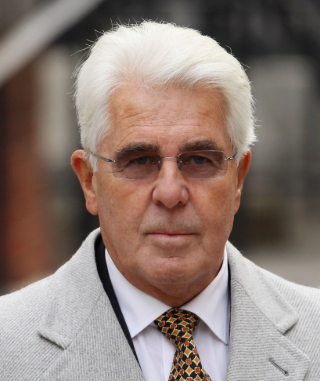
The Architect of Shadows on Fleet Street
For over four decades, British public culture was quietly manipulated by a man sitting in a modest office on New Bond Street in central London. Max Clifford was not an elected official, a newspaper proprietor, or a media mogul with television studios at his disposal. Yet during the golden age of British tabloid journalism throughout the nineteen-eighties, nineties, and early two-thousands, his influence over what the public read, believed, and discussed was virtually absolute. Editors at major national newspapers, including the Sun, the News of the World, the Daily Mirror, and the People, relied on his phone calls to fill their front pages day after day.
Born in Kingston upon Thames in nineteen forty-three, Clifford grew up in a working-class environment that gave him a sharp, instinctual understanding of human curiosity, moral hypocrisy, and public appetite for scandal. He entered press relations during the sixties, working with music acts before realizing that the real money and influence lay in managing personal reputation. By the nineteen-eighties, he had established Max Clifford Associates, positioning himself as the indispensable gatekeeper standing between high-profile celebrities, politicians, business leaders, and the aggressive press corps of Fleet Street.
What made Clifford unique was his mastery over fear. In an era when tabloid circulation ran into millions of printed copies every morning, a single front-page headline could destroy a career, break a marriage, or bring down a government minister. Clifford positioned himself as both shield and sword. To wealthy celebrities, he was the protective force who could ensure damaging personal secrets never saw the light of day. To struggling starlets, former lovers, and whistleblowers, he was the agent who could turn a private secret into a life-changing financial payout. To newspaper editors, he was the primary supplier of sensational exclusives that could add one hundred thousand sales to a single morning run.
Behind his genial persona, soft-spoken charm, and crisp business attire lay a cold, transactional approach to human relationships. For Clifford, personal lives were raw material to be bought, sold, traded, or buried. He understood before almost anyone else in media that public relations was not merely about writing press releases or managing positive image campaigns. True power resided in controlling the flow of secrets, manipulating public emotion, and maintaining a constant state of tension between public figures and the press.
The Barter Economy of Story Suppression
At the heart of Max Clifford’s media empire was a system of story bartering that fundamentally distorted British press reporting. While the public assumed that national newspapers independently investigated news stories and published facts based on journalistic merit, the reality behind the scenes was often a calculated trade brokered directly by Clifford.
The mechanics of this barter economy were deceptively simple yet extraordinarily effective. When a tabloid reporter or rival source uncovered damaging information about one of Clifford’s premier, high-paying clients, the publicist would not simply issue a denial or threaten legal action. Instead, he would contact the newspaper editor and offer a trade. In exchange for killing the damaging article about his prized client, Clifford would promise to hand over an equally juicy, exclusive scandal involving a lower-profile figure, a political opponent, or a vulnerable secondary party.
This trading mechanism created a dark dynamic where minor figures were routinely sacrificed to protect major personalities. A young model or aspiring actor seeking career advice might share personal confidences with Clifford, only to find those very secrets packaged and sold to the Sun or the News of the World weeks later to cover up the misdeeds of a powerful television host or corporate executive. The publicist charged a standard twenty percent commission on every story he sold, earning vast sums while simultaneously cementing his reputation as an untouchable power broker.
Newspaper editors were complicit in this arrangement because it guaranteed a steady stream of sensational headlines without the financial cost or legal uncertainty of prolonged investigative journalism. Clifford made their jobs easy. He delivered fully formed narratives complete with dramatic quotes, exclusive photographs, and personal interviews. In return, editors allowed him to dictate terms, suppress stories that threatened his inner circle, and shape the public narrative around major political and cultural events.
This barter system effectively replaced genuine journalism with engineered public relations. Readers buying morning newspapers believed they were reading authentic news reports, completely unaware that the presence or absence of a story on page one was the result of a secret negotiation conducted over lunch at an expensive Mayfair restaurant. Clifford operated as a one-man censor and publisher, deciding whose secrets were exposed to national scrutiny and whose sins were quietly erased.
Manufacturing History: Freddie Starr and the Hamster Lie
Perhaps no story better illustrates Max Clifford’s willingness to fabricate public reality than the infamous nineteen eighty-six headline that became a permanent fixture of British pop culture history: Freddie Starr Ate My Hamster.
The incident began when a contact phoned a tabloid news desk alleging that the eccentric comedian Freddie Starr had placed a live hamster between two slices of bread and eaten it following a performance. Appalled by the bizarre rumor and terrified that it would ruin his public standing, Starr immediately called Clifford, begging his publicist to suppress the story and clear his name.
Clifford recognized the promotional potential of the absurd claim instantly. Rather than killing the story, he advised the Sun newspaper to print it as a massive front-page splash. He convinced a hesitant Starr that despite the bizarre nature of the claim, the sheer shock value would generate millions of pounds worth of free publicity just as the comedian was preparing for a major national tour.
On March thirteen, nineteen eighty-six, the Sun published the headline across its front page, accompanied by a dramatic recounting of the supposed event. The story sparked nationwide outrage, laughter, and fascination. It dominated broadcast discussions, made international news, and solidified Freddie Starr as a household name across the United Kingdom.
The entire tale was completely fabricated. Freddie Starr had never eaten a hamster, nor had the alleged incident taken place. Yet the myth took on a life of its own, demonstrating Clifford’s profound insight into the mechanics of tabloid media: truth was entirely secondary to entertainment value. If a story was memorable, shocking, and impossible to ignore, the public would consume it regardless of whether it contained a single shred of factual truth.
For Starr, the headline proved to be a double-edged sword. While it filled theater seats and boosted ticket sales for years, it also permanently overshadowed his comedic work, leaving him forever associated with a fake rodent story. For Clifford, however, it was a triumphant demonstration of his ability to manufacture public reality out of thin air, proving to potential clients that he could turn even the most absurd accusation into a commercial victory.
Key Tabloid Deals and PR Operations Mediated by Max Clifford
| Year and Event Period | Featured Personality or Client | Media Outlet or Platform | Primary Story Narrative or Headline | Public Relations Strategy and Commercial Mechanics |
|---|---|---|---|---|
| Nineteen Eighty-Six | Freddie Starr | The Sun Newspaper | Freddie Starr Ate My Hamster | Invented outrageous fake headline to generate millions in free publicity prior to national tour |
| Nineteen Ninety-Two | Antonia de Sancha and David Mellor | The Sun and News of the World | Cabinet Minister Affair and Toe Sucking Allegations | Sold interview for twenty-five hundred pounds monthly fee, fabricating Chelsea football shirt details |
| Nineteen Ninety-Four | Bienvenida Lady Buck | National Tabloid Outlets | Defense Chief Affair and High Society Exposé | Brokered high-value kiss and tell contract exposing government figures while collecting twenty percent fee |
| Nineteen Ninety-Seven | Paul Stone | News of the World | Teenage Whistleblower and Political Scandal | Secured one hundred thousand pounds for story exposing private life of sitting Member of Parliament |
| Nineteen Ninety-Eight | Jeff and Jenny Bramley | National Broadsheets and Tabloids | Runaway Guardian Open Letter Campaign | Drafted open public letter pleading for sympathy while offering free advice to build public standing |
| Nineteen Ninety-Nine | Bettina Rinse | Evening Standard and National Press | High Society Gala Mystery Appearance | Staged public appearances with mysterious blonde companion to generate curiosity and media coverage |
| Nineteen Ninety-Nine | Ted Francis and Jeffrey Archer | News of the World and Police Inquiry | Lord Archer Cash for Alibi Exposure | Brokered one hundred fifty thousand pound deal revealing false alibi in libel trial, leading to perjury conviction |
| Two Thousand Four | Rebecca Loos | News of the World and Channel Five | Football Icon Personal Assistant Confessions | Commercialized private personal assistant story into national media stardom and reality TV bookings |
| Two Thousand Four | Faria Alam | National Tabloid Outlets | National Football Coach Relationship Scandal | Managed press fallout and exclusive interview rights for high-profile football association figure |
| Two Thousand Seven | Shilpa Shetty | Channel Four Celebrity Big Brother | International Reality Show Bullying Defense | Handled racial bullying controversy on live TV, transforming client into international cultural icon |
| Two Thousand Eight | Kerry Katona | National Tabloid and Magazine Press | Reality Star Personal Crisis and Rehabilitation | Managed personal image through continuous magazine exclusives, commercial endorsements, and TV appearances |
| Two Thousand Nine | Jade Goody | Living TV and National Print Outlets | Terminal Illness Wedding and Public Final Days | Negotiated multi-million pound broadcast and print rights to secure financial future for surviving children |
| Two Thousand Nine | Alfie Patten Family | National Print and Television Press | Thirteen Year Old Fatherhood Media Frenzy | Represented family during intense tabloid frenzy over underage pregnancy, collecting standard commission |
Bringing Down Ministers: David Mellor, Chelsea Shirts, and Political Fallout
While Clifford built his fortune on showbiz gossip, his most potent media weapons were deployed against British politicians. During the nineteen-nineties, John Major’s Conservative government preached a return to traditional family values under its Back to Basics initiative. Clifford transformed this political vulnerability into a lucrative goldmine.
His most devastating political operation occurred in nineteen ninety-two, involving the Heritage Secretary David Mellor. Mellor was a rising cabinet minister tasked with regulating the tabloid press, making him an ideal target for tabloid editors eager to neutralize political pressure. When actress Antonia de Sancha began an extramarital affair with Mellor, she sought out Clifford to manage her story.
Clifford recognized the immense commercial and political value of the scandal. He organized a series of exclusive interviews with the Sun, charging de Sancha a monthly retainer of two thousand five hundred pounds while securing massive payouts for the disclosures. However, Clifford knew that a routine infidelity story was not enough to guarantee maximum headlines. To make the scandal irresistible to the public, key sensational details were introduced into the press coverage.
The publicist encouraged the narrative that Mellor had engaged in unusual romantic acts, including wearing a Chelsea Football Club jersey in bed and engaging in toe-sucking encounters. These absurd, vivid details transformed a private affair into a national laughingstock. Mellor was relentlessly mocked in Parliament, on television comedy shows, and across national front pages.
The relentless media pressure shattered Mellor’s public standing, ruined his marriage, and ultimately forced his resignation from the cabinet. The scandal crippled the government’s efforts to regulate tabloid press intrusion, effectively delivering a decisive victory to newspaper editors.
The human cost of the operation was severe. Antonia de Sancha, thrust into an overwhelming media spotlight and exploited by the press machinery Clifford controlled, later revealed that the intense public scrutiny and humiliation left her contemplating ending her own life. For Clifford, however, the affair was a masterpiece of media manipulation that demonstrated his ability to bring down government ministers while pocketing substantial fees.
The Twenty Percent Empire and the Commodification of Scandal
At the center of Max Clifford Associates was a financial business model built entirely on commission fees. Clifford operated on a strict twenty percent cut of every story, contract, and media deal he negotiated for his clients.
This financial structure created an incentive system where scandal was directly monetized. The more shocking, intrusive, or damaging a story was, the higher the financial payout from tabloid news desks, and consequently, the larger Clifford’s twenty percent fee became. Human emotion, personal privacy, and ethical boundaries were translated directly into ledger entries.
To maintain his income, Clifford cultivated a diverse stable of clients spanning the entire spectrum of British public life. He represented world-famous entertainers like Simon Cowell, sports stars, television presenters, and reality TV figures, alongside anonymous individuals who suddenly found themselves at the center of national breaking news.
His office became a marketplace where personal secrets were appraised like physical commodities. A kiss-and-tell confession from a former girlfriend might be priced at fifty thousand pounds, while a political revelation involving a sitting Member of Parliament could command upwards of one hundred thousand pounds. Clifford handled every transaction personally, negotiating directly with editors over landline phones while sitting behind his desk surrounded by framed newspaper front pages celebrating his greatest hits.
Clients were often mesmerized by his apparent power. He promised to protect them from media intrusion, build their public brands, and secure lucrative television contracts. Yet many discovered too late that once they entered Clifford’s orbit, their lives were no longer entirely their own. If a client attempted to break away or refuse a suggested story, Clifford possessed the media contacts and institutional leverage to turn the press against them instantly.
Betrayal of Royalty: Princess Diana and the Fitness Photo Scandal
Max Clifford’s reach extended into the highest circles of British society, including the Royal Family. During the turbulent nineteen-nineties, as the marriage of Prince Charles and Princess Diana broke down publicly, Clifford actively exploited the global media appetite for royal disclosures.
Though Clifford occasionally claimed that Princess Diana had personally approached him for public relations guidance, his actual involvement in her life was marked by commercial exploitation and privacy violation. He routinely represented individuals who possessed sensitive personal details, photographs, or private communications concerning the Princess of Wales.
In nineteen ninety-three, Clifford acted as the press agent for Bryce Taylor, the owner of a gym in West London where Princess Diana exercised. Taylor had secretly installed hidden camera equipment above weight machines in the gym, capturing candid photographs of the royal taking part in workout sessions wearing gym attire.
Recognizing the immense global financial value of these intrusive images, Clifford brokered their sale to media outlets worldwide. The photographs were published on front pages, causing immense distress to Princess Diana and sparking intense debate regarding media ethics, personal privacy, and the creeping surveillance culture targeting public figures.
Clifford also brokered the sale of personal disclosures from the assistant of rugby star Will Carling, providing the News of the World with intimate details regarding Carling’s close friendship with the Princess. Through these operations, Clifford proved that no individual, regardless of royal stature or public affection, was beyond the reach of his commercial machine.
He commodified royal privacy, using sensitive personal details to fuel tabloid circulation while collecting his standard twenty percent fee. His actions demonstrated a complete disregard for the emotional wellbeing of those at the center of his stories, viewing royal distress merely as another high-value asset to be traded on the open market.
The Unravelling of Jeffrey Archer and the Cash for Alibi Plot
In nineteen ninety-nine, Clifford played a central role in one of the most explosive political scandals in modern British history: the perjury trial and public downfall of former Conservative Party deputy chairman Lord Jeffrey Archer.
Twelve years earlier, in nineteen eighty-seven, Archer had won a high-profile libel lawsuit against the Daily Star newspaper over allegations that he had paid for the services of a sex worker in London. Archer received five hundred thousand pounds in damages after presenting a detailed personal alibi for the night in question.
However, in November nineteen ninety-nine, as Archer was preparing to run as the Conservative candidate for Mayor of London, Clifford brokered a sensational story with the News of the World. He represented Ted Francis, a television producer and former friend of Archer. Francis revealed that Archer had asked him to concoct a false alibi for the night at the center of the nineteen eighty-seven libel trial.
Clifford negotiated a deal worth one hundred fifty thousand pounds for Francis’s revelations, ensuring maximum publicity across national newspapers. The disclosures triggered a formal criminal investigation by Scotland Yard into allegations of perjury and perverting the course of justice.
The resulting trial at the Old Bailey in two thousand one ended in a devastating defeat for Archer. The peer was convicted of perjury and sentenced to four years in prison, suffering complete political ruin and public disgrace. The case exposed the deep corruption at the heart of political establishment figures while highlighting Clifford’s ability to reshape British political history through brokered media deals.
Characteristically, Clifford celebrated the outcome as a triumph for his agency. While claiming he had acted in the public interest by exposing political dishonesty, he quietly collected thirty thousand pounds in commission from the Francis deal. For Clifford, exposure of political corruption was never merely a matter of civic duty; it was a highly profitable media enterprise.
Reality Television and the Commodity of Vulnerability: From Jade Goody to Kerry Katona
As traditional celebrity culture evolved in the early two-thousands with the rise of reality television, Clifford adapted his methods to exploit a new generation of vulnerable stars. Shows like Big Brother, I’m a Celebrity… Get Me Out of Here!, and Popstars created overnight personalities who lacked media experience, media training, or institutional protection.
Clifford became the primary manager for many of these reality TV icons, most notably Jade Goody. Goody had risen to fame on Big Brother in two thousand two, becoming a divisive figure before building a successful career through perfume launches, fitness videos, and media appearances managed by Clifford.
In two thousand seven, Goody became embroiled in an international media storm after making racially offensive comments toward Indian actress Shilpa Shetty on Celebrity Big Brother. As public backlash threatened to destroy Goody’s career, Clifford stepped in to manage the fallout. He crafted a public rehabilitation strategy, arranging tearful television apologies, charitable visits to India, and exclusive magazine features that framed Goody as an uneducated young woman seeking personal redemption.
Remarkably, Clifford also represented Shilpa Shetty during the same period, effectively managing both sides of an international racism scandal. By controlling the public statements of both victim and perpetrator, Clifford ensured that his agency profited from every headline, interview, and television appearance generated by the crisis.
The peak of Clifford’s involvement with Goody occurred in two thousand eight and two thousand nine, following her diagnosis with terminal cervical cancer. Recognizing that public interest in Goody’s health was overwhelming, Clifford negotiated multi-million pound deals with Living TV, OK! Magazine, and national newspapers to document her final months, her wedding to Jack Tweed, and her battle with illness.
Clifford argued that these deals were designed to secure the financial future of Goody’s two young sons after her death. However, critics argued that the relentless commercialization of a young mother’s terminal illness represented the ultimate commodification of human suffering. Every stage of Goody’s decline was turned into media content, published across glossy magazine covers until her death in March two thousand nine.
Clifford applied similar tactics to former pop star Kerry Katona, managing her personal crises, bankruptcy proceedings, and marital breakdowns through a continuous cycle of paid magazine exclusives. For reality stars, Clifford offered wealth and fame, but the cost was absolute public exposure of their most personal vulnerabilities.
The Dark Side of Gatekeeping: New Bond Street as a Private Fiefdom
Behind the glossy facade of celebrity deals, television appearances, and tabloid headlines lay a far darker reality inside Max Clifford’s agency. For decades, Clifford utilized his position as Fleet Street’s supreme gatekeeper to build a private fiefdom at his offices in New Bond Street, London.
Aspiring young women—models, actresses, singers, and teenagers seeking a breakthrough in the competitive entertainment industry—were routinely referred to Clifford. To these starstruck individuals, Clifford appeared to hold the keys to stardom. He boasted of his ability to put anyone on front pages, secure acting auditions, or arrange meetings with Hollywood producers like Charles Bronson.
In reality, Clifford used this immense power imbalance to exploit vulnerable young women. Inside his private office suites, away from public view, he subjected young women to systematic sexual abuse and indecent assault. He cultivated an environment of absolute intimidation, warning victims that if they ever spoke out or resisted his advances, he possessed the power to destroy their reputations and ensure they were permanently blacklisted across show business and the press.
During his nineteen ninety-four trial decades later, prosecution lawyers described how Clifford operated his New Bond Street premises as a sexual fiefdom. Young women who arrived expecting professional advice or film auditions were instead trapped, pinned down, and subjected to indecent assaults. In one horrific case revealed during court proceedings, Clifford forced a teenager into performing sexual acts after falsely promising her an acting role in a major feature film.
Clifford also hosted private, barely concealed sex parties involving young women whose enthusiasm he publicly claimed was genuine. In reality, many were cowed into silence by his overwhelming media influence. Investigator Nick Fielding began probing Clifford’s conduct for the Mail on Sunday in the nineteen-nineties, but the resulting investigative report was mysteriously killed before publication, demonstrating Clifford’s uncanny ability to protect his own dark secrets.
For over thirty years, Clifford maintained a dual identity: publicly presented as a respected, charming media personality frequently invited onto television news programs to discuss press ethics, while privately operating as a serial predator protected by the very media machine he controlled.
Operation Yewtree and the Collapse of an Empire
The facade finally fractured in late two thousand twelve. In the wake of the Jimmy Savile scandal, Scotland Yard launched Operation Yewtree, a massive criminal investigation into historical sexual offenses committed by high-profile media personalities.
On December six, two thousand twelve, detectives from Operation Yewtree arrested Max Clifford at his home in Surrey. The master of media manipulation, who had spent fifty years controlling newspaper front pages, suddenly found himself the subject of police mugshots and breaking news banners.
In April two thousand fourteen, Clifford stood trial at Southwark Crown Court in London, charged with multiple counts of indecent assault against four female victims aged between fourteen and nineteen at the time of the offenses. The courtroom heard harrowing testimony from women who described how Clifford had used his celebrity connections, fake film auditions, and promises of fame to bully them into sexual acts between nineteen seventy-seven and nineteen eighty-five.
Throughout the eight-week trial, Clifford remained defiant. He refused to show remorse, labeling his accusers as opportunists, fantasists, and liars seeking financial compensation. He posed for photographs outside the courthouse every morning, surrounded by supporters and family members, maintaining the delusion that his media charm could sway public opinion and legal justice.
However, the evidence presented by the Crown Prosecution Service was overwhelming. Multiple independent witnesses corroborated each other’s accounts, describing identical predatory methods and intimidation tactics used by Clifford over several decades. On April twenty-eight, two thousand fourteen, the jury found Clifford guilty on eight counts of indecent assault.
At the age of seventy-one, the former tabloid king was sentenced to eight years in prison. His PR empire collapsed overnight as celebrity clients rushed to sever ties, and Max Clifford Associates ceased trading. In December two thousand seventeen, while serving his sentence at Her Majesty’s Prison Littlehey, Clifford suffered a fatal heart attack and died at the age of seventy-four, maintaining his innocence to the end.
The Ultimate Irony: Hacked Phones and the Unravelling of the Master Manipulator
The final years of Max Clifford’s career were defined by a profound, poetic irony that highlighted the dark hypocrisy of tabloid media culture.
For decades, Clifford had worked hand in glove with senior editors at the News of the World and the Sun, including Andy Coulson and Rebekah Brooks. He relied on these relationships to publish stories, suppress scandals, and command massive fees. However, around two thousand five, Clifford experienced a bitter falling out with Coulson, and stories about his high-profile clients suddenly began appearing in rival publications without his consent.
Unbeknownst to Clifford, the very newspaper journalists he had traded secrets with for decades had turned their surveillance machinery against him. Private investigators hired by the News of the World had intercepted Clifford’s mobile phone voicemails, hacking his private communications to steal stories about his celebrity clients directly, bypassing his twenty percent commission fee entirely.
When the illegal phone-hacking scandal erupted across British media in two thousand eleven, leading to the closure of the News of the World and the establishment of the Leveson Inquiry into press ethics, Clifford appeared as a prominent witness. He pompously condemned phone-hacking as a cancer on journalism, positioning himself as a defender of privacy and ethical standards.
Yet the reality was that Clifford had helped create the toxic press culture that ultimately consumed him. By establishing the expectation that private lives were public property and that false stories were acceptable front-page fodder, Clifford paved the way for the extreme journalistic intrusion of the phone-hacking era. He was both the architect and the victim of Fleet Street’s worst excesses.
Frequently Asked Questions Regarding Max Clifford and Tabloid PR Politics
How did Max Clifford suppress damaging news stories about his celebrity clients?
Clifford utilized a barter system of story suppression. When a tabloid newspaper uncovered a damaging scandal involving a major client, Clifford offered the editor an alternative, highly lucrative story involving a lower-profile figure or political target in exchange for burying the original story.
What was the significance of the Freddie Starr hamster headline?
The nineteen eighty-six headline Freddie Starr Ate My Hamster was a completely manufactured news story encouraged by Clifford to generate massive publicity for comedian Freddie Starr prior to a national tour. It demonstrated how tabloid media prioritized sensational entertainment over factual accuracy.
How much did Max Clifford charge for his public relations services?
Clifford operated on a standard twenty percent commission model for every story, interview, or media contract he negotiated. This gave him a direct financial incentive to monetize high-drama scandals and human vulnerability.
What was Operation Yewtree and how did it lead to Clifford’s conviction?
Operation Yewtree was a Scotland Yard investigation established in two thousand twelve to probe historical sexual offenses by media personalities. In two thousand fourteen, Clifford was convicted of eight counts of indecent assault against four female victims and sentenced to eight years in prison.
Did Max Clifford admit to his crimes before his death?
No. Clifford maintained his innocence throughout his trial and imprisonment, labeling his victims as liars and fantasists. He died in prison in December two thousand seventeen following a heart attack while planning an appeal.
The Legacy of Commodification and the Evolution of Modern Public Relations
The story of Max Clifford is not merely the biography of one flawed individual; it is an examination of an era in media history when the boundaries between journalism, entertainment, and public relations collapsed entirely.
During the height of Clifford’s career, the British tabloid press operated with unprecedented market dominance. Newspapers were printed by the millions, generating vast advertising revenues and exercising immense political influence. In this environment, Clifford recognized that public attention was the most valuable currency in society. By positioning himself at the intersection of media demand and celebrity supply, he exerted control over what millions of people discussed at breakfast tables, in workplaces, and across public life.
His approach to media management permanently altered how public relations is practiced globally. Before Clifford, press relations was largely a protective or promotional function focused on drafting official press statements, organizing product launches, or coordinating formal photo opportunities. Clifford pioneered an aggressive, proactive strategy that treated reputation as a liquid asset to be traded, inflated, or liquidated based on market conditions.
He taught the media industry that scandal could be controlled through strategic disclosure. Rather than allowing a crisis to unfold organically, Clifford demonstrated that by releasing controlled portions of information—or by orchestrating a bigger distraction elsewhere—a publicist could dictate the timing, tone, and resolution of a narrative. This methodology became standard practice across corporate PR, political spin rooms, and celebrity talent management worldwide.
However, the human cost of this system was devastating. The commodification of individuals meant that personal privacy, mental health, and truth were routinely sacrificed for commercial gain. Young models, secondary political actors, and vulnerable individuals were treated as collateral damage in a relentless competition for front-page dominance. The trauma experienced by those whose lives were transformed into tabloid headlines persisted long after the newspapers were discarded.
Furthermore, Clifford’s methods eroded public trust in news reporting. By routinely planting false stories, inflating minor incidents, and brokering secret alibis for political figures, he contributed to a culture of cynicism where audiences began to doubt the authenticity of all media coverage. The line between investigated truth and manufactured PR was deliberately blurred to maximize profit.
Press Regulation After the Fall of the Tabloid King
The conviction and death of Max Clifford marked the end of an era for Fleet Street, but the structural questions raised by his career continue to challenge modern media ecosystems.
The Leveson Inquiry, established in the wake of the phone-hacking scandal and Clifford’s exposure, sought to rebuild public trust through independent press regulation, tighter legal frameworks surrounding privacy, and clearer ethical boundaries for journalists. The inquiry exposed the unhealthy closeness between senior police officers, political leaders, press proprietors, and publicists like Clifford, forcing institutions to implement stricter governance and transparency measures.
In the contemporary digital era, the nature of celebrity public relations has evolved dramatically. Social media platforms, direct-to-consumer digital channels, and creator-led podcasts have decentralized media distribution. Celebrities no longer depend entirely on tabloid editors or gatekeepers like Clifford to reach their audiences; they can publish statements, share personal updates, and manage crises directly through their own verified accounts.
Yet despite these technological transformations, the core psychological mechanics that Clifford exploited remain as potent as ever. The public appetite for intimacy, scandal, moral judgment, and celebrity downfall has not diminished; it has merely migrated from printed morning tabloids to algorithmic feeds, online video essays, and viral digital threads.
Modern digital media continues to grapple with the challenge of distinguishing verified investigative reporting from manufactured PR spin. Clickbait headlines, sensationalized video thumbnails, and outrage-driven algorithms operate on principles remarkably similar to Clifford’s twenty percent commission model: monetizing human curiosity and emotional shock for financial return.
Reflecting on the dark world of Max Clifford serves as a vital warning for media consumers, journalists, and public figures alike. It reminds society that behind every sensational headline, exclusive interview, or sudden public downfall lies a complex web of commercial interests, power dynamics, and human choices. True accountability requires moving beyond manufactured narratives to demand transparency, evidence, and fundamental respect for human dignity.