| Executive Figure or Entity | Corporate Role and Jurisdiction | Primary Event or Strategic Decision | Industry and Market Impact |
|---|---|---|---|
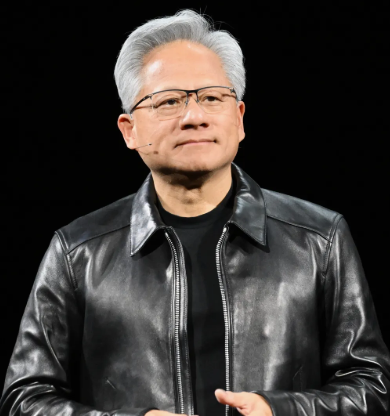
| Jensen Huang | Co-Founder, Former President, CEO, and Board Member | Resigned all executive and board positions effective immediately | Erased over three hundred billion dollars in market value in a single trading session |
| Colette Kress | Executive Vice President, CFO, and Interim CEO | Appointed Interim Chief Executive Officer while retaining CFO duties | Assumes operational control ahead of third quarter fiscal twenty twenty seven earnings |
| Harvey C. Jones | Longtime Board Member and Technology Investor | Appointed first-ever Chair of the Board of Directors | Establishes independent board oversight and oversees global CEO talent search |
| Wachtell, Lipton, Rosen & Katz | Independent External Legal Counsel | Retained by board to conduct independent investigation | Examines potential foreign intelligence targeting and corporate governance protocols |
| Alice Huang | Chief Executive of Megaspeed Data Center | Singapore-based customer named in foreign intelligence inquiries | Subject of federal scrutiny regarding potential national security risks |
| Kimberly Powell | President of Healthcare at NVIDIA | Executive officer named in secondary internal conduct disclosures | Highlighting internal corporate policy enforcement across executive ranks |
The Thirty Three Year Era Comes to a Sudden End in Silicon Valley
The global technology industry experienced an unprecedented earthquake on November twelfth twenty twenty six when Jensen Huang officially stepped down as President, Chief Executive Officer, and member of the Board of Directors at NVIDIA. His immediate departure brought a jarring conclusion to a thirty three year tenure that redefined modern computing, propelled the rise of artificial intelligence, and built a hardware empire valued at over four trillion dollars. For over three decades, the charismatic executive served as the undisputed face of the semiconductor revolution, recognizable worldwide by his signature black leather jacket, rapid-fire keynote presentations, and relentless engineering ambition. Under his watch, a startup hatched inside a San Jose diner booth evolved into the most critical infrastructure provider on planet Earth. His unexpected exit has sent shockwaves through Wall Street, national security agencies in Washington, and corporate boardrooms across Asia and Europe.
The circumstances surrounding the departure of the Silicon Valley titan are as dramatic as they are unexpected. What began as internal whispers regarding personal relationships quickly spiraled into a high-stakes corporate crisis involving independent board investigations, national security concerns, and executive conduct reviews. Over a whirlwind five-day period, disclosures regarding an extramarital relationship with a Singapore-based businesswoman combined with a secondary report involving a senior executive officer inside the company created insurmountable pressure. As the board of directors convened late on Wednesday evening, the executive leadership structure that had remained unchanged since nineteen ninety three came undone. By Thursday morning, official statements confirmed that the founder had severed all formal ties with the organization he built from scratch.
Unpacking the Official Transition Announcement from Santa Clara
The official announcement released through the corporate newsroom in Santa Clara presented a stark, measured narrative that contrasted sharply with the chaotic media reporting unfolding online. The press release confirmed that the board of directors accepted the immediate resignation of Jensen Huang from his roles as President, Chief Executive Officer, and member of the Board. Notably absent from the corporate statement was any explicit reference to the personal relationship disclosures, intelligence inquiries, or internal investigations that dominated international headlines. Instead, the formal document focused squarely on organizational continuity, executive appointments, and expressions of gratitude for the founder’s historical contributions to the technology sector.
The board emphasized that the enterprise stands as one of the most consequential technology institutions in human history, built upon a foundation of engineering excellence, deep customer integration, and world-class talent. In their public remarks, board members acknowledged the profound legacy established over thirty three years of continuous leadership, noting that the computing paradigms pioneered under his guidance remain central to modern digital society. However, behind the carefully sanitized language of corporate public relations lay an immediate operational challenge: replacing an executive who exercised absolute control over every major technical, strategic, and financial decision within the world’s most valuable semiconductor enterprise.
Colette Kress Steps Forward as Interim Chief Executive Officer
To maintain operational stability during this period of dramatic transition, the board of directors appointed Executive Vice President and Chief Financial Officer Colette Kress to serve as Interim Chief Executive Officer. Kress will retain her responsibilities as Chief Financial Officer while assuming the top executive role, ensuring that the company’s fiscal discipline and strategic execution remain aligned as an international search for a permanent successor begins. Kress joined the firm in September twenty thirteen and has spent over thirteen years guiding the financial strategy through a period of exponential growth, expanding annual revenues from single-digit billions into an unprecedented global powerhouse.
Prior to joining the organization, Kress amassed nearly twenty five years of high-level financial experience across leading technology institutions, including extended tenures at Microsoft and Cisco Systems. During her time at Microsoft, she served as Chief Financial Officer for the business division, managing complex multi-billion-dollar operational budgets and global sales channels. At Cisco, she directed financial planning across regional markets and hardware divisions. Her intimate knowledge of corporate operations, major enterprise client contracts, and Wall Street expectations positions her as a stabilizing presence during a volatile moment in the company’s history.
Harvey Jones Appointed Board Chair to Steer Governance Reform
In a unprecedented governance move designed to restore investor confidence and reinforce independent oversight, the board of directors appointed longtime director Harvey C. Jones to serve as the first-ever Chair of the Board. Throughout the thirty three year history of the firm, the roles of Chief Executive Officer and Chairman of the Board were unified under Jensen Huang, giving the founder total authority over board agendas, executive compensation, and corporate strategy. By establishing an independent Board Chair, the directors signaled a permanent shift toward formal corporate governance standards typical of mature mega-cap technology enterprises.
Harvey Jones brings over thirty years of experience as an entrepreneur, senior technology executive, and active venture capital investor in Silicon Valley. He previously served as Chief Executive Officer and Executive Chairman of Synopsys, a electronic design automation firm that produces essential software tools for semiconductor architecture. His deep technical background in chip design, combined with decades of board-level governance experience, provides the independent directors with seasoned leadership. In his initial public comments as Chair, Jones emphasized that the enterprise possesses an experienced executive team capable of delivering on product roadmaps and customer commitments without operational delay.
The Foreign Intelligence Investigation and Wachtell Lipton Retainer
The catalyst behind the leadership collapse originated in late October and early November twenty twenty six, when reports surfaced indicating that senior executive leadership had become the focus of a sophisticated foreign intelligence operation. In response to mounting concerns, the independent members of the board retained the law firm Wachtell, Lipton, Rosen & Katz to conduct an exhaustive independent investigation. Wachtell Lipton, renowned for handling high-stakes corporate crises, white-collar defense inquiries, and board-level governance reviews, was tasked with examining whether confidential technical specifications, strategic customer data, or national security trade secrets had been compromised.
Initial company statements issued on November eighth acknowledged that the directors had initiated an inquiry regarding potential foreign targeting. The scope of the legal review expanded rapidly as investigators examined personal communications, travel itineraries, and international business meetings. While early corporate statements maintained that executive leadership remained fully operational, the retention of premier legal counsel indicated that the board recognized the existential risk posed by national security scrutinies. In an era where advanced artificial intelligence hardware is classified as vital national infrastructure by federal agencies, any vulnerability involving foreign intelligence operations creates severe regulatory and legal exposure.
The Singapore Connection: Alice Huang and Megaspeed Data Center Operations
Central to the national security inquiry was an extramarital relationship involving Alice Huang, a Singapore-based businesswoman and chief executive of Megaspeed, a major data center operator across Southeast Asia. Despite sharing a surname, Alice Huang bears no family relation to the former NVIDIA chief. Megaspeed emerged in recent years as a prominent buyer of high-performance graphics processing units, building large-scale compute clusters across Asian technology hubs. Intelligence reports referenced in national media outlets indicated that Western security services had raised flags regarding Megaspeed’s supply chain connections and potential ties to foreign state entities seeking access to restricted silicon.
Public appearances by the pair at international technology summits, private dinners, and industry gatherings over a multi-year period had drawn scrutiny from counterintelligence analysts. While the former executive firmly denied any knowledge that Alice Huang operated on behalf of foreign intelligence services or that proprietary technical secrets were ever transferred, the relationship created a severe conflict of interest. On Sunday November eighth, the chief executive admitted publicly that he had been unfaithful to his wife of over forty years, Lori Huang, setting off a chain reaction that destroyed his executive standing within days.
The Hotel Video Footage and the Second Executive Relationship Disclosure
While the board struggled to contain the national security narrative surrounding the Singapore disclosures, a secondary internal crisis erupted on Wednesday November eleventh. Reporting by the New York Times revealed that the founder had engaged in a separate long-term extramarital relationship with a senior internal officer: Kimberly Powell, President of Healthcare at NVIDIA. Powell, who led the company’s expanding medical artificial intelligence, drug discovery, and digital biology divisions, was a prominent public figure within the enterprise who regularly appeared alongside the chief executive at global technology conferences.
The reporting detailed video footage captured inside a luxury hotel during a corporate technology conference in March twenty twenty six, depicting affectionate physical interactions between the two executives in public areas. The revelation of an un-disclosed relationship with a direct subordinate violated fundamental corporate governance policies regarding executive conduct and workplace relationships. For the independent board members, the emergence of a second relationship disclosure—occurring simultaneously with an ongoing foreign intelligence probe—rendered the founder’s position entirely un-tenable under published corporate ethics frameworks.
The Late Night Board Meeting That Redefined the Tech World
On Wednesday evening November eleventh, the board of directors convened an emergency session to determine the fate of the company’s founder. Joining the meeting were senior partners from Wachtell Lipton, legal risk advisors, and independent governance experts. For hours, directors weighed the catastrophic market impact of removing a legendary founder against the severe legal, regulatory, and ethical liabilities of retaining him. The presence of two concurrent relationship disclosures, combined with federal interest in foreign supply chain security, eliminated any middle ground.
Sources close to the deliberations indicated that while several long-serving directors expressed personal sadness over the downfall of a visionary leader, the consensus formed quickly that immediate executive resignation was the only viable path to protect corporate integrity. Late into the night, legal representatives finalized the terms of the departure, securing formal resignations from all executive posts and board seats. By sunrise on Thursday November twelfth, the paperwork was signed, the press releases were finalized, and the longest-running founder dynasty in modern semiconductor history was officially brought to a close.
Wall Street Plunge: Three Hundred Billion Dollars Wiped Out in Hours
When Wall Street trading opened on Thursday morning following the corporate announcement, the market reaction was immediate and punishing. Shares of the semiconductor giant opened down thirteen percent, triggering automated volatility halts across major financial exchanges. At the lowest point of morning trading, the sharp decline erased over three hundred and twenty billion dollars in market capitalization in a single trading session. Across the entire trading week, as rumors of board instability circulated, the stock shed over six hundred billion dollars in total value, bringing the corporate valuation down to approximately three point nine trillion dollars.
The massive sell-off reflected deep investor anxiety regarding the company’s leadership continuity, product execution velocity, and long-term strategic vision. As the primary beneficiary of the global generative artificial intelligence boom, the firm’s graphics processing units power the data centers of hyper-scaler tech titans including Microsoft, Alphabet, Meta, and Amazon. The sudden removal of the key architect who personally negotiated multi-billion-dollar chip allocations with global tech leaders created immediate uncertainty across financial markets, dragging down broader technology indexes worldwide.
The AI Arms Race Without Its Most Iconic Figurehead
The sudden departure of Jensen Huang leaves a massive leadership vacuum at the very apex of the global artificial intelligence arms race. Over the past four years, the semiconductor chief emerged as the chief evangelist and physical symbol of the generative computing revolution. While software executives like Sam Altman of OpenAI and Sundar Pichai of Alphabet built frontier artificial intelligence models, the underlying silicon compute engines were personally allocation-managed, architected, and championed by the NVIDIA chief. His absence leaves major technology firms without their primary strategic partner and visionary cheerleader.
Industry analysts emphasize that the global artificial intelligence ecosystem relies heavily on the physical roadmap established by the company. From the Hopper architecture that trained initial large language models to the newly deployed Blackwell liquid-cooled rack systems, the corporate technology trajectory was personally driven by the founder’s aggressive annual release cadence. Without his relentless pushing of engineering teams to compress multi-year silicon development cycles into twelve-month sprints, competitors and hyper-scalers alike face an uncertain timeline regarding future compute scale-ups and infrastructure deployments.
Inside the Unique Flat Management Structure of Jensen Huang
One of the most remarkable aspects of Jensen Huang’s executive tenure was his highly unusual organizational philosophy. Unlike traditional Fortune 50 corporate structures that feature rigid hierarchies, mid-level management layers, and strict chain-of-command protocols, the NVIDIA founder operated a radically flat organizational hierarchy. At the time of his resignation, the Chief Executive Officer had approximately fifty direct reports across engineering, sales, hardware design, finance, and software development, maintaining direct personal touch-points with every critical project across the enterprise.
This flat management model allowed the founder to eliminate bureaucracy, make rapid real-time strategic pivots, and support an intense, high-pressure accountability culture. He famously eschewed formal status report meetings in favor of open, company-wide email updates and spontaneous deep-dive reviews with frontline engineers. However, while this management style powered unprecedented agility during the company’s meteoric rise, it also created extreme key-person dependency. Transitioning away from a fifty-direct-report founder model represents one of the most complex organizational challenges facing Interim CEO Colette Kress and the board of directors.
From Denny’s Booth to Four Trillion Dollar Empire: The Thirty Three Year Rise
The story of NVIDIA began in nineteen ninety three inside a booth at a Denny’s diner in San Jose, California. Three young engineers—Jensen Huang, Chris Malachowsky, and Curtis Priem—met over coffee to discuss the future of computing. They reasoned that the next major leap in computer graphics would require dedicated 3D acceleration hardware for personal computers. Huang, a thirty-year-old former LSI Logic director and AMD microchip designer who immigrated to the United States from Taiwan as a child, assumed the role of President and Chief Executive Officer, a position he would hold for the next thirty three years.
The company’s journey was far from smooth, marked by near-bankruptcy moments, fierce competitive battles with rival graphics vendors, and bold strategic bets that took decades to pay off. In two thousand six, the executive made the fateful decision to launch CUDA, a parallel computing platform and programming model that allowed developers to use graphics processors for general-purpose mathematical calculations. For over a decade, Wall Street punished the stock for spending billions of dollars annually on CUDA software development with minimal immediate revenue returns. That long-term gamble ultimately laid the foundation for modern artificial intelligence, turning graphics processors into the engines of deep learning.
The Leather Jacket Persona and Global Celebrity in Modern Technology
Over his three-decade career, Jensen Huang cultivated an iconic personal brand that transcended traditional corporate executive norms. His signature look—a tailored black leather jacket paired with black jeans—became a ubiquitous symbol of technological power across global tech centers. From keynote addresses at Computex in Taipei to packed stadium presentations at GTC in San Jose, the executive projected a rock-star persona that captivated developers, retail investors, and world leaders alike. His willingness to sign fan autographs, pose for selfies, and deliver marathon three-hour keynotes without notes made him a uniquely beloved cultural figure.
This personal branding strategy was not merely stylistic; it served as a powerful commercial asset for the business. By positioning himself as an approachable technical visionary, the chief executive built an intense, fanatical developer ecosystem that resisted competing hardware platforms. His personal charisma opened doors at the highest levels of global diplomacy, enabling him to meet directly with prime ministers, presidents, and sovereign wealth leaders to secure multi-billion-dollar national artificial intelligence initiatives. The sudden disappearance of this larger-than-life figure leaves the company without its premier public ambassador.
Geopolitical Friction: Semiconductors US China Rivalry and National Security
The downfall of the semiconductor titan occurs against the backdrop of an escalating technological cold war between the United States and China. As advanced artificial intelligence chips have become recognized as critical instruments of economic competitiveness and military capability, the federal government enacted strict export controls restricting the shipment of high-end graphics processors to Chinese data centers. Navigating these regulatory hurdles placed the chief executive at the center of intense geopolitical tension as he sought to comply with Washington mandates while preserving lucrative Asian commercial markets.
The national security inquiries surrounding the Singapore disclosures highlighted the intense vulnerability of semiconductor leadership teams to foreign intelligence operations. Federal agencies in Washington have grown increasingly alarmed regarding potential clandestine efforts by foreign states to bypass export controls, acquire advanced silicon packaging technology, or recruit tech executives. The legal probe initiated by the board emphasizes the extreme sensitivity surrounding advanced compute technology, proving that even the most powerful corporate leaders operate under strict national security guardrails.
Reactions Across Silicon Valley: Donald Trump Elon Musk and Tech Leaders
News of Jensen Huang’s sudden resignation sparked a wave of public reactions from political figures and Silicon Valley elites. Former U.S. President Donald Trump publicly defended the departing executive during a media interview, praising his historic business achievements and describing him as an honorable business leader who performed an incredible job building an American technology champion. Trump’s supportive comments reflected a broader sentiment among conservative political figures who praised the founder’s contribution to domestic manufacturing and technological dominance.
Across Silicon Valley, prominent technology figures offered public support while acknowledging the gravity of the moment. Tesla and xAI Chief Executive Elon Musk expressed respect for the founder’s thirty three years of engineering achievements, noting that the entire artificial intelligence industry owes a massive debt to his pioneering vision. Leading venture capitalists and rival chip executives echoed these sentiments, describing the resignation as a bittersweet end to one of the most successful leadership runs in corporate history. However, despite public expressions of support, corporate boards across the tech sector quietly initiated reviews of their own executive conduct and security protocols.
Third Quarter Fiscal Twenty Twenty Seven Earnings Outlook and Investor Trust
The timing of the executive resignation adds significant pressure to an already critical financial calendar. NVIDIA confirmed that it will report its third quarter fiscal twenty twenty seven financial results on Tuesday November seventeenth at approximately one twenty PM Pacific Time, followed by a live investor conference call at two PM Pacific Time. Interim CEO Colette Kress will lead the earnings presentation, facing an international audience of institutional investors, financial analysts, and technology reporters eager for details regarding corporate stability, demand forecasts, and leadership succession plans.
Wall Street expectations for the third quarter financial results remain exceptionally high, with analysts forecasting record revenue figures driven by massive global shipments of Hopper and Blackwell architecture chips. The conference call represents a vital test of investor trust as Kress must convince capital markets that product delivery timelines, foundry partnerships with TSMC, and customer allocations remain completely unaffected by the founder’s exit. A strong financial performance accompanied by confident executive guidance could stabilize the stock, while any sign of operational friction could trigger renewed market volatility.
Analyzing the Board Governance Protocol and Corporate Ethics Directives
The swift removal of a founder controlling nearly four percent of corporate equity highlights the strict enforcement of corporate ethics directives in modern public enterprises. Modern corporate governance frameworks maintain zero-tolerance policies regarding undisclosed personal relationships between senior executives and direct subordinates, as well as unmonitored conflicts of interest involving major commercial customers. In the case of the Santa Clara chipmaker, the combination of internal relationship disclosures and potential national security risks left the independent directors with no legal leeway to compromise.
Corporate governance experts emphasize that public company boards owe a strict fiduciary duty to shareholders to enforce published codes of ethics uniformly across all management ranks. Exemption of a star founder from published relationship policies would expose the board to catastrophic shareholder derivative lawsuits and regulatory enforcement actions by the Securities and Exchange Commission. By acting decisively to enforce corporate standards, the independent directors demonstrated that institutional integrity supersedes individual star power, establishing a clear precedent for mega-cap technology governance.
The Role of Private Conduct Disclosures in Modern Corporate Leadership
The downfall of Jensen Huang illustrates a broader cultural shift across corporate America regarding executive accountability and private conduct. Over the past decade, numerous high-profile chief executives across technology, finance, and media sectors have been ousted following disclosures of personal relationships with employees or undisclosed conflicts of interest. What was once dismissed as private personal conduct is now evaluated directly through the lens of corporate risk management, employee equity, and governance integrity.
In high-technology enterprises where human capital and corporate reputation represent the primary sources of enterprise value, executive personal conduct directly impacts brand equity and talent retention. Disclosures involving senior leaders create complex workplace power dynamics that compromise organizational culture and expose firms to severe legal liability. In addition, when executive personal relationships intersect with international supply chains and foreign government Inquiries, the boundary between personal privacy and corporate risk completely disappears.
Evaluating the Competitor Advantage: AMD Intel and Custom Silicon Rivals
The leadership turmoil at the market leader creates an immediate strategic opening for semiconductor competitors and custom silicon developers. Chief rival Advanced Micro Devices, led by Chief Executive Officer Lisa Su, has made significant inroads into data center artificial intelligence hardware with its Instinct MI300 series accelerators. As hyper-scaler cloud providers evaluate multi-year hardware procurement plans, leadership instability at the market leader could encourage cloud providers to accelerate dual-sourcing strategies and allocate larger procurement budgets to alternative silicon architectures.
Simultaneously, hyper-scaler cloud giants including Amazon Web Services, Google, and Microsoft continue to invest heavily in proprietary in-house artificial intelligence silicon, such as Trainium, TPU, and Maia chips. By designing custom silicon tailored specifically for their internal software workloads, hyper-scalers seek to reduce their long-term dependence on commercial chip vendors. Leadership disruption at the dominant GPU provider reinforces the urgency for cloud giants to expand custom silicon deployments, potentially eroding the market leader’s ninety percent market share over the next decade.
The Supply Chain Imperative: TSMC Packaging and Blackwell Architecture
Beyond corporate governance and Wall Street expectations, the company’s ultimate success depends on physical manufacturing logistics managed through contract foundry partner Taiwan Semiconductor Manufacturing Company. The production of cutting-edge Blackwell architecture chips requires sophisticated CoWoS advanced packaging technologies, extreme ultraviolet lithography, and high-bandwidth memory integration. Managing these complex physical supply chains requires continuous technical coordination between engineering teams in Taiwan and California.
Interim CEO Colette Kress and senior operations executives must maintain flawless operational relationships with TSMC leadership to ensure that planned wafer allocations and packaging capacity commitments remain secure. Fortunately for shareholders, the technical teams managing foundry logistics, liquid-cooling architecture integration, and data center rack testing consist of seasoned engineering directors who remain focused on execution. So long as physical supply chains operate without disruption, the fundamental product roadmap driving multi-billion-dollar enterprise revenue streams will remain intact.
Frequently Asked Questions Regarding the Jensen Huang Resignation
What were the primary reasons for Jensen Huang resignation as NVIDIA CEO? The resignation followed disclosures regarding personal relationships, including an extramarital relationship with a Singapore-based businesswoman and a secondary disclosure involving a senior executive officer inside the firm, leading the board of directors to initiate an independent legal review.
Who has been appointed to lead NVIDIA following the resignation? Executive Vice President and Chief Financial Officer Colette Kress has been appointed Interim Chief Executive Officer while maintaining her financial duties, while board member Harvey C. Jones has been named the first-ever Chair of the Board.
How did financial markets react to the announcement of Jensen Huang exit? Company shares fell sharply during morning trading, erasing over three hundred billion dollars in corporate market value in a single session as investors evaluated executive continuity and future product roadmap execution.
When will NVIDIA report its upcoming quarterly financial results? The company confirmed that third quarter fiscal twenty twenty seven financial results will be reported on Tuesday November seventeenth, accompanied by a live executive conference call led by Interim CEO Colette Kress.
Is Jensen Huang remaining on the NVIDIA Board of Directors? No, Jensen Huang resigned effective immediately from all executive and corporate governance positions, including his seats as President, Chief Executive Officer, and member of the Board of Directors.
Detailed Comparative Analysis of Tech Founder Departures and Corporate Transitions
| Corporate Departure Case | Executive Figure & Enterprise | Primary Catalyst for Resignation | Long-Term Corporate Outcome |
|---|---|---|---|
| Apple Leadership Transition (2011) | Steve Jobs (Apple Inc) | Health considerations and formal succession planning | Tim Cook expanded market capitalization from three hundred billion to over three trillion dollars |
| Microsoft Executive Shift (2000) | Bill Gates (Microsoft) | Antitrust regulatory pressure and leadership transition | Steve Ballmer led enterprise expansion before Satya Nadella drove cloud computing boom |
| Uber Founder Exit (2017) | Travis Kalanick (Uber) | Workplace culture scandals and board investor pressure | Dara Khosrowshahi stabilized corporate governance and achieved public profitability |
| Intel Leadership Change (2018) | Brian Krzanich (Intel) | Personal conduct disclosure involving employee relationship | Accelerated manufacturing delays during ongoing competitive pressure from rivals |
| NVIDIA Leadership Crisis (2026) | Jensen Huang (NVIDIA) | Conduct disclosures and foreign intelligence investigation | Colette Kress assumes interim leadership as board establishes independent Chair oversight |
Key Profiles in the NVIDIA Succession Transition
Colette Kress Interim Chief Executive Officer and Chief Financial Officer Serving as Chief Financial Officer since September twenty thirteen, Colette Kress brings over thirty years of high-level technology finance experience to the Interim CEO role. Having guided the firm through its evolution into a multi-trillion-dollar enterprise, her deep knowledge of operational budgets, hyper-scaler client contracts, and Wall Street communications makes her a vital stabilizing leader during the transition period.
Harvey C Jones Chair of the Board of Directors Appointed as the first-ever independent Board Chair, Harvey Jones is a seasoned technology entrepreneur and venture investor with over thirty years of Silicon Valley experience. As former Chief Executive Officer and Executive Chairman of Synopsys, Jones possesses deep expertise in semiconductor architecture, electronic design automation, and corporate governance protocols.
Jensen Huang Co-Founder and Former Chief Executive Officer Over a thirty three year executive career, Jensen Huang built NVIDIA from a diner-booth startup into a four-trillion-dollar global technology power. An immigrant from Taiwan who earned engineering degrees from Oregon State University and Stanford University, his visionary investments in CUDA parallel computing and graphics processing hardware laid the physical foundation for modern artificial intelligence.
The Psychological Weight of Iconic Founder Leadership in Public Corporations
The market shock surrounding Jensen Huang’s resignation underlines a recurring phenomenon in modern capitalism: the intense psychological dependency that financial markets and corporate cultures develop around visionary founders. In high-technology sectors where rapid innovation defines success, charismatic founders are often viewed as irreplaceable visionaries whose intuition cannot be codified into traditional corporate processes. When such a figure departs unexpectedly, investors experience an existential crisis regarding the company’s future identity and competitive moat.
However, historical corporate transitions reveal that mature technology institutions often thrive under professional management structures once initial volatility subsides. The transition at Apple from Steve Jobs to Tim Cook demonstrates that a disciplined operational leader can build upon a founder’s innovation engine to achieve unprecedented scale and profitability. The key challenge for NVIDIA’s next leadership team is preserving the aggressive innovation mindset championed by Huang while implementing institutionalized management processes capable of supporting a multi-trillion-dollar enterprise.
Financial Mechanics of Founder Equity and Market Volatility
Beyond executive leadership continuity, financial analysts are closely monitoring the disposition of Jensen Huang’s massive personal equity stake. According to regulatory disclosures filed prior to his resignation, the former chief executive owned over eight hundred and seventy million shares of corporate stock, representing approximately three point six percent of the total outstanding equity. With a personal net worth estimated at one hundred and forty five billion dollars at the time of his departure, Huang stands as one of the wealthiest individuals on earth, his fortune intrinsically tied to the performance of the semiconductor giant.
While formal corporate separation agreements typically include structured lock-up periods and orderly liquidation protocols to prevent market disruption, any potential future equity sales by the founder represent an overhang for the stock. Institutional risk managers calculate that even minor secondary stock distributions could create temporary price pressure during periods of broader market uncertainty. Wall Street analysts will watch upcoming SEC Form 4 filings closely to determine whether the departing founder intends to maintain his long-term equity position or gradually diversify his wealth into family foundation initiatives.
The Global Semiconductor Security Architecture Post Resignation
The foreign intelligence investigation that preceded Jensen Huang’s departure has triggered a broader re-evaluation of security protocols across the entire global semiconductor industry. Major microchip designers, foundry operators, and advanced equipment manufacturers are implementing enhanced counterintelligence measures to protect technical IP and executive personnel from foreign surveillance. In an era where silicon hardware underpins advanced defense systems, autonomous vehicles, and frontier artificial intelligence models, semiconductor firms are effectively operating as strategic national security assets.
Federal regulatory agencies in Washington, Tokyo, and European capitals are expanding oversight regarding international technology partnerships, data center joint ventures, and executive travel. Corporate boards across Silicon Valley are adopting rigorous security compliance audits, unannounced communications reviews, and mandatory conflict-of-interest disclosures for all executive officers. The dramatic downfall of one of tech’s most powerful chief executives serves as a sobering reminder that executive leadership in high-technology sectors carries profound national security responsibilities.
Rebuilding Corporate Trust and Strategic Continuity in Accelerated Computing
As NVIDIA enters a new chapter in its history, the immediate priority for Interim CEO Colette Kress and Chair Harvey Jones is rebuilding stakeholder trust across clients, software developers, and international investors. The fundamental technological thesis driving the company remains incredibly strong: global computing infrastructure is undergoing a multi-trillion-dollar transition from traditional general-purpose CPUs to accelerated GPU architectures. This fundamental industry shift, pioneered under Huang’s thirty three year tenure, continues to accelerate regardless of executive suite turnover.
By focusing on flawless product execution, supporting software developer communities, and demonstrating transparent corporate governance, the leadership team can reassure capital markets that the company’s competitive moat remains impenetrable. The upcoming third quarter earnings call on November seventeenth presents the first major opportunity for executive leadership to demonstrate calm, capable governance under intense public scrutiny. If the enterprise executes on its Blackwell product rollout and delivers strong revenue growth, the leadership crisis will gradually give way to a renewed focus on technological achievement.
Final Reflections on the Legacy of Jensen Huang and the Future of AI
The resignation of Jensen Huang marks the end of an era in technology history, bringing down the curtain on one of the most extraordinary executive runs since the dawn of the silicon age. Over thirty three years, the visionary founder changed a modest graphics chip venture into the central engine of the global digital economy. His willingness to bet the entire company on CUDA parallel computing long before a market existed remains one of the most brilliant strategic decisions in corporate history. He democratized supercomputing, enabled modern computer graphics, and single-handedly built the hardware foundation that brought artificial intelligence from research labs into daily human experience.
While the personal conduct disclosures that forced his departure leave a painful mark on an otherwise stellar executive record, his engineering achievements remain permanently etched into the architecture of modern society. As the artificial intelligence revolution continues to reshape industries, scientific research, and human communication, the computing platforms pioneered by Jensen Huang will continue powering the future. The enterprise he built now enters a new era of professional corporate governance, leaving behind a legacy of technological audacity that will inspire and challenge generations of innovators to come.
The Early Engineering Days: From LSI Logic and AMD to Silicon Valley Founder
Long before becoming one of the most celebrated executives in corporate history, Jensen Huang developed his technical expertise at the fundamental level of integrated circuit design. After earning his bachelor’s degree in electrical engineering from Oregon State University in nineteen eighty four, he began his career as a microchip designer at Advanced Micro Devices, working on high-performance microprocessor architectures. Seeking to expand his technical foundation, he pursued a master’s degree in electrical engineering at Stanford University, balancing evening graduate studies with full-time engineering duties.
Following his time at AMD, Huang joined LSI Logic, a pioneer in application-specific integrated circuits, where he rose through the engineering ranks to become director of core management. At LSI Logic, he gained valuable insight into customer-driven silicon design, supply chain coordination, and ASIC methodology. This combination of hands-on microchip engineering experience at AMD and strategic management training at LSI Logic provided the ideal foundation when he co-founded NVIDIA in nineteen ninety three. His deep technical fluency enabled him to communicate as an equal with senior hardware architects throughout his thirty three years as chief executive.
The Architecture of GPU Acceleration: How Hardware Vector Engines Beat CPUs
To understand the magnitude of the company’s market dominance, one must examine the fundamental architectural difference between traditional central processing units and graphics processing units. Traditional CPUs are engineered for serial processing, utilizing a small number of complex cores optimized to execute a single sequence of calculations with minimum latency. This architecture excels at running operating systems, database queries, and traditional software applications that require sequential logic.
In contrast, graphics processing units are engineered for massive parallel processing, employing thousands of smaller, simpler cores designed to execute mathematical matrix operations simultaneously. Originally developed to calculate millions of pixel shaders for three-dimensional computer graphics, vector processing engines proved perfectly suited for deep neural networks. Because training artificial intelligence models involves calculating billions of matrix multiplications, parallel GPU architectures outperformed traditional CPUs by several orders of magnitude, sparking the modern artificial intelligence revolution.
Deep Learning and the ImageNet Breakthrough: The Two Thousand Twelve Pivot
The defining moment that unlocked the modern artificial intelligence boom occurred in two thousand twelve during the international ImageNet computer vision competition. A team of researchers led by Alex Krizhevsky, Ilya Sutskever, and Geoffrey Hinton at the University of Toronto created AlexNet, a deep convolutional neural network trained on two consumer graphics cards. AlexNet crushed rival computer vision algorithms by an astounding margin, proving to the scientific world that deep neural networks combined with parallel GPU compute could solve previously intractable problems.
Recognizing the monumental implications of the AlexNet result, Jensen Huang made the bold strategic decision to pivot the entire enterprise around artificial intelligence. He reallocated thousands of software and hardware engineers toward optimizing GPU architectures, tensor processing cores, and neural network software libraries. While Wall Street initially viewed artificial intelligence as a niche academic discipline, the chief executive directed billions of dollars in corporate research and development toward AI hardware, ensuring that when enterprise adoption exploded a decade later, the firm enjoyed an insurmountable technological lead.
The CUDA Developer Ecosystem: How Software Libraries Created an Unassailable Moat
While financial commentators frequently focus on silicon hardware performance, industry insiders recognize that the enterprise’s true competitive moat resides in its proprietary software platform: CUDA. Launched in two thousand six, Compute Unified Device Architecture allowed programmers to write C, C++, and Fortran code directly for graphics processors, removing the requirement to convert mathematical equations into graphics shading languages. Over twenty years, the company invested heavily in developing specialized software libraries for linear algebra, deep learning primitives, medical imaging, and computational fluid dynamics.
By distributing CUDA free of charge to universities, research laboratories, and software developers worldwide, the firm trained generations of computer scientists to build applications natively on its platform. Today, popular artificial intelligence software frameworks like PyTorch and TensorFlow are deeply integrated with CUDA software libraries. For an enterprise customer, switching to competing hardware platforms requires rewriting vast codebases and re-engineering software pipelines, creating a powerful network effect that locks in customers and preserves multi-billion-dollar hardware revenue streams.
Sovereign AI Initiatives: How Nations Built Data Centers with Advanced Silicon
In the final years of his tenure, Jensen Huang pioneered the concept of Sovereign AI, arguing that every nation must build its own domestic artificial intelligence compute infrastructure to preserve national language, culture, and economic security. Recognizing that relying entirely on foreign cloud providers exposes countries to data privacy risks and supply chain disruptions, governments across Europe, Asia, and the Middle East initiated multi-billion-dollar public infrastructure programs to construct sovereign AI data centers.
From state-backed computing initiatives in Japan, France, and the United Kingdom to massive data center developments in the United Arab Emirates and Saudi Arabia, national governments placed multi-billion-dollar hardware orders. The chief executive traveled extensively across international capitals, meeting with prime ministers and technology ministers to negotiate sovereign compute allocations. This diplomatic expansion broadened the customer base beyond traditional Silicon Valley hyper-scalers, establishing national governments as a major revenue driver for advanced accelerated computing hardware.
Enterprise Customer Dynamics: Hyper-scalers, Fortune Five Hundred, and Startup Ecosystems
The customer ecosystem built under Jensen Huang spans three distinct tiers of global demand. At the top sit the hyper-scaler cloud giants—Microsoft Azure, Amazon Web Services, Google Cloud, and Meta Platforms—who purchase hundreds of thousands of high-performance accelerators annually to power public cloud offerings and internal AI research. Managing relationships with these mega-clients required delicate allocation balancing, as demand consistently outstripped physical silicon supply.
Below the hyper-scalers sit thousands of Fortune 500 enterprises across healthcare, automotive, financial services, and industrial manufacturing seeking to deploy custom AI models within private corporate data centers. Concurrently, a vibrant startup ecosystem powered by venture capital funds relies on GPU compute infrastructure to train frontier models. By catering to startups through specialized incubator programs and providing direct cloud compute access, the firm ensured that the next generation of software innovators remained firmly anchored to its hardware ecosystem.
The Mechanics of Semiconductor Fab Agreements: TSMC, ASML, and Packaging Supply Chains
The physical production of advanced graphics processors represents one of the most intricate manufacturing coordination efforts in human history. Operating as a fabless semiconductor designer, the firm relies entirely on contract foundry giant Taiwan Semiconductor Manufacturing Company for physical wafer fabrication. TSMC utilizes extreme ultraviolet lithography machines produced by Dutch equipment maker ASML to etch billions of nanometer-scale transistors onto silicon wafers.
Once wafer fabrication is complete, chips undergo complex advanced packaging, such as TSMC’s Chip-on-Wafer-on-Substrate technology, which integrates high-bandwidth memory stacks alongside the main compute die. Managing these supply chain relationships requires continuous multi-billion-dollar capital commitments and real-time operational coordination. The senior operations teams established under Huang’s leadership maintain daily contact with foundry partners, ensuring that manufacturing yields, wafer allocations, and packaging capacity remain optimized despite global supply chain pressures.
Corporate Ethics, Executive Conduct, and Board Fiduciary Duties in Modern Tech
The dramatic events in Santa Clara offer a profound case study in corporate governance, executive ethics, and board fiduciary duties. In publicly traded corporations, independent directors are legally obligated to enforce established codes of conduct to protect shareholder interests and corporate assets. When senior executives engage in undisclosed personal relationships with subordinates or major commercial partners, board members must act decisively to eliminate potential conflicts of interest and legal liabilities.
The board’s willingness to remove a world-famous founder demonstrates that corporate governance standards apply equally across all organizational levels. In an era where public companies face intense regulatory scrutiny, environmental social governance mandates, and shareholder litigation, board oversight must remain independent and uncompromising. By prioritizing ethical governance over short-term stock market stability, the independent directors preserved the institution’s long-term legal integrity and operational standing.
Strategic Playbook for the Successor: Managing Wall Street and Engineering Teams
As the board of directors conducts a global search for a permanent Chief Executive Officer, the incoming leader will face a unique dual responsibility: maintaining Wall Street confidence while preserving an intense engineering culture. The successful candidate must possess deep technical credibility to command the respect of world-class silicon architects, alongside refined corporate communication skills necessary to navigate complex investor relations and geopolitical regulatory environments.
Key priorities for the next Chief Executive Officer include formalizing corporate management structures without sacrificing agility, sustaining aggressive research and development investments, and diversifying customer relationships beyond hyper-scaler cloud providers. By establishing clear operational boundaries, empowering senior engineering directors, and maintaining transparent communications with capital markets, the next leader can successfully guide the enterprise through its post-founder transition into a mature global institution.
Concluding Analytical Framework: The Lasting Impact of Jensen Huang on Computing History
When historians evaluate the evolution of technology in the twenty first century, Jensen Huang will be remembered alongside figures like Thomas Edison, Henry Ford, and Steve Jobs as an industry pioneer who reshaped human industry. His thirty three year leadership run demonstrated that visionary engineering conviction, combined with relentless operational execution, can overcome immense competitive odds to create new industrial paradigms.
From a modest diner booth in nineteen ninety three to a four-trillion-dollar global technology powerhouse, the company he built changed graphics processors into the essential compute engines of modern civilization. While the personal disclosures that brought his executive tenure to an abrupt end reflect human frailty, the technological foundation he established remains permanent. As humanity enters an era defined by artificial intelligence, accelerated computing, and automated industry, the silicon hardware and software architectures pioneered by Jensen Huang will continue shaping the future of global technology for decades to come.
Regulatory Compliance and Antitrust Realities in Global Microchip Markets
In addition to internal governance and executive conduct inquiries, the enterprise operates within an increasingly complex global regulatory and antitrust environment. With a market share exceeding ninety percent in high-performance artificial intelligence accelerators, regulatory agencies in the United States, the European Union, and East Asia have maintained active inquiries regarding commercial sales practices, software bundling, and customer allocation policies.
Regulatory authorities closely examine whether the tight integration between CUDA software libraries and proprietary GPU hardware creates artificial barriers to entry for competing silicon developers. In addition, as hyper-scaler cloud providers invest tens of billions of dollars in AI infrastructure, antitrust enforcement agencies monitor chip distribution agreements to ensure fair access for independent research institutions, startups, and emerging technology ventures. The incoming leadership team must navigate these international antitrust reviews with diplomatic skill, demonstrating that the firm’s market leadership stems from engineering innovation rather than anti-competitive market practices.
Human Capital and Engineering Culture: Preserving the Innovation Engine
While financial headlines focus on stock price volatility and market capitalization shifts, the long-term value of any technology enterprise resides in its human capital. Across global research facilities in California, Taiwan, Israel, and Europe, thousands of elite hardware engineers, software developers, and computer scientists design the next-generation microchip architectures that power global computing infrastructure.
Preserving an environment of psychological safety, technical excellence, and intense creative collaboration represents an essential priority for Interim CEO Colette Kress and the board of directors. The legendary founder built a unique corporate culture that encouraged bold risk-taking, celebrated technical curiosity, and rewarded long-term engineering bets. By empowering senior engineering directors, maintaining competitive equity compensation structures, and supporting an inclusive workplace, the enterprise can retain its top technical talent and sustain its relentless innovation cadence for decades to come.
High-Bandwidth Memory Architecture and Data Center Rack Engineering
As artificial intelligence models expand to trillions of parameters, microchip performance is increasingly constrained by memory bandwidth and thermal dissipation rather than raw processing speed. To overcome these physical bottlenecks, the company’s latest Blackwell rack systems integrate high-bandwidth memory chips, liquid-cooling manifolds, and high-speed NVLink interconnect networks directly into unified data center architectures.
Designing these massive liquid-cooled compute racks requires sophisticated thermal engineering, structural mechanics, and high-speed signal integrity optimization. Engineering teams collaborate closely with global data center partners and thermal management providers to ensure that megawatt-scale server deployments operate with maximum energy efficiency and minimal downtime. This holistic approach to system-level rack engineering distinguishes the enterprise from traditional chip designers, changing it into a full-stack data center infrastructure provider.
The Future Horizon of Artificial Intelligence Computing Infrastructure
Looking ahead to the next decade, the demand for accelerated computing infrastructure will continue to expand across every sector of the global economy. From autonomous vehicle fleets and robotics manufacturing to personalized medicine and climate modeling, advanced artificial intelligence compute engines will serve as the fundamental utility powering modern civilization.
While the executive transition marks the end of a legendary founder’s thirty three year tenure, the technological momentum established under Jensen Huang’s leadership remains unstoppable. Supported by an experienced executive team, world-class foundry partners, and a global developer ecosystem, the enterprise is well positioned to lead the next wave of industrial automation and artificial intelligence discovery. As capital markets adapt to the new corporate leadership structure, the focus will ultimately return to where it has always belonged: pushing the physical boundaries of silicon technology to accelerate human progress.
The Geopolitical Economy of AI Microchips and International Security
The intersection of advanced artificial intelligence hardware, global supply chains, and international security represents one of the defining structural dynamics of twenty first century geopolitics. As high-performance graphics processors have evolved from consumer gaming accessories into strategic dual-use assets, sovereign nations view access to state-of-the-art silicon packaging and foundry production as a vital national interest. Export control frameworks enacted by Western governments reflect a fundamental recognition that supercomputing infrastructure directly influences economic competitiveness, national intelligence processing, and defense capabilities.
In this hyper-sensitive geopolitical environment, semiconductor design firms must balance international commercial growth with rigorous national security compliance protocols. Corporate executives operate under intense scrutiny from international security services, regulatory bodies, and independent board oversight committees. The departure of one of the industry’s most prominent leaders demonstrates that personal conduct, supply chain transparency, and national security guardrails are inextricably linked at the highest levels of global technology management. Moving forward, semiconductor enterprises will place even greater emphasis on security compliance, transparent governance, and supply chain integrity to navigate international trade friction.
Final Synthesis: Innovation, Governance, and the New Era of Accelerated Computing
In conclusion, the resignation of Jensen Huang after thirty three years as Chief Executive Officer marks both a poignant personal moment and a momentous milestone in the history of Silicon Valley. From a humble diner booth in nineteen ninety three to the command of a four-trillion-dollar corporate empire, his extraordinary career demonstrated the groundbreaking power of visionary engineering conviction. By betting early on CUDA parallel computing, tensor processing, and deep neural networks, he laid the physical infrastructure for the global artificial intelligence boom.
While personal relationship disclosures and national security inquiries brought his executive tenure to an unexpected end, the corporate foundation he established remains exceptionally resilient. Supported by Interim CEO Colette Kress, Board Chair Harvey Jones, and an world-class engineering team, the enterprise stands fully prepared to execute on its Blackwell architecture rollout and meet expanding global demand. As humanity embarks on a new era of accelerated computing, autonomous systems, and digital intelligence, the silicon technologies pioneered by Jensen Huang will continue driving human progress for generations to come.