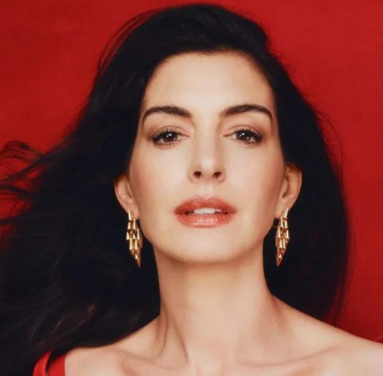
The news arrived with a striking amount of quiet around it. Anne Hathaway and her husband, Adam Shulman, have welcomed their third child, PEOPLE reported on 17 November, saying it could confirm the birth. The couple already have two sons, Jonathan, 10, and Jack, 6. Beyond those essentials, the family has not announced a name, sex or birth date for the new baby.
That reserve is not a puzzle waiting to be solved. It is the most meaningful part of the story’s shape: a family has shared that it is growing, while withholding the details that would turn a private arrival into a public profile. The distinction matters. In a culture where celebrity milestones can become a stream of dates, photographs and intimate disclosures, Hathaway and Shulman have offered a small fact and kept the rest to themselves.
Other outlets have reported the birth, too.

 Entertainment Weekly says PEOPLE confirmed the news and reports that Hathaway was seen in New York City with the infant swaddled in a carrier. The
 Los Angeles Times says TMZ shared photographs on 17 November showing Hathaway walking in New York with the newborn. The paper reported that the baby’s name, gender and birth date had not been released; representatives did not immediately respond to its request for comment.
Those accounts establish the boundaries, not an invitation to fill in what is missing. The new baby’s name, sex and exact date of birth are not public. The family has not publicly spoken about the arrival, according to  E! News. There is no need to infer more from a reported sighting or from the dates of Hathaway’s earlier public appearances.
What can be understood is the wider context. This is a third child arriving in a family that has kept its children largely out of public view; a pregnancy Hathaway announced in her own deliberately playful way; a partnership she has described with evident warmth; and a year in which her professional life has been unusually full. It is also a story with a more tender history behind it: Hathaway has spoken about pregnancy loss and the uncertainty of trying to conceive, and those disclosures deserve care rather than a tidy narrative of hardship resolved.
A birth can be news without becoming a demand for access. Here, the most responsible account begins with what is known, recognizes what Hathaway has chosen to share, and leaves the private parts private.
The confirmed news, and its limits
The clearest reporting is also the most restrained. PEOPLE’s 17 November report says it can confirm that Hathaway and Shulman welcomed their third baby. Its account identifies their older children as sons Jonathan, 10, and Jack, 6, but does not disclose the new baby’s name, sex or birth date. PEOPLE’s family profile, updated on 18 November, gives more detail about the older boys: Jonathan was born on 24 March 2016, while Jack was born in November 2019. It continues to leave the third child’s identifying details undisclosed. ( PEOPLE’s birth report; PEOPLE’s family profile.)
The difference between a confirmed birth and an announced birth is worth preserving. PEOPLE says it can confirm the arrival; that is the outlet’s reporting, not a direct public announcement from the couple. E! likewise reports the birth according to multiple outlets and says Hathaway and Shulman have not publicly spoken about it. The available reporting therefore supports a simple statement: the baby has arrived, according to PEOPLE and other publications, while the family has not supplied a public announcement of its own.
That distinction does not diminish the news. It simply keeps the account accurate. The couple’s silence should not be presented as a statement, a clue or a sign of anything beyond what has been reported: they have not publicly shared further details. Nor should a reported street sighting be treated as a substitute for permission to describe the baby or the family’s private life.
The known family timeline is uncomplicated. Hathaway and Shulman married in September 2012. Their first son, Jonathan, was born in March 2016, and their second, Jack, was born in November 2019. The third child was born in 2026, though the birth date remains private. Entertainment Weekly also notes the marriage and the arrival years of the two older boys. Shulman is described in reporting as a businessman, former actor and sometime producer, and as a co-founder of James Banks Design. Those public biographical details offer context, not a warrant to invent a portrait of how the family manages its days.
There is a temptation, when reporting is sparse, to make the gaps feel like an obstacle. In practice, the gaps are the story’s most useful boundary. They tell readers where confirmed information ends. A responsible feature can still explore what Hathaway herself has said about motherhood, work, partnership and fertility without treating her children as characters whose private details must be uncovered.
This is not a matter of withholding every personal detail from public discussion. Hathaway has voluntarily talked about parts of her experience, and those comments are relevant. But a distinction remains between a subject sharing an insight and the public being entitled to every fact around it. Her pregnancy announcement was public. Her reflections on the emotional demands of parenting have been public. The new baby’s name and sex have not. Reporting should not flatten those different kinds of information into one undifferentiated pool.
It is especially important not to use the family’s earlier history as a way of guessing what they may do now. The older boys’ birth dates are reported; that does not make a third date available for calculation. The couple’s previous public comments are meaningful in themselves; they do not decode the new child’s identity. The proper account is modest: a third baby has joined the family, and the details remain theirs to share or not share.
That modesty may seem unusual in the machinery of celebrity news, where an announcement can be treated as the first instalment in a larger sequence of updates. But it is a coherent choice. Hathaway has spent years being publicly recognizable while keeping much of family life out of view. The current reporting fits that pattern: enough to confirm a significant life event, not enough to make a newborn’s private information a public record.
A pregnancy announced on Hathaway’s own terms
In June, Hathaway chose to share the pregnancy herself. On 19 June 2026, she posted a video on Instagram set to Barbara Lewis’s song “Baby, I’m Yours.” Wearing a flowing white outfit, she lowered her arms to reveal her bump. The caption was brief: “x Baby, I’m yours x.” The post announced the pregnancy without attempting to turn it into a long explanation. ( Hathaway’s Instagram post.)
The format was simple, but simplicity is not the same as accidental. The music, the movement and the line of text made the news legible without offering a medical history or a timetable. It was a personal announcement staged for a public platform, with the control that such a post can give its subject: Hathaway could share the fact, choose the tone and decide how much of the moment to disclose.
That approach feels consistent with the way the birth is being reported now. In June, she made the pregnancy public. In July, she spoke about her reaction to it. In October, she spoke about the family’s attention to the children already at home. Now, after PEOPLE has reported the birth, the couple have not supplied public details about the newborn. These are not contradictions. They are different decisions about what to share at different moments.
The pregnancy post also arrived in a year that was already gathering professional momentum. It did not ask the audience to view the news as a pause from Hathaway’s career or as a replacement for it. The post simply placed a new fact in the middle of an already active year. In that sense, its quiet confidence was apt: a major personal change, presented without a grand theory about what it would mean for the work to come.
A public announcement does create a kind of shared knowledge. Once the news is posted, people may congratulate, comment and discuss it. But it does not create an open-ended obligation to provide updates. The post did not promise a live diary of the pregnancy, and the caption did not invite strangers into every detail. It marked a threshold, then left the rest to Hathaway and Shulman.
There is a broader pressure on public figures to make personal events narratively complete. A pregnancy announcement is expected to lead to updates; updates lead to a birth post; a birth post is expected to include a name or photograph. But families do not owe a story an ending shaped for social media. They may tell one part and keep another. The audience can be glad to hear the news without claiming the details that have not been shared.
Hathaway’s announcement also illustrates a way of being public that does not require constant exposure. The video was visible and expressive. It did not make the pregnancy a secret. At the same time, it offered little that could be converted into speculation about the child. The distinction between visibility and access is important. A person can choose to share a moment without choosing to make every associated fact public.
That distinction becomes particularly significant when children are involved. Adults who are famous have their own public identities, careers and platforms; their children have not made the same choice. Hathaway and Shulman have kept Jonathan and Jack largely out of the public eye. The pregnancy post did not change that approach. The new baby’s arrival need not change it either.
The family behind the public names
Hathaway has spent much of her adult life in a profession that makes recognition part of the job. Films, interviews, premieres and public appearances invite attention, often on a scale far beyond anything most families experience. Yet her public account of home life has generally been selective. She has talked about the way becoming a parent changed her priorities, but the children themselves are not presented as an ongoing source of content.
The available facts about Jonathan and Jack are spare. Their names and ages are known through reporting; PEOPLE’s family profile gives Jonathan’s birth date and Jack’s birth month and year. The family has otherwise kept the boys largely out of the public eye. That restraint has been consistent enough that the birth of a third child does not need to trigger a different standard of coverage.
It can be hard, in celebrity reporting, to distinguish curiosity from entitlement. There is ordinary interest in the life of an actor whose work people follow. There is also a sharper kind of curiosity that treats children as extensions of a famous parent’s story, available for photographs, personality sketches or details about daily routine. A careful account should resist that second impulse. The fact that Hathaway has spoken about motherhood does not mean that her sons’ private lives are now public property.
Her comments about parenting are most useful when they remain about her own experience. She has said motherhood altered her priorities and made her choosier about projects that would take time away from her children. She has described herself as a “mama bear” and emphasized that the boys have feelings. In July 2026, E! reported Hathaway speaking about wanting to give her sons an emotional foundation and make them feel safe. These are reflections on the responsibilities she feels as a parent, not a licence to construct a detailed account of the children’s lives. (E! News.)
That sense of responsibility is present in the way she has discussed the family’s transition. In October, according to PEOPLE, Hathaway said on CBS Mornings that she and Shulman were thrilled and overjoyed, but focused on enjoying being a family of four because everything was about to change, especially for their children. This was not a birth announcement; it was a pregnancy-era comment about the approaching shift at home. Its emphasis was not on presenting the older children as props in a public narrative, but on acknowledging that a new baby would affect them, too.
A family is not only a collection of milestones. It is a set of relationships that continue off camera, in moments outsiders do not see. Hathaway’s remark about the boys’ experience points toward that truth without elaborating on their private reactions. There is no need to guess how Jonathan or Jack feel now, or to dramatize their adjustment. What can be said is that Hathaway publicly recognized the change would matter to them and described the family as focused on the transition.
That care in language is notable. Celebrity coverage can easily cast an older sibling as a helper, a delighted spectator or a miniature caretaker, even when no such portrayal has been offered by the family. It can also turn a parent’s brief comment into an imagined domestic scene. Hathaway’s words do not support either move. They support a more grounded observation: she has spoken about the emotional importance of making her sons feel safe and included, and she has treated their feelings as worthy of attention.
There is an ethical benefit to leaving that point there. It lets her parenting comments carry meaning without pretending to know the children. It also keeps the new baby from becoming a device for a sentimental account of siblinghood that the family has not supplied. Warmth does not require invention. Sometimes it means allowing a family’s own words to remain as general as they were given.
The public record of the family is necessarily incomplete, and that is not a failure of reporting. It is an ordinary consequence of people choosing what belongs outside public view. The family’s identity cannot be reduced to the details that have been published, and the published details should not be used as scaffolding for conjecture. A feature can reflect on privacy itself, but should not pretend that privacy is a secret to be cracked.
What Hathaway has said about fertility and loss
The pregnancy announcement carried a particular resonance because Hathaway had previously spoken about how complicated the path to pregnancy can be. In 2019, she wrote that pregnancy had not been a straight line and sent love to people experiencing infertility and difficulties conceiving. The words were not a comprehensive account of her medical history. They were a public expression of empathy, offered to people whose experiences can be made to feel invisible by uncomplicated stories of expectation and arrival.
In a 2024  Vanity Fair interview, Hathaway revealed that she had experienced a miscarriage in 2015 while performing the one-woman play Grounded, a production that involved acting out giving birth. That disclosure was specific and personal. It should be carried with the same care as any other account of loss: as something Hathaway chose to share, not as an opening for outsiders to supply explanations, medical conclusions or emotional conclusions on her behalf.
It is tempting to arrange those moments into a neat arc: a painful past, a difficult path, then a triumphant third baby. That structure is familiar because it offers the comfort of a conclusion. It is also too simple. A baby’s arrival does not erase a previous loss, and a history of fertility difficulties cannot responsibly be reduced to a dramatic obstacle that a later birth “overcomes.” The facts do not establish a cause, a treatment, a medical process or a universal lesson. There is no basis for inventing one.
Hathaway has shared pieces of experience at different times, in different contexts. Her 2019 message addressed people struggling with infertility and conception. Her 2024 interview disclosed a miscarriage. Her 2026 remarks about a surprise pregnancy reflected her response to that pregnancy. Together they show that she has been willing to speak with honesty about complicated feelings. They do not add up to a complete account of her reproductive life, nor do they require her to provide one.
That distinction matters both for accuracy and for compassion. People who have experienced infertility or loss are often confronted with narratives that promise a happy ending if they wait long enough, endure enough or remain hopeful enough. Such stories can be painful precisely because they turn an individual outcome into a rule. Hathaway’s family has welcomed a third baby, according to PEOPLE. That fact is joyful in its own right. It does not prove anything about what another person’s path will look like.
Nor should the birth be used as evidence that a previous pregnancy loss was part of a plan or had a purpose. Loss is not made meaningful by a later event, unless the person who experienced it chooses to describe it that way. Hathaway has not asked the public to interpret her history as a moral lesson. The respectful approach is to report the words she has shared and resist fitting them into a story that offers tidy closure at the expense of reality.
The phrase “not a straight line,” as she used it in 2019, has particular power because it declines to present pregnancy as a universal sequence. But it should not be stretched beyond what she said. It does not tell us what happened between one pregnancy and another; it does not disclose medical detail; it does not make her experience representative of anyone else’s. It is a reminder that the public version of a family’s story may be much smaller than the lived experience behind it.
That is one reason the current news should be handled with restraint. The reported birth does not give the public permission to revisit every personal disclosure and treat it as a clue. It is possible to hold two truths at once: Hathaway has made meaningful public disclosures about fertility and loss, and the new baby’s private details remain undisclosed. A feature can acknowledge both without converting one into an explanation for the other.
Her words may still offer recognition to readers. A person who has struggled to conceive may hear something compassionate in the 2019 message; someone who has experienced loss may
The privacy line Hathaway has drawn
Anne Hathaway’s public life has never been short on images. A film career is built, in part, on being seen: on screens, at premieres, in interviews and in the steady circulation of photographs and headlines that accompanies a famous face. Motherhood, by contrast, has appeared in her public story in carefully bounded pieces. She has spoken about what becoming a parent changed in her, shared the news of pregnancies, and allowed the broad outline of family life to be known. But the children themselves have not been made into an ongoing public narrative.
That distinction matters in the coverage of Hathaway and Adam Shulman’s third child. On Nov. 17, 2026, PEOPLE confirmed that the couple had welcomed a baby. The child’s name, sex and birth date were not made public. Entertainment Weekly, the Los Angeles Times, E! and ELLE reported the news as well. Readers were given a significant fact, but not a profile of the baby, a collection of intimate details or a new character to follow. The public record has a beginning; it does not fill in every blank.
A report of a street sighting is a different kind of information. The Los Angeles Times noted that TMZ had captured Hathaway carrying the newborn in a carrier in New York. That description belongs to the report of an observation in public. It is not the same as a family statement, and it does not establish that Hathaway or Shulman chose to announce the child’s arrival through that image. The distinction can sound technical, but it is central to how celebrity news is made: one account comes from a family’s own communication; another comes from a third party’s reporting of what was seen.
It is also a distinction worth preserving for the child’s sake. A picture or sighting may make a moment visible without making every detail about the person in it public property. The fact that the baby was seen in a carrier does not invite description of the baby’s appearance, nor does it answer questions the family has not answered. The existence of a report is not a license to complete the story with speculation.
Hathaway’s pregnancy announcement, by contrast, was unmistakably hers to share. On June 19, she posted an Instagram video set to Barbara Lewis’s “Baby, I’m Yours,” with the caption “x Baby, I’m yours x.” It was a public gesture with a particular tone: brief, musical, personal, and still limited. She did not use it to introduce a child who had not yet arrived or to open a continuing window into family life. The caption expressed feeling; it did not hand over a dossier.
In July, Hathaway described the pregnancy as “amazing,” a surprise and a “buzzer-beater.” In October, she said the family was enjoying being four before everything changed, especially for the children. Those remarks made room for a familiar human pleasure—the anticipation of a new baby—while keeping the focus on the experience of change rather than on details about the future child. Her words offered a glimpse of how she was thinking about the transition, not a promise that the audience would be included in its private particulars.
The difference between sharing and disclosure is easy to blur when a famous person speaks warmly. A remark about a pregnancy can feel like an invitation to know more, particularly when it arrives in the language of affection. But warmth is not the same as unlimited access. Hathaway has shared some parts of motherhood and not others. The shape of what is known is itself informative: pregnancy news, reflections on the meaning of parenthood, and the existence of a family, without a public catalogue of the children’s lives.
That is not an unusual contradiction so much as a practical feature of celebrity. Hathaway’s work depends on visibility. In 2026, five films associated with her appeared on the public calendar: Mother Mary, The Devil Wears Prada 2, The Odyssey, The End of Oak Street and Verity. Each title brings its own press, audiences and attention. The person who acts in those films is part of a public profession; the children who happen to be related to her are not thereby performers in it. The boundary is not always easy to maintain, because the same public interest that follows a career often extends to family. But the fact that the interest extends does not make the two kinds of visibility equivalent.
The public knows that Hathaway and Shulman are parents of three, and that their older children are sons Jonathan, 10, and Jack, 6. Those facts give the announcement a family context without requiring the children to become recurring subjects. Knowing the names and ages of the older boys does not establish what they look like, what they do, or how they experience the arrival of a sibling. Nor should a detail already in circulation be treated as a reason to seek more. A family fact can remain a fact, not the first installment in a demand for access.
The newborn’s name, sex and birth date are not public. That absence is sometimes treated by celebrity coverage as a puzzle waiting to be solved, as if a blank in the record were an editorial assignment. But there is no journalistic necessity to turn every unknown into a question for the family. “Not public” is a complete description of the information available. It need not be recast as coyness, a game, or a clue that reporters and readers should decode.
There is a difference between curiosity and entitlement, though the two can sit close together. Curiosity is a natural response to news about a person whose work has meant something to an audience. People may feel affection for Hathaway, may have followed her career for years, and may be glad that she has reached a moment she has chosen to share. None of that requires the audience to be cold or indifferent. It simply means that interest can stop at the edge of what has been offered.
That stopping point is especially important when the person at the centre of a story is a child. Adults who choose public careers can speak for themselves, decide what to say about their lives and participate in the exchange that fame creates. A baby cannot make that choice. Older children are not made responsible for public attention by their parents’ profession, either. The question of consent is not an accusation against any one photograph or report; it is a reminder that children do not enter the public sphere in the same way as the adults whose names draw cameras.
It would be too simple to say that all family visibility is wrong, or that a parent who shares a personal moment has surrendered the right to keep other moments private. The point is not to impose a single rule on every celebrity family. It is to notice that sharing one thing does not automatically authorize everything else. Hathaway’s pregnancy video was a choice to tell the public she was expecting. Her July and October comments were choices to describe aspects of the experience. The later confirmation of a birth gives the public another fact. None of those communications, separately or together, makes the child’s name, sex or birth date public.
That distinction is also why the source of a detail matters. A family statement can be understood as a deliberate act of communication, with the family choosing its terms. A reported sighting is assembled differently: a person is observed, the observation is described, and an outlet decides what to publish. The Los Angeles Times’ account of the TMZ sighting adds context to the reporting; it should not be mistaken for Hathaway or Shulman issuing an invitation to inspect the baby. A report can be accurate and still be different in kind from a statement.
Responsible coverage can make that difference legible without dramatizing it. It can say what was confirmed, identify what remains undisclosed, and resist converting the gap into a contest between a celebrity and the press. There is no need to imply that Hathaway has hidden something from the public, because the public was never promised every detail. There is also no need to cast the family as making a grand declaration about privacy. The facts support a more measured description: some information has been shared; some has not.
Hathaway’s earlier comments about motherhood help explain why the subject can carry emotional weight without turning the children into content. She has spoken about infertility and about a miscarriage in 2015. She has also said that motherhood changed her career priorities. Those experiences belong to her own account of her life. They are meaningful because she has chosen to speak about them, not because they entitle anyone to infer medical details, private feelings or the circumstances of her new baby’s arrival.
The word “motherhood” can become a shortcut in celebrity writing, used to make an actor’s life seem more legible or to frame professional decisions as a simple before-and-after story. Hathaway’s statements suggest something more personal and less tidy: parenthood has affected how she weighs work, and she has described difficult experiences as well as joy. But even when an artist speaks openly about the broad stakes of her life, that openness is not an all-access pass to the lives of her children. Her own history and the child’s identity are related, but they are not interchangeable subjects.
A reader can care about the news without pretending to know the family. There is room to be pleased for Hathaway and Shulman, to recognize that a third child changes the shape of a household, and to remember that Hathaway herself has described the transition as especially significant for the older children. There is room to reflect on what she has said about infertility, loss and the ways motherhood altered her priorities. The response does not have to be either intrusive curiosity or chilly detachment. Affection can be real and still observe limits.
That may be the most useful way to read a short announcement in a culture that often expects a long trail of follow-up. A birth becomes a headline; the headline invites a photograph; the photograph invites details; and details can quickly become a routine in which a child’s presence is treated as a continuing public offering. Each step can feel small. Together, they can change the terms of the story, shifting attention from what a parent chose to share toward what an audience wants to see.
The pressure does not always arrive as a demand. It can arrive as a question repeated often enough to seem harmless: What is the baby’s name? Was it a boy or a girl? When was the baby born? These are ordinary questions among people who know one another. In celebrity coverage, however, their ordinariness can disguise the fact that the people being asked are strangers, and that the answers concern a person who has not chosen public life. The questions are not inherently malicious. They are simply not owed answers.
The same is true of a sighting. A public figure carrying a newborn may prompt a moment of recognition, especially in a city where people share streets. But the sighting does not transform an everyday action into a performance for the audience. Reporting that it occurred is not identical to receiving permission to build a detailed picture of the child around it. A careful account can note the report and leave it there, rather than treating the image as an opening for visual scrutiny.
There is a tendency to interpret restraint as mystery, and mystery as a form of publicity. That reading can be unfair. When a name or date has not been disclosed, the simplest explanation is also the most accurate one: it is not public. The absence of a detail does not prove a strategy, a motive or a private arrangement. It tells us only what the public record contains. In a feature about the boundary between celebrity and family, that modesty of inference is more valuable than a confident theory about why a family has made any particular choice.
Hathaway’s public image has, across a long career, been shaped by the work she presents and the comments she chooses to make. She can offer a line about a pregnancy, a reflection on parenting or an account of how motherhood changed her professional calculus, and still retain areas of life that do not become material for the audience. The public may not always experience that boundary as satisfying. Celebrity culture trains people to expect that a familiar face comes with a familiar life. But recognition is not the same as relationship. A viewer can feel connected to an actor’s work without having a claim on the actor’s child.
The most humane response is neither to scold readers for being interested nor to indulge every appetite simply because interest exists. It is to ask what a particular detail adds, and who bears the cost of circulating it. Knowing that Hathaway welcomed another child completes a piece of news she and her family have permitted to become public. Knowing a baby’s identifying details, if those remain undisclosed, would add little to an understanding of Hathaway’s career or her own remarks, while making the child more searchable and more exposed. That is a different balance.
The announcement, then, is not a puzzle with missing pieces. It is a bounded piece of news. Hathaway has shared the fact of pregnancy, spoken about its emotional character, and allowed the public to know that her family has grown. News outlets have confirmed the arrival, and one account has described a reported street sighting. The child’s name, sex and birth date remain private in the public record. There is no contradiction in that combination. It is what sharing looks like when a person offers some information and keeps other information back.
For an audience, that can be enough. Not because a famous family’s life should be beyond all discussion, but because meaningful attention does not require possession. We can take Hathaway at her word when she has spoken about the parts of motherhood she chose to discuss, and accept the limits of what she did not. We can recognize the warmth in her announcement without treating warmth as a contract. And we can mark the arrival of a new chapter in a public career’s story while leaving the child room to be, for now, simply a child.
The year that made the arrival feel even bigger
By the time Anne Hathaway’s third child arrived, the news landed against a year already crowded with work. Five films were reported as part of her 2026 professional slate: Mother Mary, The Devil Wears Prada 2, The Odyssey, The End of Oak Street and Verity. The titles alone make for a striking measure of a year in motion. They do not tell us how much time Hathaway spent on any one project, how the work was arranged around her family, or what the experience felt like from inside it. But they do make the scale of the public year hard to miss: a succession of films, a pregnancy announced in June, and, by November, a new baby joining a household that had long been organized around two children.
The contrast is part of what gives the arrival its emotional weight. A career can be counted in titles and dates; a family’s change cannot be so neatly summarized. Hathaway’s 2026 was visible in a way many working years are visible, through the steady accumulation of projects and public appearances. The news of a third child, by comparison, came with important boundaries. The baby’s name, sex and birth date have not been made public. Those omissions are not gaps to fill in. They mark the limit of what the family has chosen to share.
PEOPLE confirmed on November 17 that Hathaway and her husband, Adam Shulman, had welcomed their third baby. Entertainment Weekly, the Los Angeles Times, E! and ELLE reported the same news. The Los Angeles Times also reported a sighting in New York in which Hathaway was carrying the newborn in a carrier. That is a small public glimpse, not a window into the circumstances of the birth. It offers no basis for inferring a birth date or location, and no need to imagine the baby’s appearance. The significant fact is simpler: after years of speaking publicly, at times, about motherhood and its complications, Hathaway had become a mother of three.
The announcement of the pregnancy had come months earlier, on June 19, in a short Instagram video set to Barbara Lewis’s “Baby I’m Yours.” Hathaway captioned it, “x Baby, I’m yours x.” Its brevity left the message intimate without making it a report on private life. She did not use the moment to supply a timetable or explain the pregnancy. The post said what it needed to say, in the language of a song and a sentence.
In July, she described the pregnancy as amazing, a surprise and a “buzzer-beater.” The phrase carried the lightness of a sports metaphor, but it also acknowledged timing: this was not presented as a development the family had simply scheduled and awaited. “Buzzer-beater” suggests something arriving at the edge of expectation, though it does not tell us what Hathaway had expected, how she felt about the timing before the announcement, or what the word meant to her beyond that moment. It is tempting to make a neat story out of the phrase—to turn surprise into destiny, or a late arrival into a reward. The public facts do not warrant that kind of certainty. What they do allow is a more modest reading: Hathaway chose a playful term for an experience she described as both unexpected and welcome.
By October, she was describing a different part of the transition. The family, she said, was enjoying being four before everything changed, especially for the children. That observation is at once ordinary and revealing. A new baby does not arrive only into an abstract family unit; the change also reaches the people already in it. Hathaway and Shulman’s sons, Jonathan, 10, and Jack, 6, were about to become older brothers. Her remark did not turn them into characters in a public drama or disclose how either child responded. It simply recognized that a family’s expansion is also a change in the lives of its existing members.
The timing makes that comment resonate with the year’s unusual breadth. In 2026, Hathaway’s professional life was represented by five films, while her family life was approaching a transformation she had chosen to share in carefully spaced glimpses. It would be easy to treat those facts as evidence of an impossible balancing act, or to cast the year as a triumph of productivity over every other demand. Neither conclusion follows from the record. A list of films cannot establish the conditions under which they were made, and pregnancy announcements cannot reveal the private arrangements that made work and family possible. The more honest observation is that public life can make several kinds of change visible at once, while leaving the labor of negotiating them largely unseen.
The five-film slate matters not because it proves a particular personal cost, but because it complicates the familiar image of a pregnancy as a pause in an actor’s professional story. Hathaway’s year was not publicly defined by one role or one announcement. It included Mother Mary, The Devil Wears Prada 2, The Odyssey, The End of Oak Street and Verity. Their variety as titles suggests a wide professional horizon, but titles alone are not enough to make claims about genre, workload or the circumstances of production. What can be said is that the arrival did not erase the scale of the work associated with the year. Nor does the work make the arrival seem like a footnote. The two facts sit beside one another, each resisting the idea that a woman’s life must be narrated through a single dominant identity.
That tension is familiar for actors, whose work is both personal and public in a distinctive way. A performance is the product audiences see; the decisions that put a performer in one project rather than another are usually less visible. Motherhood can alter those decisions, as Hathaway has said it changed her career priorities. But the phrase “career priorities” should not be made to carry more than it can. It does not necessarily mean fewer films, a retreat from ambition, or a fixed new formula for choosing roles. It may describe a changed sense of what matters, or a different way of assessing a commitment. The public does not know which projects Hathaway accepted or declined for family reasons, and it should not pretend that the five titles provide the answer.
The deeper question is not whether motherhood made Hathaway’s career smaller or larger. It is how a working actor’s choices change when the terms of life change. The answer will differ from person to person, and even for the same person from one period to another. A role can be attractive for its artistic challenge, its schedule, its collaborators or any number of considerations the public never hears about. Family may enter that calculation without becoming the sole explanation. An actor’s priorities can shift while professional desire remains intact. They can also shift in ways that are difficult to explain as a clean before-and-after story.
Hathaway’s own public account offers a useful restraint against tidy conclusions. She has spoken about motherhood changing her career priorities, but she has also continued to be associated with a substantial year of film work. That is not a contradiction to solve. It is a reminder that priority is not the same as exclusivity. A person can care more about one part of life without abandoning another; she can decide differently without announcing a universal rule. The notion that motherhood must either derail a career or inspire a miraculous increase in capacity is a familiar trap. Both versions make the mother’s life into a lesson for everyone else. Hathaway’s year is more interesting, and more human, when left complicated.
Her comments about fertility and miscarriage bring a further need for care. Hathaway has spoken about infertility and about a miscarriage in 2015. Those disclosures matter because they put a human history behind the ease with which pregnancy news is often treated as simple celebration. They also deserve to remain what she has made public, rather than becoming clues in a medical narrative assembled by outsiders. A past miscarriage does not tell us what happened in this pregnancy. A history of infertility does not tell us how this pregnancy began, what care she received, or what its course was. The fact of a later birth does not retroactively resolve or explain earlier loss.
There is a particular temptation, when a public figure has discussed miscarriage, to cast a subsequent pregnancy as a happy ending. The language can sound kind, even generous, but it compresses distinct experiences into a single arc: grief, perseverance, reward. That is not a fair account of reproductive life, and it is not an account Hathaway has supplied. A birth can be joyful without turning a previous loss into a necessary prelude. A person may welcome a child while still carrying the memory of an earlier pregnancy loss; the public cannot know what that means to her, and does not need to. Compassion here means resisting the urge to convert disclosure into explanation.
The same restraint applies to the word “infertility.” In public conversation it can become a label people use to infer a diagnosis, a treatment history or the precise emotional character of someone’s experience. Hathaway has spoken about infertility, but the fact brief supplies no further medical details. It would be wrong to fill that silence with guesses, or to treat the birth of a third child as evidence that any earlier difficulty was overcome in a simple, predictable way. Her account belongs to her. The public record can acknowledge the words she has shared without claiming the private knowledge she has not.
That distinction also helps clarify what the November confirmation does and does not do. It confirms that the family has welcomed a third child. It does not invite speculation about the pregnancy’s medical course, the birth or the family’s private arrangements. Nor does it require a full public portrait of the baby. Hathaway and Shulman have shared the basic news while keeping identifying details private. There is no contradiction in that choice. A public person can let an important milestone be known without making every part of it available for inspection.
Hathaway’s praise of Shulman’s support is part of the public picture too. They married in 2012, and their family has grown over the years from two parents and their sons to a family of five. The fact that she has spoken appreciatively about his support gives a glimpse of how she has described their partnership, but it is not a license to invent what that support looked like day to day. It would be easy to narrate a specific division of labor, or to declare that one spouse made the other’s career possible. The available facts do not say that. What they do suggest is that Hathaway has chosen to recognize support as meaningful—a counterpoint to the myth of the solitary working mother who manages everything through willpower alone.
That myth is especially persistent in entertainment, where the public sees the finished work and can mistake visibility for ease. Five films in one year may look like a clean measure of professional momentum. A pregnancy announcement can then be treated as an added challenge overcome, as though the important story were the ability to continue producing at pace. But work and family are not opposing forces in a contest whose winner is determined by how many projects a person completes. The number of films tells us something about the professional scale of the year; it tells us nothing by itself about what Hathaway gave up, what she welcomed, what support she had, or what she might choose next.
Perhaps the most useful way to understand the year is as a collision of timelines that do not resolve into one another. The public timeline has five film titles, a June pregnancy announcement, a July description of the pregnancy as a “buzzer-beater,” an October reflection on the children’s impending change, and a November confirmation of the birth. The family timeline is more private. It includes two children who had been living as the youngest, a couple who had been married since 2012, and a new baby whose details remain theirs to keep. The first timeline can be reported; the second cannot be reconstructed from fragments.
And then there is the future-facing question: what will motherhood mean for Hathaway’s work from here? The most responsible answer is that we do not know. She has said it changed her priorities, and that is significant without being a forecast. The arrival of a third child may bring new considerations; it may also sit alongside continuing ambitions and choices that will only become legible in retrospect. There is no need to predict a retreat or a return, a narrowing or an expansion. Any such prediction would make the baby’s arrival serve as a plot device in a career story that is still unfolding.
The year’s unusual scale, then, is not a claim that Hathaway did everything at once or that she found a formula for doing so. It is the coexistence of an unusually full public professional slate with a family changing in a profound and ordinary way. Five films can be named. The consequences of becoming a mother of three cannot be reduced to a slate. Hathaway’s own words—about surprise, timing, her children, changed priorities and Shulman’s support—offer enough to make the year feel larger than a birth notice, while leaving room for what remains private.
The baby arrived into a life that was already full of people, work and history. The fact of a new child does not settle the meaning of the year; it sharpens it. In public, Hathaway had moved through five films and shared the news of a pregnancy on her own terms. In private, a family of four became a family of five. Those two descriptions are both true, and neither tells the whole story. That is not a failure of reporting. It is a recognition that a life can be consequential without being completely available.
What the public can know now
The confirmed news is both simple and significant. PEOPLE says Anne Hathaway and Adam Shulman have welcomed their third child. Their older sons are Jonathan and Jack, and the family has now moved from four to five. That is the part of the story that can be stated plainly.
The rest remains private. The baby’s name, sex and birth date have not been announced. No representative has supplied those details in the reporting covered here, and neither Hathaway nor Shulman has published a separate birth post. The absence of a photograph, a name or a message is not a gap that needs filling. It is a boundary.
A reported sighting in New York explains why the news became public, but it does not provide a window into the family’s private life. A carrier can tell readers that a newborn is with a parent. It cannot tell them a name, a personality, a birth story or what the first days at home have been like. Those details belong to the family if and when they decide to share them.
That approach also gives Hathaway’s earlier comments their proper weight. Her pregnancy announcement was joyful, her “buzzer-beater” description was funny and her October remarks showed that she understood the arrival would change the older children’s world as well as her own. None of those comments was a promise to provide a running account of the baby’s life.
For readers, the most honest way to follow the story is to hold on to what is known and leave the rest alone. Hathaway has spoken openly about motherhood, fertility, loss, work and partnership. She has also shown that openness does not mean unlimited access. The new arrival can be welcomed as happy news without turning privacy into a mystery to solve.
That is why the story has lasting interest beyond the first headline. It is not only about an Oscar-winning actor becoming a mother of three. It is about the choices she has made around public life, the people she has chosen to speak for herself, and the details she has chosen to keep for her family. For now, that is the full picture: a confirmed birth, two older brothers, a supportive partnership and a new chapter whose most personal details remain theirs.