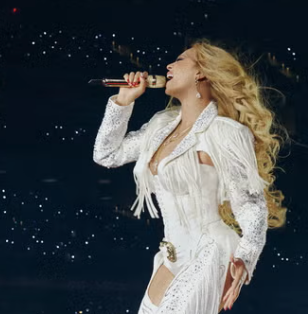
She’s done it again. Beyoncé Knowles-Carter has officially closed the book on her Cowboy Carter Tour — and in doing so, she didn’t just wrap up a concert run, she rewrote the record books of the entire country music industry. In just 32 shows, across only nine cities, Beyoncé grossed a jaw-dropping $407.6 million, making it the highest-grossing country tour of all time, the fastest tour in Billboard Boxscore history to cross the $400 million mark, and yet another entry in a resume already stacked with historic firsts.
But behind the eye-popping number is a much bigger story — one about genre-defying reinvention, family loyalty on stage, quiet business genius, and a woman who keeps proving that the rules other artists play by simply don’t apply to her. Here are the facts fans need to know about the tour that shook country music to its core.
A Quick Refresher: How We Got Here
To understand why this tour landed as hard as it did, it helps to rewind to March 2024, when Beyoncé released Cowboy Carter — her eighth studio album, and her first full-length dive into country music. The album itself was already a lightning rod before a single tour date was announced. It arrived loaded with symbolism: guest spots from country legends alongside rising Black country artists, interludes addressing the genre’s fraught racial history, and cover artwork reimagining Beyoncé as a rodeo queen astride a white horse, American flag in hand. It wasn’t subtle, and it wasn’t meant to be.
By the time the Cowboy Carter Tour was announced, expectations were already sky-high — not just because of Beyoncé’s track record, but because the album had ignited a genuine industry-wide conversation about who gets credited as a “country artist” in the first place. That backdrop is part of why the tour’s box office numbers landed as more than just a financial story. Every ticket sold was, in a way, also a referendum on that debate.
1. The Number That Broke the Internet: $407.6 Million
Let’s start with the headline figure. According to Billboard Boxscore — the touring industry’s gold-standard data tracker, which has been logging concert grosses for nearly 40 years — the Cowboy Carter Tour brought in $407.6 million from its 32-show run. Pollstar, the concert industry’s other major trade authority, independently confirmed the same milestone, leaving no doubt: this is officially the biggest country tour in history, full stop.
To put that number in perspective, $407.6 million isn’t just a big concert haul — it’s a figure that rivals or exceeds the annual GDP of small nations, and it dwarfs the total box office runs of most Hollywood blockbusters. It also arrived from a genre that, historically, hasn’t produced tours anywhere near this scale. Country music’s previous benchmark-setters — names like Garth Brooks, George Strait, and more recently Morgan Wallen — built massive followings over decades of steady touring. Beyoncé arrived, released one album, and blew past all of it in a single run.
2. She Did It in 24 Fewer Shows Than Her Own Previous Record
Here’s where it gets almost unbelievable. Beyoncé’s own 2023 Renaissance World Tour previously set an R&B touring record by grossing $579.8 million — but it took 56 shows to get there. The Cowboy Carter Tour hit its own $400 million-plus milestone in just 32 shows, a full 24 shows fewer. That makes it the shortest tour in Boxscore history — of any genre — to ever cross the $400 million threshold.
For context on just how remarkable that pace is, consider the other tours that have historically flirted with the $400 million mark: The Rolling Stones’ No Filter Tour took 58 shows spread across four years (2017–2021) to get there. Metallica’s ongoing M72 World Tour has needed 60-plus dates and counting. Beyoncé did it in barely half that many shows, and in a fraction of the time — a three-month sprint compared to tours that unfolded over years.
3. She’s Now the First Woman Ever to Have Two Separate $400 Million Tours
Before Cowboy Carter, only three acts in touring history had ever grossed over $400 million on two completely separate tours: Coldplay, Ed Sheeran, and The Rolling Stones. With Cowboy Carter joining Renaissance in that club, Beyoncé becomes not just the newest member of that exclusive list — she’s the first woman, and the first American artist, to ever pull it off.
That’s worth sitting with for a moment. Coldplay, Sheeran, and the Stones each built their $400 million-plus tours over careers spanning decades, with international fanbases cultivated across dozens of albums. Beyoncé matched that feat twice within a three-year window, using two tours built around two very different sonic identities — one an ode to Black dance and ballroom culture (Renaissance), the other a deep dive into a genre she’d never released a full album in before (Cowboy Carter). Range like that, at this level of commercial success, has essentially no precedent.
4. Only Nine Cities, Worldwide
Unlike most blockbuster tours that snake through dozens of markets, Beyoncé took a completely different strategy this time. The entire Cowboy Carter Tour touched down in just nine cities total: Los Angeles, Chicago, New York City, Houston, Washington D.C., Dallas, Atlanta, London, and Paris.
5. She Stacked Multiple Nights Instead of Spreading Out
Rather than adding new markets, Beyoncé went deep instead of wide — playing five nights each in Los Angeles and the New York area, six nights in London, and four nights in Atlanta. This “residency-style” approach to touring, concentrating shows in fewer, bigger markets, is part of what allowed her to hit record grosses in a fraction of the usual number of stops.
6. 1.6 Million Tickets, Sold Out Nearly Everywhere
The tour didn’t just make money — it sold. Roughly 1.6 million tickets moved across the run, and Beyoncé set or tied venue attendance records at every single one of the nine stadiums she played, an extraordinary feat of consistency across an entire tour.
7. She Broke Over 40 Individual Boxscore Records
The $400 million headline is just the tip of the iceberg. Boxscore reported that the Cowboy Carter Tour broke more than 40 individual records across its run — spanning categories like single-night grosses, per-city attendance, and stadium sellout benchmarks.
8. The Tour Closed Out an Entire Album Trilogy Era
Cowboy Carter wasn’t a standalone project — it was Act II of a three-part album trilogy Beyoncé kicked off with Renaissance in 2022. That means the tour wasn’t just a commercial victory; it also marked the symbolic close of one of the most ambitious multi-year creative arcs of her career, with one final act still to come.
9. It Won Album of the Year at the Grammys
Before the tour even wrapped, the Cowboy Carter album had already claimed music’s biggest individual prize: Album of the Year at the Grammys, adding to a trophy case that already made Beyoncé the most decorated artist in Grammy history.
10. The Finale Brought Out Destiny’s Child — For Real This Time
Beyoncé closed out the tour’s final show at Las Vegas’s Allegiant Stadium on July 26 with a surprise reunion fans had been begging for: Kelly Rowland and Michelle Williams joined her onstage for a full Destiny’s Child moment, sending the internet into a frenzy in real time.
11. Jay-Z Made a Surprise Appearance Mid-Tour
Family loyalty was a running theme of the whole run. During the tour, husband Jay-Z joined Beyoncé onstage for a duet of their classic hit “Crazy in Love” — a moment that became one of the most talked-about clips of the entire tour.
12. Her Mother, Tina Knowles, Also Joined Her Onstage
Beyoncé’s mother, Tina Knowles, also made an appearance during the tour’s run, adding another deeply personal, family-first layer to a tour that was as much a celebration of legacy and lineage as it was a commercial juggernaut.
13. She Brought Emerging Black Country Artists Into the Spotlight
One of the loudest cultural conversations sparked by Cowboy Carter — both the album and the tour — was Beyoncé’s deliberate spotlighting of Black artists within country music, a genre that has historically sidelined them. Rising country crossover artist Shaboozey joined her onstage during the tour, part of a broader pattern of Beyoncé using her platform to challenge who gets to be seen as a “country artist” in the mainstream.
This wasn’t a one-off gesture. Throughout the Cowboy Carter album rollout, Beyoncé repeatedly credited the Black roots of country and Americana music — genres that trace back to Black string-band traditions long before they were commercially rebranded as “country” in the early 20th century. By building an entire stadium tour around that message, and then breaking the genre’s own commercial records in the process, Beyoncé turned a historical argument into a very literal, very public demonstration.
14. The Setlist Ran Over 40 Songs and Three Hours
This wasn’t a quick in-and-out show. Fans got a full three-hour spectacle featuring a setlist of more than 40 songs, blending Cowboy Carter’s genre-bending tracklist with career-spanning hits.
15. Dance Group The Mayyas Joined the Production
Beyoncé also brought out globally recognized dance troupe The Mayyas — best known for winning “America’s Got Talent” — as part of the tour’s elaborate staging, another example of how the production reached beyond music into full-scale performance art.
16. The Tour Opened at SoFi Stadium in Los Angeles
The Cowboy Carter Tour kicked off on April 28, 2025, at SoFi Stadium in Inglewood, California — setting the tone early for a run that would ultimately be defined by massive stadium-scale ambition from night one.
17. It Spanned Exactly Three Months
From its April 28 opening night to its July 26 finale in Las Vegas, the entire Cowboy Carter Tour ran for almost exactly three months — an extremely compressed timeline for a tour that would go on to smash 40-year-old industry records.
18. It’s Officially the Highest-Grossing Solo Tour of 2025
Beyond the country music record, the Cowboy Carter Tour was also named the single highest-grossing tour of 2025 by a solo artist, beating out every other major headline tour that year across every genre.
19. She Extends Her Own Record as the Highest-Grossing Black Artist Ever
The tour’s success pushes Beyoncé further ahead in a record she already owned outright: the highest-grossing Black artist in touring history, and separately, the highest-grossing R&B artist of all time.
20. Not Everyone Agrees It Should Count as “Country” — And That’s Part of the Story
Not all of the reaction has been celebratory applause. Some country music commentators and outlets have pushed back on Billboard classifying the tour under the country genre at all, arguing that Cowboy Carter blends so many genres that crowning it the “biggest country tour ever” oversimplifies a more complicated genre debate. Critics in this camp point out that the album and tour draw heavily on pop, R&B, and rock alongside country instrumentation, and question whether Boxscore’s genre-labeling methodology fairly represents traditional country artists who’ve spent entire careers building toward — but never reaching — the numbers Beyoncé posted in a single run.
That controversy hasn’t slowed the numbers down one bit, but it has added a layer of industry debate to what would otherwise be a straightforward victory lap — and arguably made the story even bigger. Whether you view Cowboy Carter as a country album, a genre-blending statement, or something else entirely, the commercial result is the same: it’s the biggest tour any country-classified run has ever produced, and it’s not particularly close.
The Bigger Picture: Why This Tour Matters Beyond the Money
It would be easy to treat this as just another eye-popping celebrity finance headline — but the Cowboy Carter Tour’s success carries weight well past the box office. Beyoncé built an entire album and touring era around inserting herself, unapologetically, into a genre that has a long, complicated history of excluding Black artists — and then went out and broke that genre’s own commercial records in the process. That’s not a subtle statement. It’s a very loud one, delivered through sold-out stadiums instead of interviews.
It also cements something that’s been true of Beyoncé’s career for two decades now: she doesn’t chase trends, she builds entire eras — visual albums, trilogies, surprise drops, genre pivots — engineered years in advance and executed with a level of precision few artists in any genre can match. The Renaissance-to-Cowboy Carter run alone has now generated close to a billion dollars in combined ticket sales, an almost unthinkable sum for two tours released back-to-back within a three-year span.
There’s also a business lesson buried in these numbers that touring industry insiders have taken note of: bigger doesn’t always mean more shows. By concentrating dates in fewer, larger markets and stacking multiple nights per city instead of spreading a tour thin across dozens of one-off stops, Beyoncé’s team effectively engineered a model that maximizes per-market demand while minimizing overhead, travel logistics, and production teardown-and-rebuild costs. Expect other major touring acts — and their promoters — to study this exact structure closely when planning future stadium runs.
Then there’s the matter of legacy-building. Beyoncé has spent the last several years methodically working through a self-described album trilogy, with Renaissance as Act I and Cowboy Carter as Act II. Fans and industry watchers alike are now fixated on a single question: what does Act III sound like, and which genre will she reinvent next? If the pattern holds, whatever she chooses next will likely arrive with the same level of meticulous planning, symbolic weight, and eventual record-breaking payoff.
What’s Next for Beyoncé
With Act II of her trilogy now closed, all eyes turn to what Act III might bring — a question Beyoncé has kept characteristically silent on. In the meantime, she’s already back in the awards conversation, with a nomination in the Outstanding Variety Special (Live) category tied to her Netflix Christmas game day halftime show. If the Cowboy Carter era proved anything, it’s that betting against Beyoncé topping her own records is rarely a good idea.
How the Cowboy Carter Tour Stacks Up Against Music’s Biggest Tours Ever
Context is everything when a number this large gets thrown around, so here’s how the Cowboy Carter Tour’s $407.6 million actually compares to other titans of the touring world:
- Taylor Swift’s The Eras Tour — widely reported to have crossed $2 billion across its multi-year, multi-continent run, still stands as the highest-grossing tour of all time by a wide margin, but it took well over 150 shows spread across nearly two years to get there.
- Beyoncé’s Renaissance World Tour (2023) — $579.8 million over 56 shows, still her personal record for total gross.
- The Rolling Stones’ No Filter Tour — over $400 million, but spread across 58 shows and four years (2017–2021).
- Metallica’s M72 World Tour — still ongoing, with 60-plus dates needed to approach the $400 million mark.
- Beyoncé’s Cowboy Carter Tour — $407.6 million in just 32 shows over three months, the fastest of any of these to reach that threshold.
What this comparison makes clear is that while Cowboy Carter isn’t the single biggest tour in absolute dollar terms, it may be the most efficient blockbuster tour of the modern stadium era — extracting historic revenue from a strikingly compact run.
The Cultural Ripple Effect on Country Music
Beyond the ledger sheet, industry watchers are already pointing to a broader shift the Cowboy Carter era may have kicked off. Streaming data throughout 2025 showed a marked rise in listenership for Black country and Americana artists, several of whom experienced their biggest career streaming weeks in the immediate aftermath of Beyoncé’s album release and subsequent tour dates. Nashville-based labels and country radio programmers, an industry historically slow to diversify its rosters and playlists, faced renewed public pressure to open more space for the artists Beyoncé had spent her rollout deliberately amplifying.
Whether that translates into lasting structural change in country music remains an open question — genres have absorbed viral crossover moments before without permanent shifts in who gets signed, played on radio, or nominated for major industry awards. But for now, the commercial receipts are undeniable, and they’ve given advocates for greater diversity in country music their strongest data point in years: a $407.6 million argument that audiences were more than ready for it.
FAQ
How much did Beyoncé’s Cowboy Carter Tour gross? $407.6 million across 32 shows, according to Billboard Boxscore and Pollstar.
Is the Cowboy Carter Tour Beyoncé’s highest-grossing tour ever? No — that distinction still belongs to her 2023 Renaissance World Tour, which grossed $579.8 million over 56 shows. Cowboy Carter is the fastest tour to reach $400 million, not the single highest-grossing overall.
How many cities did the Cowboy Carter Tour visit? Nine: Los Angeles, Chicago, New York, Houston, Washington D.C., Dallas, Atlanta, London, and Paris.
Who joined Beyoncé onstage during the tour? Confirmed guest appearances included Jay-Z, Miley Cyrus, Tina Knowles, Shaboozey, dance group The Mayyas, and — at the final show — a Destiny’s Child reunion with Kelly Rowland and Michelle Williams.
When did the Cowboy Carter Tour start and end? It ran from April 28, 2025 (SoFi Stadium, Los Angeles) to July 26, 2025 (Allegiant Stadium, Las Vegas).
This article is based on publicly reported touring data from Billboard Boxscore, Pollstar, and Live Nation as of late July 2025.
Final Takeaway
Strip away the record-keeping jargon and the genre debates, and what’s left is a simple story: an artist took a genre she’d never fully explored before, built an entire era of music and performance around reclaiming her place in it, and then backed up every ambitious claim with box office numbers no one in that genre’s history had ever come close to. Records get broken constantly in the touring industry — but rarely with this much cultural weight attached to the receipt.