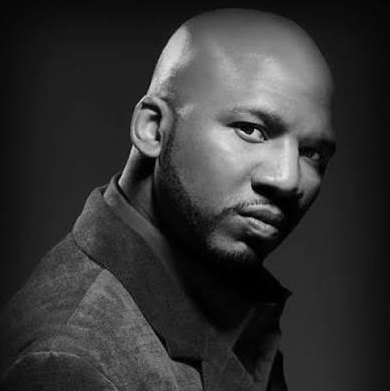
The entertainment world and fans of classic 1990s urban cinema are reeling today from the heartbreaking news of a major loss. Samuel Monroe Jr., the beloved character actor whose unforgettable performances cemented his status as a legendary figure in Black Hollywood, has passed away at the age of 52. Known to millions of fans worldwide as the ultimate scene-stealer, Monroe left an indelible mark on pop culture with his highly expressive, raw, and often hilarious portrayals of memorable hood characters. Whether playing the hyper-confrontational cousin in the Hughes Brothers’ cinematic masterpiece Menace II Society, the loyal gang member Lorenz in Set It Off, or the eccentric club regular Junior in Ice Cube’s comedy-drama The Players Club, Monroe possessed a rare, magnetic screen presence. He was the kind of actor whose face was instantly recognizable to generations of moviegoers, bringing an unmatched authenticity, grit, and street-level realism to every frame he occupied.
The tragic announcement of his passing was made by his mother, Joyce Patton, who took to Facebook to share her immense grief with friends, family, and the actor’s dedicated fan base. Patton wrote a deeply moving post confirming that her son had passed away, stating that “today God called him home” and asking for prayers for their family during this incredibly challenging time, particularly for his three beloved children. According to his family’s representatives and close friends, Monroe died of natural causes related to a severe, months-long medical battle, passing away around 10:24 PM PT on Wednesday, August 26, 2026, at a hospital in Southern California. His death marks the end of a grueling, heartbreaking medical ordeal that began in early 2025 and saw the actor fighting for his life on life support for several months.
As the news of his death hit social media, a massive wave of tributes, condolences, and memories flooded platforms like Facebook, X (formerly Twitter), and Reddit. Fans, fellow actors, and directors shared iconic clips of Monroe’s legendary film scenes, with many expressing deep sadness over his untimely departure. For many, Monroe represented the golden era of 1990s Black cinema—a period where independent filmmakers and major studios alike were producing highly influential, raw, and culturally resonant films that captured the realities of urban American life. Monroe was one of the key character actors who populated this cinematic universe, providing the essential texture, humor, and stakes that made these stories feel so alive and true.
While his passing has brought immense sadness to his family and millions of fans, the details surrounding his final months reveal a heartbreaking, incredibly frustrating medical struggle marked by multiple hospitalizations, severe infections, and a highly publicized legal and financial battle behind the scenes of his hospital room. In this massive, comprehensive tribute and biography, we are going to look past the tragic headlines and celebrate the life, career, and enduring legacy of Samuel Monroe Jr. We will provide a complete, verified physical and personal profile table, explore his early life and rise to fame in Los Angeles, dive deep into his legendary on-screen breakthroughs, and dissect the medical and familial struggles that defined his final days.
Grab your notebook, because we are honoring the incredible life and career of a true Hollywood legend.
To help you quickly get up to speed with all of Samuel Monroe Jr.’s vital statistics, body measurements, and personal details, we have compiled his official, verified facts into this easy-to-read personal profile table.
Samuel Monroe Jr.: Quick Wiki & Biographical Profile
| Physical and Personal Facts | Official Statistics & Details |
|---|---|
| Full Name | Samuel Monroe Jr. |
| Nickname | Sam, Caffamilliano |
| Date of Birth (DOB) | November 28, 1973 |
| Age | 52 Years Old (at the time of his passing on August 26, 2026) |
| Birthplace | Los Angeles, California, United States |
| Nationality | American |
| Ethnicity | African-American (Black) |
| Zodiac Sign | Sagittarius |
| Profession | Actor, Screenwriter, Film Director, Producer |
| Years Active | 1988 – 2026 |
| Net Worth | Estimated $500,000 USD (heavily impacted by medical expenses) |
| Height in Feet | 6 feet 1 inch |
| Height in Meters | 1.85 m |
| Weight in Pounds | 180 lbs (prime weight; dropped significantly during illness) |
| Weight in Kilograms | 81.5 kg |
| Body Proportions | Hourglass / Broad-shouldered (Athletic prime build) |
| Eye Color | Dark Brown |
| Hair Color | Naturally Black (often shaved bald) |
| Mother | Joyce Patton |
| Father | Samuel Monroe Sr. |
| Marital Status | Married / Domestic Partner |
| Spouse / Wife | Shawna Stewart |
| Children | 3 Children (including son Kingston, 12, and daughter Brooklynn, 11) |
Early Life, Los Angeles Roots, and “Caffamilliano”
Samuel Monroe Jr. was born on November 28, 1973, in the heart of Los Angeles, California. Growing up as a young Black kid in LA during the late 1970s and 1980s meant navigating a highly complex, rapidly shifting social, economic, and cultural landscape. Los Angeles was a city of extreme contrasts—while it served as the global capital of glamour, wealth, and filmmaking, the working-class and predominantly Black neighborhoods of South Central, Compton, and Inglewood were grappling with systemic disinvestment, the devastating onset of the crack cocaine epidemic, and intense gang activity. For a young Samuel, this environment was a daily reality, shaping his worldview, his survival instincts, and ultimately, his artistic expression.
Despite the challenges of his surroundings, Samuel possessed an innate, burning passion for creativity and performance. He was a highly charismatic, talkative, and observant child who loved to make people laugh. His mother, Joyce Patton, recognized her son’s unique spark early on, encouraging him to channel his high energy into constructive pursuits. Growing up, Samuel spent countless hours watching television, movies, and theater, completely captivated by the way actors could manipulate their voices, bodies, and expressions to tell powerful stories. He realized very early on that performance was not just a form of entertainment; it was a powerful tool for survival, self-expression, and communication.
As he entered his teenage years, Samuel began exploring the local LA creative scene, attending school plays, drama workshops, and community theater productions. It was during this period that he developed his distinctive artistic persona and adopted the stage name “Caffamilliano.” The nickname was a reflection of his bold, larger-than-life personality and his desire to stand out in a highly competitive industry. He wanted a name that sounded smooth, unique, and memorable—something that captured both his street-smart charm and his high artistic aspirations.
Attending Verdugo Hills High School in the Tujunga neighborhood of Los Angeles, Samuel was a popular, highly energetic student. He regularly performed in school assemblies, talent shows, and drama classes, accompanied by classmates who marveled at his natural acting ability and his impeccable comedic timing. Samuel was a keen observer of human behavior; he would study the mannerisms, slang, and walking styles of the people in his neighborhood, storing them away in his mental library to use in his future characters. He did not want to just play a role; he wanted to embody the actual, living essence of the people he grew up with. This dedication to authentic observation became the foundation of his signature acting style, setting him up for a major professional breakthrough in the early 1990s.
The Television Beginnings: Out All Night and Outward Success
Samuel Monroe Jr.’s professional acting career began in the most high-profile way possible. In 1993, when he was just 19 years old, he landed his first official on-screen acting credit on Patti LaBelle’s hit NBC sitcom, Out All Night. The show, which starred the legendary soul diva alongside Vivica A. Fox and Morris Chestnut, was a major platform for young Black talent in the early 1990s. Set in a trendy Los Angeles nightclub, the sitcom was full of energy, style, and music, providing the perfect playground for a rising star like Samuel.
On the show, Samuel landed the role of Dion, a recurring character who regularly brought his sharp comedic energy and street-level charisma to the nightclub scenes. Working alongside established industry heavyweights like LaBelle, Fox, and Chestnut was an incredible masterclass for the teenage actor. He had to learn how to hit his marks on a fast-moving, multi-camera television set, deliver his lines with perfect comedic timing, and hold his own against highly experienced co-stars who were at the peak of their careers. Samuel passed this test with flying colors, proving immediately that he possessed a natural, effortless on-camera charisma that could not be taught.
His successful run on Out All Night opened doors for him across the television landscape. Casting directors began taking notice of his unique ability to play grounded, authentic, and highly memorable characters. Over the next decade, Samuel scored guest-starring and recurring parts on some of the most acclaimed television series of the era. He appeared in the groundbreaking ABC police procedural NYPD Blue in 1996, playing a gritty, realistic street character in a performance that was widely praised for its raw intensity. He also landed spots on Steven Bochco’s highly dramatic legal series Murder One, the beloved WB sitcom Smart Guy, and TNT’s critically acclaimed, ultra-realistic cop drama Southland.
No matter how small the television role, Samuel approached it with the same level of preparation and respect that he would a major feature film. He believed that there were no small parts, only small actors, and he made sure that every single character he played had a distinct voice, a clear physical presence, and a logical set of motivations. This absolute commitment to his craft made him a favorite among television directors, who knew they could rely on Samuel to bring instant credibility and life to their scenes. But while his television work provided a steady foundation, it was his transition to the big screen that would permanently write his name into the history of American cinema.
The Menace II Society Breakthrough: The Legend of Ilena’s Cousin
In 1993, directors Albert and Allen Hughes were preparing to shoot their debut feature film, Menace II Society. The film was designed to be a raw, uncompromised, and incredibly realistic look at the lives of young Black men in the Watts neighborhood of Los Angeles, offering a stark contrast to the more polished, moralistic stories being produced by mainstream Hollywood. The Hughes Brothers wanted to populate their film with actors who looked, spoke, and moved like the actual residents of South Central—actors who could bring a sense of immediate danger, emotional weight, and authenticity to the screen.
Samuel Monroe Jr. auditioned for the film and immediately blew the directors away with his raw intensity and natural charisma. He was cast in a small but pivotal role: the unnamed character officially credited as “Ilena’s Cousin.” On paper, the role was brief, consisting of only a single major scene. Yet, through sheer performance power, physical commitment, and a legendary delivery, Samuel turned this brief appearance into one of the most iconic, quoted, and culturally resonant scenes in the history of Black cinema.
The scene takes place outside a local housing project, where the main characters, C-Caine (played by Tyrin Turner) and his crew, are hanging out. C-Caine has recently gotten a local girl, Ilena, pregnant, and he has been avoiding her calls and refusing to take responsibility. Ilena’s cousin, played by Samuel, decides to confront C-Caine directly to demand justice and stand up for his family’s honor. Standing at an imposing 6 feet 1 inch, dressed in a classic ’90s oversized plaid shirt and sagging jeans, Samuel walks up to the crew with an incredibly distinct, exaggerated, open-handed gangsta run that immediately signals high tension and volatile energy.
When he reaches C-Caine, Samuel delivers a confrontational, high-pitched, and raw verbal assault that has been memorized by millions of fans: “What you say about my momma?! Yo, you think you’re tough? What you say about my momma?!” The confrontation escalates instantly into a physical altercation, with Samuel’s character swinging wildly before C-Caine’s crew jumps in to beat him down. The scene is violent, chaotic, and incredibly raw, perfectly capturing the volatile, hair-trigger environment where a single misunderstood word can lead to explosive physical violence.
What makes Samuel’s performance in this scene so legendary is his absolute, uncompromised commitment to the physical and emotional reality of the moment. He did not play the character as a generic movie bully or a cartoonish thug. Instead, he brought a deeply human, desperate, and highly volatile energy to the screen. His open-handed, loose-limbed gangsta run was so unique and physically distinctive that it became an instant cultural trademark, widely discussed, analyzed, and imitated on social media for decades. Fans still post side-by-side video comparisons, recreating his run and his iconic lines with absolute reverence.
Through his performance in Menace II Society, Samuel Monroe Jr. achieved something that many lead actors struggle to accomplish: he created a permanent, unforgettable cultural touchstone out of a single, two-minute scene. He proved that an actor does not need ninety minutes of screen time to make a massive, lasting impact on the audience. He just needed to be raw, true, and completely honest to the character and the moment.
Defining an Era: Set It Off, Tales from the Hood, and The Players Club
Following his explosive, historic breakthrough in Menace II Society, Samuel Monroe Jr. became one of the most highly sought-after character actors for the booming urban and Black cinema genres of the mid-to-late 1990s. Directors and producers realized that if they wanted to add immediate street-level credibility, raw tension, and a touch of grounded, dark humor to their films, they needed to hire the man who had played Ilena’s cousin. Over the next five years, Samuel built an incredibly impressive filmography, starring in some of the most celebrated and culturally significant films of the decade.
In 1995, Samuel landed a starring role in the horror-comedy anthology film Tales from the Hood. Directed by Rusty Cundieff and executive produced by Spike Lee, the film was a brilliant, highly subversive work that used classic horror tropes to address real-world social issues affecting the Black community, including police brutality, domestic violence, gang culture, and institutional racism. Samuel starred in the film’s highly memorable and terrifying gang-war segment as “Bulldog,” a hardened, cold-blooded street soldier who is forced to face the supernatural, monstrous consequences of his violent lifestyle. His performance in Tales from the Hood was widely praised for its chilling realism and its ability to seamlessly transition from aggressive street bravado to absolute, bone-chilling terror as his character’s past sins literally come back to haunt him.
The following year, in 1996, Samuel was cast in F. Gary Gray’s explosive, critically acclaimed action-drama Set It Off. The film, which starred Queen Latifah, Jada Pinkett, Vivica A. Fox, and Kimberly Elise as four working-class friends in Los Angeles who turn to bank robbery to escape their desperate financial circumstances, is widely considered one of the greatest heist films of all time. In the movie, Samuel reunited with his Out All Night co-star Vivica A. Fox, playing the role of Lorenz, a slick, street-smart associate who is deeply involved in the local LA underground economy. Working under the direction of F. Gary Gray, Samuel brought a smooth, calculated, and highly polished energy to his scenes, showing off a completely different side of his acting range. He was no longer just the volatile teenager from Watts; he was now a mature, calculating player who understood the high-stakes chess game of the streets.
That same year, Samuel showed off his incredible comedic self-awareness by starring in the Wayans Brothers’ hilarious parody film, Don’t Be a Menace to South Central While Drinking Your Juice in the Hood. The film was a brilliant, loving send-up of the entire ’90s hood movie genre, poking fun at the highly dramatic tropes and characters of films like Boyz n the Hood, Menace II Society, and Poetic Justice. Samuel was cast in the film as a character named “Sam,” which was a direct, genius parody of his own iconic role in Menace II Society. He hilariously recreated his famous confrontational lines and his signature open-handed, loose-limbed gangsta run, proving to the world that he possessed a fantastic sense of humor and did not take himself too seriously. His appearance in Don’t Be a Menace became a massive favorite among comedy fans, cementing his self-parody as an unforgettable highlight of the film.
In 1998, Samuel landed yet another legendary role in Ice Cube’s directorial debut, the comedy-drama The Players Club. The film, which offered an authentic, behind-the-scenes look at the lives and struggles of women working in a Southern strip club, starred Bernie Mac, LisaRaye McCoy, and Jamie Foxx. Samuel was cast in the film as “Junior,” an eccentric, highly energetic, and occasionally troublesome club regular. Junior was a character who brought a constant wave of humor, chaos, and unpredictable energy to the club, serving as a perfect foil to Bernie Mac’s hilarious, strict club owner Dollar Bill. Samuel’s performance as Junior was a masterclass in character work—he used his tall, 6-foot-1-inch frame, wide-eyed expressions, and physical comedy to turn every club scene into a hilarious, memorable highlight of the movie.
Through his work in Tales from the Hood, Set It Off, Don’t Be a Menace, and The Players Club, Samuel Monroe Jr. solidified his status as an absolute legend of 1990s Black cinema. He had built a highly diverse, incredibly impressive body of work that spanned horror, high-stakes drama, self-parody, and physical comedy, proving himself to be one of the most versatile and valuable character actors of his generation.
The Tragic Medical Ordeal: Meningitis, MRSA, and the Misdiagnosis Nightmare
While Samuel Monroe Jr.’s professional career was defined by his incredible physical energy, expressive movement, and large-on-screen persona, his final eighteen months were marked by an unspeakably tragic, incredibly frustrating medical ordeal that ultimately cost him his life. The nightmare began in early 2025, while Samuel was on location in Las Vegas, Nevada, filming an independent movie. During the shoot, Samuel began experiencing severe headaches, a stiff neck, a high fever, and extreme exhaustion—classic symptoms of a systemic, highly volatile infection.
Concerned about his health, Samuel sought medical attention at a local hospital. However, according to his wife, Shawna Stewart, and other close family members, doctors repeatedly misdiagnosed his condition, brushing off his severe symptoms as a standard viral infection, exhaustion, or a severe migraine. These repeated misdiagnoses allowed the infection to fester and spread unchecked throughout his body for several months.
By the time medical professionals in Southern California finally ran the correct diagnostic tests and identified the true culprit, the reality was terrifying. Samuel was diagnosed with a severe, advanced case of bacterial meningitis—an incredibly dangerous, life-threatening infection and swelling of the protective membranes (meninges) that cover the brain and spinal cord. Because the infection had been allowed to spread untreated for so long, it had already traveled up his spine and invaded his brain, causing massive, critical brain swelling (cerebral edema) and triggering a series of violent, debilitating seizures.
To save his life, Samuel was rushed into emergency surgery, ultimately undergoing three highly invasive brain surgeries to relieve the mounting, life-threatening pressure on his brain tissue and drain the infected fluid. The surgeries were successful in keeping him alive, but they took an unimaginable toll on his physical and cognitive systems. Samuel was placed on a ventilator and life support in a Southern California intensive care unit, where his medical team closely monitored his brain activity. His family was forced to face the devastating reality that the actor was at extreme risk of entering a permanent vegetative state or suffering irreversible, catastrophic brain damage.
To make matters worse, while his body was fighting to recover from the massive trauma of brain surgery, Samuel contracted a severe, highly resistant hospital-acquired lung infection: MRSA pneumonia (Methicillin-resistant Staphylococcus aureus). MRSA is a strain of staph bacteria that is highly resistant to standard antibiotics, making it exceptionally difficult to treat and cure, especially in a patient whose immune system has already been completely devastated. The severe lung infection caused his respiratory system to fail, requiring maximum assistance from life support systems to keep him oxygenated.
As his organs began to shut down under the pressure of multiple, systemic infections, Samuel’s kidneys failed, requiring him to undergo daily, intense kidney dialysis to manually filter his blood and remove life-threatening toxins from his body. For months, Samuel remained in a critical, highly volatile state, fighting a daily battle against meningitis, MRSA, kidney failure, and the lingering trauma of three brain surgeries. His wife, Shawna Stewart, launched a public GoFundMe campaign to help cover the staggering, astronomical medical bills that were mounting daily, pleading with his fans and the entertainment community to support the actor who had given them so many legendary cinematic memories. Tragically, despite his immense physical strength and the tireless efforts of his medical team, the extensive damage to his brain, lungs, and kidneys proved too severe to overcome, and Samuel Monroe Jr. passed away on August 26, 2026.
Behind Closed Doors: The Joyce Patton vs. Shawna Stewart Conflict
While Samuel Monroe Jr. was fighting for his life in a Southern California hospital room, a bitter, highly publicized, and deeply personal legal battle erupted behind closed doors, pitting his mother against his partner. The conflict, which was documented by outlets like TMZ and public court filings, added a layer of immense stress and tragedy to an already heartbreaking situation, exposing deep fissures within the actor’s family.
The legal war began in mid-2026, when Samuel’s mother, Joyce Patton, filed an emergency petition in a California court to place her son under a legal conservatorship. A conservatorship is a legal arrangement where a judge appoints a guardian to manage the financial affairs and medical decisions of an individual who is physically or mentally incapacitated. In her court filings, Patton argued that she, as his biological mother, was the most qualified and legally appropriate person to make critical life-or-death medical decisions for her son and oversee his estate.
However, the petition did not stop at a simple request for medical guardianship. In a highly contentious move, Patton’s legal filings openly questioned the validity of her son’s relationship and marriage to his partner, Shawna Stewart. Patton asked the court to investigate whether Stewart was ever legally married to her son, suggesting that their marital status was unverified and that Stewart had no legal standing to make medical or financial decisions on Samuel’s behalf.
Shawna Stewart immediately hit back, presenting evidence to TMZ and the court that she held Samuel’s medical power of attorney and was the designated, legal manager of his finances and quality-of-life decisions. Stewart asserted that she had been by Samuel’s side throughout his entire eighteen-month medical battle, managing his day-to-day care, coordinating with his surgeons, and acting as his primary advocate. In a series of emotionally charged statements, Stewart claimed that Samuel had been incredibly clear before his cognitive decline: he did not want his mother, Joyce Patton, to be in control of his finances or to make decisions regarding his medical care and quality of life.
The battle split the family into opposing camps, with different family members taking sides while Samuel remained unconscious on a ventilator. Fans and observers were left devastated by the public nature of the feud, which saw his mother and his partner trading accusations while a beloved actor was fighting for his very survival. The legal fight highlighted the complex, often messy realities of celebrity estate planning and the immense importance of having legally verified, uncontested power of attorney documents in place before a medical crisis occurs. Ultimately, the bitter dispute remained unresolved at the time of Samuel’s passing, leaving behind a legacy of unresolved grief, legal tension, and family division that continues to cast a shadow over his memory.
Samuel Monroe Jr. Height, Weight, and Physical Presence Analysis
Samuel Monroe Jr.’s physical statistics formed the literal framework of his on-screen success, dictating the types of roles he was cast in and how he commanded the audience’s attention. Standing at an imposing 6 feet 1 inch (1.85 m), Samuel possessed a towering, highly athletic, and broad-shouldered physique that made him an incredibly intimidating physical presence on screen. In his prime, he weighed a solid, conditioned 180 pounds (81.5 kg), carrying a lean, muscular frame that allowed him to move with an effortless, fluid grace.
In the world of 1990s character acting, an actor’s physical proportions were their calling card. For Samuel, his tall stature, long limbs, and expressive, wide-set facial features allowed him to play characters that were both physically imposing and deeply expressive. When stood next to his co-stars, Samuel consistently commanded the frame, using his height to establish immediate authority, stakes, and tension in his dramatic scenes.
However, his physical presence was not just about intimidation; it was also his greatest tool for physical comedy. In the David Kibbe body-typing and styling framework, Samuel’s bone structure and physical proportions classify him as a classic Dramatic / Flamboyant Natural. This styling category is defined by a strong vertical line, a long skeletal structure, and a natural, athletic frame. For an actor like Samuel, this verticality allowed him to use his body as a physical instrument.
He was famous for his chameleonic ability to manipulate his physical proportions on camera. In Menace II Society, he used his long legs and loose joint alignment to execute his legendary, wide-open-handed gangsta run—a movement that looked incredibly fluid, chaotic, and volatile all at once. In The Players Club, he used his tall frame and expressive arms to play the goofy, hyper-animated club regular Junior, using physical comedy to make his character stand out in crowded nightclub scenes.
Tragically, Samuel’s physical frame changed dramatically during his grueling, eighteen-month medical battle. The severe meningitis, multiple brain surgeries, MRSA pneumonia, and kidney failure took a catastrophic toll on his muscular tissue and bone density. Confined to a hospital bed on life support, his body experienced severe muscle wasting and cachexia, causing his weight to drop precipitously from his prime 180 pounds to a fraction of that size. The gaunt, hollowed-out appearance of his cheeks and face in his final months was a heartbreaking testament to the extreme, devastating toll that chronic, systemic illness takes on even the strongest, most athletic physical systems.
Legacy, Net Worth, and Frequently Asked Questions (FAQs)
At the time of his tragic passing, Samuel Monroe Jr.’s net worth was estimated to be around $500,000 USD. While he had earned steady, comfortable residuals and acting fees throughout his three decades in the entertainment industry—including his work as an actor, screenwriter, director, and co-producer on his independent TV series The Halls—his financial estate was heavily depleted in his final eighteen months. The compounding costs of intensive care, three major brain surgeries, daily dialysis, ventilators, and long-term life support ran into hundreds of thousands of dollars, completely draining his personal savings and prompting his family to turn to GoFundMe to keep up with his staggering medical bills.
But Samuel’s true wealth was never measured in dollars; it was measured in the deep love of his family and the enduring legacy he left behind in American culture. He was a deeply devoted, loving father to his three beautiful children, including his 12-year-old son Kingston Monroe and his 11-year-old daughter Brooklynn Monroe. His children were his pride and joy, and the family’s GoFundMe was launched not just to cover his hospital care, but to ensure that his young children would be provided for in the face of their father’s devastating illness and untimely death.
Samuel Monroe Jr.’s legacy is one of absolute authenticity, resilience, and artistic brilliance. He took characters that could have easily been written off as minor background texture and breathed life, humanity, and permanent cultural relevance into them. He was a hood cinema icon, a pioneer of Black character acting, and a man who stayed true to his Los Angeles roots from his very first screen credit to his very last day. Rest in peace, Samuel Monroe Jr. Your run—your legendary, open-handed gangsta run—is complete, but the footsteps you left behind in the halls of cinema will echo forever.
Frequently Asked Questions (FAQs) About Samuel Monroe Jr.
Q1: What is Samuel Monroe Jr.’s real height in feet?
Samuel Monroe Jr. stood at an imposing height of 6 feet 1 inch (1.85 m). His tall, broad-shouldered physique gave him an exceptionally commanding and memorable presence in both his dramatic and comedic scenes.
Q2: What was the cause of death for Samuel Monroe Jr.?
Samuel Monroe Jr. passed away at age 52 on August 26, 2026, following a severe, eighteen-month battle with bacterial meningitis. The infection was initially misdiagnosed, allowing it to spread to his brain and spine. He also suffered from MRSA pneumonia and kidney failure that required dialysis while on life support.
Q3: Which famous character did Samuel Monroe Jr. play in Menace II Society?
He played the unnamed character officially credited as “Ilena’s Cousin.” His confrontation with C-Caine (“What you say about my momma?!”) and his highly distinct open-handed “gangsta run” became one of the most famous and imitated scenes in the history of Black cinema.
Q4: What other famous movies did Samuel Monroe Jr. star in?
In addition to Menace II Society (1993), Samuel starred in several classic ’90s urban films, including Tales from the Hood (1995) as Bulldog, Set It Off (1996) as Lorenz, Don’t Be a Menace to South Central While Drinking Your Juice in the Hood (1996) as Sam, and The Players Club (1998) as Junior.
Q5: Did Samuel Monroe Jr. have any children?
Yes, Samuel was a proud father to three children, including his 12-year-old son Kingston Monroe and his 11-year-old daughter Brooklynn Monroe.
Q6: What was the legal dispute between his mother and partner about?
While Samuel was hospitalized, his mother, Joyce Patton, filed for a legal conservatorship and questioned the legal validity of his marriage. His partner, Shawna Stewart, held his medical power of attorney and managed his finances, claiming Samuel did not want his mother in control.
Q7: What was Samuel Monroe Jr.’s net worth at the time of his death?
His net worth was estimated at $500,000 USD, though his personal savings were heavily depleted by the astronomical medical expenses from his prolonged hospital care and surgeries.