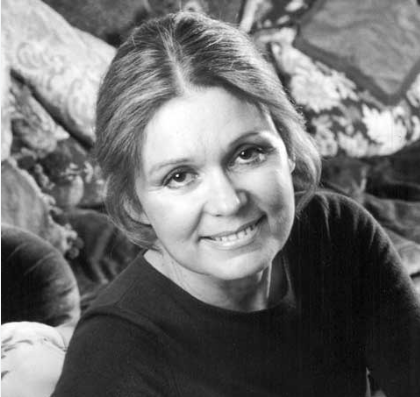
Gloria Steinem, the journalist and activist who spent nearly six decades as the most recognizable face of American feminism, has died at 92. Her death was announced Thursday in a statement posted to her official Instagram account, which said she passed away peacefully at her home in New York City on Wednesday, surrounded by some of the many people who loved her. No cause of death was given.
For anyone who came of age at any point over the last sixty years, Steinem’s name is close to inseparable from the modern fight for women’s rights. Here’s what’s known about her death, along with a full look back at a career that changed how millions of women saw themselves.
Quick Facts: Gloria Steinem
| Category | Details |
|---|---|
| Full Name | Gloria Marie Steinem |
| Date of Birth | March 25, 1934 |
| Place of Birth | Toledo, Ohio |
| Date of Death | Wednesday, September 2, 2026 |
| Place of Death | New York City |
| Age at Death | 92 |
| Profession | Journalist, writer, political activist |
| Best Known For | Founding Ms. Magazine, leading second-wave feminism |
| Education | Smith College |
| Husband | David Bale, married 2000, died 2003 |
| Notable Stepson | Actor Christian Bale |
| Charity | Gloria’s Foundation |
How Gloria Steinem Died
The news came in a statement posted to Steinem’s verified Instagram account on Thursday, saying she died Wednesday at her home in New York City, peacefully, and surrounded by people who loved her. The post did not disclose a cause of death, and as of this writing, no further medical details have been made public by her family or representatives.
What the statement did offer was a portrait of a woman who kept working right up until the end. It described her near-century on earth as years well lived, noting she continued working for equality until the very end. The tribute credited her greatest gift as her ability to listen to others and make them feel truly seen and heard, adding that her words and example gave people permission to be their truest selves.
According to the same statement, Steinem had spent her final years doing the two things she loved most — being in community with others, and writing. Her home had long served as an informal gathering place for what she called “Talking Circles,” bringing hundreds of guests through her living room over the years as part of what her team described as a deliberate effort to keep her home a center for social justice organizing, right up until her death.
Her representatives asked fans to light a candle in her honor and to consider donations to Gloria’s Foundation, the charitable organization she established to continue her work.
From Toledo to the Front Lines of a Movement
Gloria Marie Steinem was born on March 25, 1934, in Toledo, Ohio, to Leo and Ruth Steinem. Her early life was unconventional by the standards of the time. Her father worked as a traveling antiques salesman, and much of her childhood was spent moving around the country with her family rather than settling into one fixed community, an upbringing she later credited with shaping her independent streak and comfort with instability.
She attended Smith College, graduating in the mid-1950s, and went on to build a career in journalism at a moment when very few American newsrooms took women seriously as reporters rather than as typists or researchers. Steinem pushed through that resistance directly, eventually landing bylines that put her at the center of some of the defining cultural conversations of the era.
One assignment in particular became legendary. In 1963, working undercover, Steinem took a job as a Playboy Bunny at the New York Playboy Club and wrote an exposé detailing the exploitative working conditions faced by the club’s waitresses. The piece, published as “A Bunny’s Tale,” became one of the earliest and most widely read examples of the kind of participatory, boots-on-the-ground journalism that would define much of her later career — reporting from inside the systems she was critiquing rather than observing them from a comfortable distance.
Founding Ms. Magazine
Steinem’s most enduring institutional legacy arrived in 1972, when she co-founded Ms. Magazine, one of the first mainstream American publications built entirely around a feminist editorial perspective. At a time when most women’s magazines were built around homemaking tips and beauty advice, Ms. treated women as full political, intellectual, and economic actors — publishing serious, often confrontational journalism on topics including domestic violence, unequal pay, sexual harassment, and abortion rights, years before most of those subjects were considered acceptable for mainstream discussion at all.
The magazine turned Steinem into a public figure in a way her earlier journalism hadn’t. Her name and, increasingly, her face — often photographed in mini-skirts, aviator sunglasses, and her signature long, straight hair — became closely associated with the entire feminist movement in the eyes of the American public, for better and occasionally for worse. Steinem herself pushed back against the tendency to reduce her to her looks, telling Teen Vogue in 2011 that there remained a persistent notion that an attractive woman couldn’t also be taken seriously, and that women were still identified by their appearance rather than by their hearts or minds.
Ms. Magazine’s launch was itself a small act of defiance against the publishing industry. Major advertisers were reportedly skeptical that a magazine built around feminist politics rather than fashion and homemaking could sustain itself commercially, and early trial issues sold out far faster than publishers had anticipated, forcing a rapid reassessment of just how large an audience existed for the kind of journalism Steinem and her co-founders wanted to produce. Over the following decades, the magazine became a training ground for generations of feminist writers and editors, publishing pieces on subjects — domestic abuse, date rape, unequal pay, closeted sexuality — that few, if any, mainstream outlets of the era were willing to touch.
A Voice at the Center of Second-Wave Feminism
Through the late 1960s and into the 1970s, Steinem became one of the most visible public faces of what’s now commonly called second-wave feminism, a broad, decades-long push for legal, economic, and social equality that reshaped nearly every institution in American life. She was a fixture at rallies, congressional hearings, and televised debates, and she co-founded several organizations that extended feminist advocacy directly into the political system, including groups focused on getting women into elected office and securing reproductive rights.
Reproductive freedom was, by her own account, never an abstract political issue for Steinem. In her 2015 memoir, “My Life on the Road,” she wrote about having had an illegal abortion at age 22, a formative and dangerous experience at a time when the procedure was against the law across most of the country. She dedicated the book to the doctor who performed it, recalling that he’d asked her to promise two things in return — not to tell anyone his name, and to go on to live the life she actually wanted rather than the one that had been expected of her. That early experience shaped decades of subsequent advocacy work on reproductive rights, work she continued well into her final years.
Her activism extended beyond feminism narrowly defined. Steinem was also a vocal opponent of the Vietnam War and remained engaged with a broad range of liberal political causes throughout her life, rarely stepping back from public advocacy even as she moved into her eighties and nineties.
Building Institutions, Not Just Headlines
What separated Steinem from many of the era’s other prominent feminist voices was her sustained focus on building lasting organizations rather than simply generating attention through speeches and media appearances. Beyond Ms. Magazine, she helped establish the National Women’s Political Caucus in 1971, an organization dedicated to recruiting, training, and supporting women running for political office at every level of American government, at a time when female representation in elected office was minimal even by today’s still-imperfect standards.
She also co-founded the Women’s Media Center in the mid-2000s, decades after her initial rise to prominence, showing a continued willingness to adapt her organizing work to new media landscapes rather than resting on the reputation she’d already built. That pattern — founding new institutions well into her seventies rather than settling into an emeritus role — became one of the more frequently noted aspects of her later career, distinguishing her from many activists whose public influence tends to fade once their original movement’s most visible period has passed.
Steinem was also known for extensive public speaking, often touring college campuses and community centers across the country for decades, engaging directly with audiences in a way that kept her connected to shifting generations of activists rather than remaining a figure primarily associated with one specific era of the movement.
Marriage Later in Life
For most of her public life, Steinem was famously and unapologetically unmarried, having long criticized marriage as an institution that, historically, stripped women of independent legal identity and economic standing. That made her decision, at age 66, to marry entrepreneur and activist David Bale in 2000 a genuine surprise to many of her longtime followers, given how consistently she’d rejected the institution in her earlier writing and public statements.
Steinem addressed the apparent contradiction directly when reporters asked what had changed her mind. Her answer was blunt: she hadn’t changed — marriage had. She explained that decades earlier, marrying would have meant losing her name, her legal residence, and her credit rating, along with a range of other civil rights that simply no longer applied by the time she married Bale, since it had, by then, become possible to build a genuinely equal marriage.
David Bale, the father of actor Christian Bale, died of lymphoma in 2003, just three years into the marriage. Steinem rarely spoke at length about her grief following his death, though she continued to reference their relationship warmly in interviews over the following two decades, crediting him with helping her understand a different, more equal model of partnership than the one she’d spent much of her career criticizing.
Tributes From Across the World
Reaction to Steinem’s death arrived quickly and from across the political and journalistic world. Journalist Christiane Amanpour wrote publicly that Steinem would go down in history as one of the most important activists of all time, having led a movement for the equality of half the world’s population. Amanpour added that Steinem had lived a long, passionate life dedicated to that cause, carried out with intellectual precision, emotional awareness, humor, and beauty, and closed by wishing her peace and hoping the cause she’d spent her life on would continue to thrive.
Similar tributes followed from political figures, fellow writers, and generations of activists who credited Steinem, directly or indirectly, with reshaping how they understood their own rights and place in the world. For many, the tributes weren’t abstract — they described specific ways Steinem’s writing, speeches, or public example had changed the direction of their own lives, a testament to just how personal and far-reaching her decades of public advocacy had become.
A Legacy Measured in Decades, Not Headlines
It’s difficult to summarize a career as long and varied as Steinem’s in any single sentence. She was a journalist who used undercover reporting to expose exploitation. A magazine founder who built an entire publication around the radical idea that women’s political and economic concerns deserved serious, mainstream coverage. A public speaker who spent decades touring the country building support for reproductive rights, equal pay, and women’s political representation. And, by her own final years, someone who’d shifted much of her focus toward smaller, more intimate community-building — hosting the kind of living-room “Talking Circles” that echoed the grassroots consciousness-raising groups that helped launch the feminist movement she’d become synonymous with in the first place.
That full arc — from a young undercover reporter exposing exploitative labor conditions in 1963, to a 92-year-old still hosting organizing circles in her own living room in her final years — is likely the clearest measure of what made Steinem’s influence so lasting. She didn’t simply arrive at a moment and become its symbol. She kept working, publicly and consistently, across roughly six decades, long after many of her contemporaries from the same era of activism had stepped back from public life.
Frequently Asked Questions
How did Gloria Steinem die? Her official Instagram account announced she died peacefully at her home in New York City on Wednesday, September 2, 2026, surrounded by loved ones. No cause of death was disclosed.
How old was Gloria Steinem when she died? She was 92, having been born on March 25, 1934.
What is Gloria Steinem best known for? She’s best known for co-founding Ms. Magazine in 1972 and becoming one of the most recognizable public faces of second-wave feminism in the United States.
Was Gloria Steinem married? Yes, though only later in life. She married entrepreneur David Bale in 2000, at age 66, after decades of publicly criticizing marriage as an institution. He died of lymphoma in 2003.
Is Gloria Steinem related to actor Christian Bale? By marriage, yes. Christian Bale is her stepson, the son of her late husband, David Bale.
What was “A Bunny’s Tale”? It was Steinem’s landmark 1963 undercover exposé, written after she took a job as a Playboy Bunny to report on the exploitative working conditions faced by waitresses at the New York Playboy Club.
Did Gloria Steinem write any books? Yes, including her 2015 memoir “My Life on the Road,” in which she wrote about her early activism and personal experiences, including having had an illegal abortion at age 22.
What causes was Gloria Steinem most associated with? She was best known for her advocacy on reproductive rights, equal pay, women’s political representation, and broader gender equality, along with her opposition to the Vietnam War and involvement in other liberal political causes.
Key Takeaways
- Gloria Steinem died Wednesday, September 2, 2026, at her home in New York City, at age 92. No cause of death has been disclosed.
- She co-founded Ms. Magazine in 1972 and became the most publicly recognized face of second-wave feminism in the United States.
- Her 1963 undercover exposé, “A Bunny’s Tale,” about conditions for Playboy Club waitresses, remains one of her earliest and most influential pieces of journalism.
- She married David Bale, Christian Bale’s father, at age 66 in 2000, after decades of publicly criticizing marriage as an institution. Bale died in 2003.
- She continued organizing and hosting activist “Talking Circles” from her own home until the final years of her life.
- Tributes have poured in from journalists, activists, and public figures crediting her with reshaping how generations of women understood their own rights.
Gloria Steinem’s representatives have asked that those who wish to honor her consider donations to Gloria’s Foundation. This article will be updated with memorial details as they are announced.