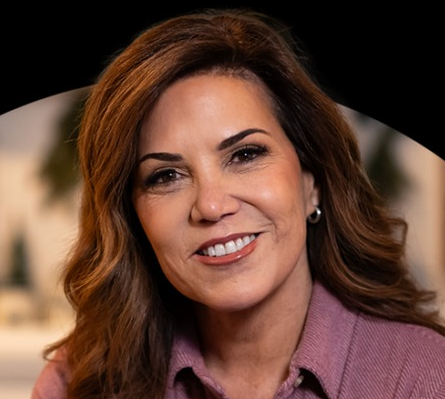
For two decades, Michele Tafoya was the voice millions of NFL fans heard between plays — the sideline reporter chasing down coaches at halftime, breaking injury news, and anchoring some of the biggest broadcasts in sports. Now she’s chasing something much bigger: a seat in the United States Senate.
On Tuesday night, Tafoya was declared the projected winner of Minnesota’s Republican U.S. Senate primary, beating out a field that included the state party’s own endorsed candidate. It’s one of the most surprising political stories of the year — a former NBC Sunday Night Football fixture turned political outsider who just out-hustled career Republicans for the nomination in a state the GOP hasn’t won statewide since 2002.
Here’s the full story of who Michele Tafoya is, how she got here, what happens next, and why this race is suddenly one of the most closely watched in the country.
Quick Facts About Michele Tafoya
| Full Name | Michele Joan Tafoya |
| Born | December 17, 1964, Manhattan Beach, California |
| Age | 61 |
| Education | B.A., Mass Communications, UC Berkeley (1988); MBA, University of Southern California (1991) |
| Career | Sports broadcaster — CBS Sports, ABC/ESPN, NBC Sports (1994–2022) |
| Best Known For | Sideline reporter, NBC Sunday Night Football (2011–2022) |
| Spouse | Mark Vandersall (married May 13, 2000) |
| Children | Two |
| Residence | Edina, Minnesota |
| Political Party | Republican |
| Current Race | 2026 U.S. Senate election, Minnesota |
| Primary Result | Won GOP nomination, roughly 51.6% of the vote |
| General Election Opponent | Minnesota Lt. Gov. Peggy Flanagan (Democrat) |
The Headline: Tafoya Wins the GOP Senate Primary
Michele Tafoya is officially the Republican nominee for one of Minnesota’s U.S. Senate seats. The Associated Press and multiple networks projected her as the winner of Tuesday’s primary, positioning her for a general election showdown against Democratic Lt. Gov. Peggy Flanagan this November.
The win is notable for a few reasons. First, Tafoya isn’t a career politician — before this campaign, her most public role was standing on the sidelines of NFL games with a microphone, not standing behind a podium at the State Capitol. Second, she pulled off the win despite losing the Minnesota Republican Party’s official convention endorsement back in May, when delegates instead backed Adam Schwarze, a former Marine and Navy SEAL. Third, the seat she’s running for is a big one: it’s open because longtime Democratic Senator Tina Smith announced she would not seek re-election, and Minnesota Republicans haven’t sent one of their own to the U.S. Senate since Norm Coleman won in 2002.
That’s more than two decades of Democratic dominance in Minnesota’s Senate delegation. National Republicans think Tafoya, with her built-in name recognition and fundraising muscle, might be their best shot yet at breaking that streak.
How the Primary Played Out
The Republican field wasn’t small, and it wasn’t friendly. Tafoya faced off against Adam Schwarze, the party’s convention-endorsed candidate, and Royce White, a former NBA player, conservative commentator, and the GOP’s 2024 Senate nominee who ran again this cycle with support from the party’s more hardline wing.
It became a classic “electability versus purity” primary. Schwarze and White both ran to Tafoya’s right, arguing that her more moderate positions — particularly on abortion — meant she wasn’t conservative enough to represent the party’s base. Schwarze in particular argued that Republicans shouldn’t have to “compromise” their values to win, and he tried to frame Tafoya as wealthy and disconnected from everyday voters given her television career.
Tafoya, for her part, leaned into the argument that she was the candidate best positioned to actually win in November — not just excite the base. She entered the race with far more name recognition than either rival thanks to her broadcasting career, and she out-raised the field by a wide margin. That combination of star power and money proved decisive: when the votes were counted, Tafoya took roughly 51.6% of the primary vote, enough to secure the nomination outright over a divided opposition.
It’s worth noting former President Donald Trump stayed out of the primary entirely, declining to endorse any of the three candidates — a notable absence in a Republican primary where Trump’s word often carries outsized weight. Tafoya still had the backing of the National Republican Senatorial Committee, which viewed her as the party’s strongest general-election option regardless of the local endorsement fight.
Who Is Michele Tafoya? Her Life Before Politics
Long before “Senate candidate” was attached to her name, Michele Tafoya built a genuinely notable career in sports broadcasting — one that spanned four major networks and more than two decades on air.
Early Life and Education
Michele Joan Tafoya was born on December 17, 1964, in Manhattan Beach, California. She attended Mira Costa High School, where she first developed an interest in journalism and sports broadcasting, reportedly encouraged by a teacher to pursue the field. She went on to earn a Bachelor of Arts degree in Mass Communications from the University of California, Berkeley, graduating in 1988. She didn’t stop there — Tafoya later returned to school and completed a Master of Business Administration at the University of Southern California in 1991, giving her a business background that isn’t typical for sports broadcasters, but has proven useful in her political and commentary career since.
A Broadcasting Career That Spanned Decades
Tafoya’s on-air career took her through nearly every major sports network in the country:
- CBS Sports (1994–1999): She started out covering college basketball and football, cutting her teeth as a reporter and host during the 1990s.
- ABC and ESPN (2000–2011): Tafoya became a regular presence on Monday Night Football during its run on both ABC and ESPN, while also covering the NBA, NCAA tournaments, and Olympic events — including a stint at the 2000 Sydney Olympics covering rhythmic gymnastics and softball play-by-play.
- NBC Sports (2011–2022): This was the role that made her a household name to football fans. Tafoya spent eleven seasons as the lead sideline reporter for NBC’s Sunday Night Football, the network’s marquee primetime NFL broadcast, working alongside legendary play-by-play announcer Al Michaels and analyst Cris Collinsworth.
Over her career, Tafoya earned five Sports Emmy Awards for Outstanding Sports Personality – Sports Reporter, along with a Gracie Award for outstanding individual achievement. She’s also credited as the first woman to call play-by-play for an NCAA basketball tournament game on CBS Radio — a genuine broadcasting milestone.
Her final assignment for NBC came at Super Bowl LVI in February 2022, after which she stepped away from full-time sports broadcasting. According to reporting at the time, she had actually informed NBC of her decision to leave years earlier, but stayed on through the Super Bowl at the request of the show’s longtime executive producer.
The Pivot From Press Box to Politics
Tafoya’s move into politics didn’t happen overnight, and it didn’t come out of nowhere either. She had been a visible conservative commentator for years even while still working in sports media, making regular appearances on Fox News programs and speaking out on hot-button cultural issues — most notably her opposition to transgender athletes competing in women’s sports, a position she connected directly to her decades covering athletics professionally.
The day after her departure from NBC Sports became official, Tafoya wasted no time signaling where she was headed next: she was announced as co-chair of Kendall Qualls’s campaign for Minnesota governor. Qualls later withdrew from that race, but the door into Minnesota Republican politics had been opened, and Tafoya walked through it.
She spent the years that followed building a political profile — hosting a politically themed podcast, speaking at conservative events, and becoming an increasingly familiar face in Minnesota GOP circles. Then, in January 2026, she made it official: Michele Tafoya announced her candidacy for the United States Senate.
Her Campaign Platform
Tafoya framed her campaign from day one around the idea that Minnesota is a state in crisis under Democratic leadership, and her messaging has stayed consistent through the primary. Her core platform planks include:
- Fighting fraud in state government. This has been arguably the centerpiece of her campaign, tied to a widely publicized scandal involving the theft of public funds from Minnesota social service programs — a controversy Republicans across the state have seized on heading into the fall elections. Tafoya has cited a figure of roughly nine billion dollars in stolen taxpayer money as a rallying point.
- Supporting law enforcement, at a time when public safety has become a central theme in Minnesota political debates.
- Cutting costs and taxes for the middle class, framed as relief for Minnesota families she says have been squeezed by state policy.
- Opposition to transgender athletes in women’s sports, an issue she’s spoken about extensively, drawing on her own background in sports broadcasting to argue the point with a level of subject-matter credibility most political candidates don’t have.
- A relatively moderate position on abortion compared to her primary rivals — a stance that cost her support among some conservative delegates but is seen by national party strategists as an asset in a general election in a state that leans Democratic.
In her own words after the primary results came in, Tafoya framed the race as being about accountability: “Minnesotans are beaten down by this fraud. Nine billion dollars was stolen from all of us taxpayers. We’re seeing test scores go down while crime goes up; we are seeing businesses flee and our kids are unable to afford to stay. This needs to change.”
Who Will She Face? Meet Peggy Flanagan
Tafoya’s opponent in the November general election is Minnesota Lt. Gov. Peggy Flanagan, who won the Democratic Senate primary over centrist U.S. Rep. Angie Craig. Flanagan ran on a progressive platform, campaigning on pushing back against corporate influence and standing up to President Trump’s administration.
The matchup sets up a genuine ideological contrast: a moderate-leaning Republican newcomer with celebrity name recognition against a sitting lieutenant governor with a well-established progressive base and years of statewide political experience. Republicans are hoping to tie Flanagan to the state’s fraud scandals and to progressive policy positions they believe will be unpopular with swing voters, while Democrats are expected to lean on Flanagan’s experience and question whether Tafoya, despite her fame, is ready for the job.
Political observers have noted that Tafoya was widely seen as more likely to benefit from facing Flanagan than she would have been facing the more moderate Angie Craig — meaning the shape of the Democratic primary result may have handed Tafoya a more favorable general election matchup.
Why This Race Matters Nationally
Minnesota isn’t just electing a senator this year — it’s providing a test case that both national parties are watching closely.
For Republicans, Tafoya represents a rare commodity: a candidate who doesn’t need to spend millions of dollars just to become recognizable to voters. Her broadcasting career gave her built-in familiarity across the state, something that usually takes political newcomers years and enormous ad budgets to build. Combined with a fundraising advantage that helped carry her past the party’s own endorsed candidate, Republicans believe she gives them a legitimate shot at a state they haven’t carried in a Senate race in over two decades.
For Democrats, the race is a reminder that celebrity and crossover appeal can be a real threat, particularly in a political environment where voters in both parties have shown a growing appetite for outsider candidates over establishment picks — the same dynamic that saw Tafoya beat out the party’s actual convention-endorsed nominee.
There’s also the fraud scandal hanging over the race. Republicans up and down the ballot are hoping that ongoing anger over the theft of public funds from Minnesota’s social service programs gives them an opening in a state that otherwise leans blue. How much that issue actually moves general election voters, as opposed to just primary voters, is one of the biggest open questions heading into November.
A Closer Look at Her Primary Rivals
To understand why Tafoya’s win is such a notable story, it helps to know who she actually beat.
Adam Schwarze was the candidate Minnesota’s Republican Party officially threw its weight behind at the state convention in Duluth back in May. A former Marine and Navy SEAL, Schwarze built his campaign heavily around his military service and a promise not to compromise conservative positions to chase moderate votes. He was especially aggressive on abortion, repeatedly contrasting his position with Tafoya’s more moderate stance and arguing the party didn’t need to soften its values to win in November. He also tried to paint Tafoya as a wealthy media figure out of touch with everyday Minnesotans — a line of attack that ultimately wasn’t enough to overcome her financial and name-recognition advantages.
Royce White was the most familiar name in the race behind Tafoya herself. A former NBA player turned conservative commentator, White was the Minnesota GOP’s Senate nominee back in 2024, giving him an existing base and a track record as a statewide candidate. He ran further to the right than either of his rivals and drew support from the party’s most hardline wing, but wasn’t able to expand his coalition enough to overtake Tafoya’s broader appeal.
Both men tried the same basic strategy: run to Tafoya’s right, question her conservative bona fides, and bet that primary voters would prioritize ideological purity over general-election viability. It didn’t work. Tafoya’s combination of statewide name recognition, superior fundraising, and NRSC backing proved to be the more powerful formula, even without the state party’s own endorsement behind her.
The Fraud Scandal Driving Minnesota Politics
Much of Tafoya’s messaging — and much of the broader Republican strategy heading into the fall — centers on a sprawling fraud scandal involving Minnesota’s social service programs. Investigations uncovered widespread theft of public funds, with Tafoya and other Republicans citing losses in the billions of dollars to taxpayers. The scandal has become a rallying point for the state GOP up and down the ballot, not just in the Senate race, as Republicans argue it’s evidence of mismanagement under Democratic leadership in St. Paul.
Democrats, including likely general-election opponent Peggy Flanagan, aren’t directly implicated in the fraud itself, but Republicans are working to tie the scandal to the broader Democratic governing coalition in Minnesota, hoping it becomes a defining issue with swing voters the way it has already become a defining issue in GOP primary messaging. Whether that strategy translates from a Republican primary electorate to a full, more moderate general electorate is one of the central questions of the fall campaign.
Reactions to Tafoya’s Win
Minnesota GOP chairman Alex Plechash offered an enthusiastic endorsement of the newly minted nominee, saying Tafoya “brings the charisma, toughness and fight Minnesota Republicans need to unite our party, expand our coalition and win in November” — a notable statement given that the party’s own convention had endorsed her rival just months earlier.
Not every Republican voter is fully on board, though. Some conservatives who backed Schwarze or White in the primary have voiced discomfort with Tafoya’s more moderate positions, particularly on abortion. In Hermantown, one Republican voter, Libby Vukson, said she personally disagreed with Tafoya’s stance on abortion but ultimately wanted to back “people who have a chance against the Democrats” — a sentiment that captures the broader electability-versus-purity trade-off that defined the entire primary.
That tension isn’t unique to Tafoya’s race. Minnesota Republicans have grappled with a similar divide across other contests this cycle, weighing whether to back convention-endorsed candidates who satisfy the party base or higher-profile alternatives seen as stronger general election contenders.
Timeline: How Tafoya Got Here
- 2011–2022: Serves as lead sideline reporter for NBC Sunday Night Football, becoming one of the most recognizable women in sports broadcasting.
- February 13, 2022: Works her final broadcast, Super Bowl LVI, closing out her NBC tenure.
- February 14, 2022: One day after her NBC departure is confirmed, she’s announced as co-chair of Kendall Qualls’s Minnesota gubernatorial campaign, formally launching her political involvement. Qualls later withdraws from that race.
- 2022–2025: Builds a political profile through conservative media appearances, a politically focused podcast, and continued advocacy on issues like transgender athletes in women’s sports.
- January 21, 2026: Officially announces her candidacy for the U.S. Senate seat being vacated by retiring Sen. Tina Smith.
- May 2026: Loses the Minnesota Republican Party’s convention endorsement to Adam Schwarze, despite entering the convention as the highest-profile candidate in the field.
- Throughout the primary: Leads in polling, fundraising, and name recognition even without the formal party endorsement, fending off attacks from both Schwarze and White that she isn’t conservative enough.
- Primary Day 2026: Wins the Republican nomination with roughly 51.6% of the vote, setting up a general election matchup with Democrat Peggy Flanagan.
Michele Tafoya’s Personal Life
Away from cameras and now campaign events, Tafoya’s personal life centers on her family in Minnesota. She has been married to Mark Vandersall, a financial advisor, since May 13, 2000. The couple has two children and has lived in Edina, Minnesota, a suburb of the Twin Cities, for years — giving Tafoya deep roots in the state she’s now hoping to represent in Washington.
She’s spoken in past interviews about balancing a demanding national broadcasting career with raising a family, and has described her time away from the sidelines as an opportunity to be more present at home while she builds out this new chapter of her professional life.
Career Earnings and Public Profile
Tafoya spent close to three decades as one of the most visible women in sports broadcasting, working marquee assignments across CBS, ABC, ESPN, and NBC, including more than a decade on the NFL’s flagship primetime broadcast. That level of career longevity at the network level, combined with her post-broadcasting work in commentary, speaking engagements, and now politics, has made her a financially comfortable private citizen heading into this race — though as with most political candidates, her exact current net worth isn’t something she has publicly detailed in full, and third-party estimates should be treated as unverified approximations rather than fact.
What is well documented is her broadcasting résumé: five Sports Emmy Awards, a Gracie Award, and the distinction of being the first woman to call play-by-play for an NCAA basketball tournament game on CBS Radio. That track record is central to why national Republicans were eager to recruit her, and why she was able to outraise better-connected primary rivals.
Frequently Asked Questions
Is Michele Tafoya a Republican or Democrat? Tafoya is a Republican. She won the GOP nomination for the U.S. Senate seat in Minnesota in the 2026 primary election.
What did Michele Tafoya do before politics? She spent nearly three decades as a sports broadcaster, most notably as the sideline reporter for NBC’s Sunday Night Football from 2011 to 2022. She also worked for CBS Sports, ABC, and ESPN earlier in her career.
Who is Michele Tafoya’s husband? She is married to Mark Vandersall, a financial advisor. The couple wed in 2000 and have two children together.
Who will Michele Tafoya face in the general election? She’ll face Minnesota Lt. Gov. Peggy Flanagan, a Democrat, in the November general election for the open U.S. Senate seat being vacated by retiring Senator Tina Smith.
Did Michele Tafoya have the Minnesota Republican Party’s endorsement? No. The party’s convention delegates endorsed Adam Schwarze in May. Tafoya won the primary anyway, relying on broader name recognition and a fundraising advantage.
Has a Republican won a Minnesota Senate race before? Not recently. The last Republican elected to the U.S. Senate from Minnesota was Norm Coleman, back in 2002.
Did Donald Trump endorse in this primary? No. Trump did not make an endorsement in the Minnesota GOP Senate primary, despite Tafoya receiving support from national Republican organizations like the NRSC.
What is Michele Tafoya’s stance on abortion? Her position is considered relatively moderate compared to her primary rivals, a stance that cost her the Minnesota Republican Party’s convention endorsement but is viewed by national party strategists as an asset in the general election.
Where did Michele Tafoya go to college? She earned a Bachelor of Arts in Mass Communications from the University of California, Berkeley, in 1988, and later completed an MBA at the University of Southern California in 1991.
How many Sports Emmy Awards has Michele Tafoya won? Five, all in the category of Outstanding Sports Personality – Sports Reporter, along with a Gracie Award for outstanding individual achievement.
Does Michele Tafoya have any political experience before this Senate run? Not in elected office. Her political involvement began in 2022 when she co-chaired Kendall Qualls’s Minnesota gubernatorial campaign, followed by several years as a conservative commentator and podcast host before launching her own Senate campaign in January 2026.
When is the Minnesota Senate general election? The general election is scheduled for this November, when Tafoya will face Democrat Peggy Flanagan for the open seat.
Inside the Broadcasting Career That Made Her a Household Name
It’s worth spending a little more time on just how substantial Tafoya’s broadcasting résumé actually is, because it’s the single biggest factor separating her from a typical first-time Senate candidate.
Sideline reporting is one of the most demanding jobs in sports television. Unlike play-by-play announcers or studio analysts, sideline reporters work in real time, on their feet, chasing down coaches and players in the middle of live games, often with only seconds to get a usable answer before cutting back to the broadcast booth. Tafoya did that job at the highest level of American sports — NFL primetime football — for more than a decade, working alongside some of the biggest names in sports broadcasting, including Al Michaels and Cris Collinsworth during her run on Sunday Night Football.
Before NBC, she’d already logged years covering the NBA, NCAA tournaments, and Olympic events, giving her a breadth of experience across multiple sports rather than a single-sport specialty. Her assignment covering rhythmic gymnastics and softball at the 2000 Sydney Olympics, for instance, shows a broadcaster capable of adapting across very different sports and formats — a skill set that, while very different from legislating, does reflect the kind of high-pressure, high-visibility public performance that a Senate campaign also demands.
That visibility is precisely what national Republican strategists were counting on when they recruited her. Most first-time Senate candidates spend years and tens of millions of dollars simply building the kind of statewide name recognition Tafoya already had walking into her campaign launch. In a compressed primary calendar, that head start proved decisive.
What Happens Next
With the primary behind her, Tafoya now shifts into a full general election campaign against Peggy Flanagan, with the vote set for this November. Expect the race to center on a handful of core fights: the fraud scandal in Minnesota’s social service programs, cost-of-living and tax policy, public safety, and the broader national political environment heading into the midterms.
For Tafoya personally, the challenge now is converting name recognition into sustained momentum over a multi-month general election campaign — something very different from a crowded primary against underfunded rivals. She’ll need to introduce herself to voters not as a football broadcaster, but as a credible potential senator, while Democrats work just as hard to define her on their own terms before she gets the chance.
Whatever happens in November, Michele Tafoya has already made political history in this cycle simply by getting here — a former sideline reporter who out-organized, out-raised, and out-lasted a field of career political operatives to become her party’s nominee for one of the most closely watched Senate seats in the country.
This article will be updated as the 2026 Minnesota Senate general election develops.