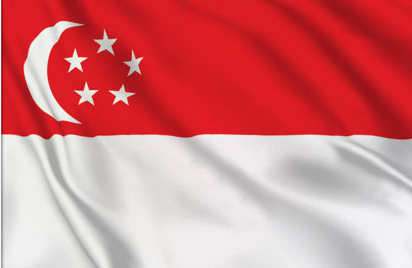
Singapore is famous the world over for being spotless, orderly, and — let’s be honest — a little boring on the surface. Gum is banned, jaywalking gets you fined, and the trains run so precisely that a two-minute delay makes the news. But scratch beneath that gleaming, air-conditioned exterior and you’ll find a nation absolutely buzzing with drama. From ministers caught renting mystery mansions, to opposition politicians caught holding hands they shouldn’t have been holding, to a real estate power-couple scandal that broke the internet in January 2026 — Singapore has quietly become one of Asia’s juiciest tabloid battlegrounds.
We’ve done the digging so you don’t have to. Below is our definitive countdown of the ten biggest, messiest, and most talked-about Singapore scandals that are still sending shockwaves through the Lion City today. Grab a kopi (or a chilled Tiger beer, we don’t judge) and settle in, because this is a massive story.
What makes Singapore’s scandal culture so uniquely fascinating is the contrast. This is a country where a piece of chewing gum smuggled through customs can technically get you fined, where public housing estates are famous for being spotlessly maintained, and where the ruling party has governed continuously since 1959 with an image of near-total discipline. So when scandal does break through — a minister caught with luxury gifts, a Speaker of Parliament caught in a secret affair, an opposition leader convicted of lying under oath — it doesn’t just make local headlines, it becomes a genuine national event that dominates dinner table conversations, taxi rides, and every corner of Singaporean social media for weeks.
Some of the scandals on this list involve the country’s most senior politicians. Others involve viral social media moments that exploded practically overnight. A few involve staggering sums of money that would make even Hollywood scriptwriters blush. And at least one involves artificial intelligence being weaponized to impersonate the country’s own Prime Minister. Whatever the flavor, each entry on this list reveals something honest about modern Singapore: behind the immaculate skyline and the five-star efficiency, it’s still a place full of very real, very human drama.
Quick Facts About Singapore’s Scandal Scene
Country: Republic of Singapore
Known For: Clean governance, low crime, strict laws, “fine city” reputation
Reputation Status: Rocked repeatedly in 2023–2026 by political, financial, and viral social media scandals
Corruption Perception Ranking: Historically top five cleanest nations globally, according to Transparency International
Biggest Scandal Categories: Political affairs, ministerial corruption, money laundering, celebrity-style viral drama, deepfake scams
Now, let’s get into the countdown.
10. The Deepfake Zoom Call That Fooled a Businessman — Impersonating the Prime Minister Himself
Kicking off our list is a scandal so strange it sounds like science fiction, except it’s very real and it happened in 2026. A Singaporean businessman received a WhatsApp message from someone posing as the Secretary to the Cabinet, inviting him to a private virtual meeting with Prime Minister Lawrence Wong. Nothing unusual so far — except the “meeting” turned out to be an elaborate, AI-generated deepfake Zoom call, digitally fabricated to feature not just PM Wong, but President Tharman Shanmugaratnam, Minister Indranee Rajah, and other senior officials, all urging the businessman toward a fraudulent investment platform.
This wasn’t a lone wolf operation either. According to the Singapore Police Force’s Annual Scam and Cybercrime Brief, government-official impersonation scams more than doubled in a single year, jumping from 1,504 cases in 2024 to 3,363 in 2025, with total losses hitting close to S$243 million. The average victim in this category alone lost over S$72,000. What makes this scandal so headline-worthy isn’t just the money — it’s the unsettling realization that Singapore’s leadership can now be digitally cloned convincingly enough to trick savvy businesspeople out of their life savings. Even a well-known taxi-driver-turned-YouTuber nearly lost his entire channel to a similar scam that unfolded over weeks, beginning with what looked like a legitimate brand collaboration offer.
Cybersecurity experts and the government have both flagged this as one of the most alarming developments of the decade, and it’s forced Singaporeans to rethink how much they can trust a face on a screen, even one that looks exactly like their own Prime Minister.
Interestingly, the numbers show something almost paradoxical happening across Singapore’s broader scam landscape. Total losses to scams actually fell in 2025, dropping to roughly S$913 million from around S$1.1 billion the year before, a decline of nearly 18 percent, while the total number of reported cases dropped by more than a quarter. On paper, that looks like real progress for the city-state’s anti-scam efforts. But dig one layer deeper and the picture gets murkier: the average amount lost per victim is actually climbing, meaning scammers are getting more successful at draining bigger sums from fewer, more carefully chosen targets. Government-impersonation scams, the exact category behind the fake Lawrence Wong Zoom call, were the single fastest-growing category of fraud recorded, more than doubling year over year. That combination of fewer victims but bigger individual losses is exactly why this scandal has stuck around in the headlines rather than fading into a footnote.
9. The PropertyLimBrothers Scandal — Singapore’s Real Estate World Gets Its Own Soap Opera
If you thought Singapore’s property scene was all spreadsheets and floor plans, think again. In January 2026, the country’s real estate influencer world was blindsided by what’s now widely dubbed the “PLB scandal,” involving PropertyLimBrothers co-founder Melvin Lim and KW Singapore’s Grayce Tan.
The drama kicked off when videos began circulating on Reddit showing the pair leaving an office together during the week of January 19, 2026, sparking immediate speculation. Things escalated fast: a leaked message attributed to Lim reportedly admitted to a “personal mistake” and “crossing boundaries,” with Lim saying he intended to focus on protecting his family going forward. Within days, PropertyLimBrothers appointed Marc Chan as interim CEO while the company began reviewing its workplace conduct policies from top to bottom.
On the other side of the story, KW Singapore confirmed that Lim had stepped back as operating principal, while Tan exited her role as director of growth entirely, with Jonathan Lee stepping in as interim leader. The internet did what the internet does best — memes, screenshots, and theories flooded social platforms within hours. Both Lim and Tan deactivated their social media accounts as the fallout continued, while both companies scrambled to reassure clients and staff that business would continue as usual. For an industry built on trust, polished branding, and glossy home tours, this scandal landed like a wrecking ball, and Singaporeans are still talking about it.
8. The Wirecard Fallout — Singapore’s Financial Hub Gets Burned by a European Fraud
Long before crypto scams and deepfakes became the talk of the town, Singapore was already entangled in one of Europe’s biggest corporate fraud sagas: the collapse of German payments company Wirecard. As the scandal’s tentacles reached Southeast Asia, Singapore courts sentenced businessmen linked to the case to jail time, with confirmation of sentencing landing as recently as January 2026.
The Wirecard saga has always cast an uncomfortable shadow over Singapore’s reputation as a trusted regional financial hub, since the city-state was used as a base for some of the operations tied to the multi-billion-dollar accounting fraud that eventually bankrupted the German firm and shocked global markets. Watching local courts finally hand down custodial sentences years after the initial collapse gave Singaporeans a sense of delayed justice, but it also reignited uncomfortable questions about how such an operation was allowed to run through the country’s financial system in the first place, and whether enough was done early on to catch it.
7. Singapore’s Biggest-Ever Money Laundering Bust — The S$3 Billion Scandal
If you want raw numbers, this scandal wins hands down. Singapore’s biggest money laundering case in its history involved more than S$3 billion (roughly US$2.2 billion) in illicit assets, uncovered through a dramatic series of simultaneous raids across the island in August 2023. Ten foreigners were eventually convicted in connection with the case, which involved forged documents, shell companies, and a network of properties, cars, and luxury goods purchased with dirty money.
The scandal didn’t stay buried, either. In 2026, the Financial Action Task Force (FATF) — the global body that sets anti-money-laundering standards — weighed in publicly, stating that the fines handed down against nine financial institutions connected to the case were simply “too low” given the scale of the wrongdoing. That’s a rare and pointed international rebuke for a country that prides itself on watertight financial regulation. While the FATF’s broader evaluation still scored Singapore well on most other fronts, this particular black mark stuck, and it’s forced local regulators to defend their approach to banks that failed to flag obviously suspicious activity worth billions of dollars.
For a nation whose entire brand is built on trust, discretion, and financial integrity, having the world’s top anti-money-laundering watchdog publicly say “you didn’t punish this hard enough” is about as embarrassing as scandals get.
6. Pritam Singh’s Conviction — The Opposition Leader Found Guilty of Lying to Parliament
Few political scandals in Singapore’s history have dragged on quite like this one. Pritam Singh, Secretary-General of the Workers’ Party and Singapore’s most prominent opposition figure, was found guilty in February 2025 on two counts of lying under oath to Parliament’s Committee of Privileges. The charges stemmed from his handling of a scandal involving former WP MP Raeesah Khan, who had admitted to lying in Parliament about accompanying a sexual assault victim to a police station.
The court found that Singh had not done enough to get Khan to come clean earlier, and gave weight to her testimony that Singh had told her, in essence, to take the lie to the grave. He was fined the maximum penalty of S$7,000 per charge, totalling S$14,000. Singh appealed, but the conviction was upheld by the High Court in December 2025. As a direct consequence, Parliament passed a motion declaring him unfit to continue as Leader of the Opposition, and Prime Minister Lawrence Wong formally stripped him of that position in mid-January 2026.
The fallout kept spreading well into 2026. The Workers’ Party’s own Central Executive Committee convened a disciplinary panel and issued Singh a formal letter of reprimand at the end of April 2026 after concluding he had breached the party’s constitution. More than twenty WP cadres reportedly petitioned for a special party conference to discuss his future. On top of all that, the Singapore Law Society opened its own disciplinary case against Singh as a lawyer, since a conviction involving dishonesty automatically triggers professional review, with a hearing date set for August 2026. For a politician who built his career on integrity and careful, lawyerly precision, this has been about as public and prolonged a fall from grace as Singapore politics has ever produced.
5. Raeesah Khan’s Parliamentary Lie — The Scandal That Started It All
You can’t tell the Pritam Singh story without going back to where it began: Raeesah Khan, a young, high-profile Workers’ Party MP who became a viral sensation after the 2020 general election for her progressive, outspoken style. In August 2021, Khan told Parliament a moving but ultimately false story about accompanying a sexual assault victim to a police station, claiming she witnessed the victim being mistreated by officers. When challenged, she repeated the claim again in October 2021, digging herself in deeper.
The story eventually unravelled, and Khan admitted in Parliament that she had fabricated the account. The fallout was swift and severe: Parliament’s Committee of Privileges launched a lengthy investigation, Khan was fined S$35,000, and she resigned from both the Workers’ Party and Parliament altogether. But the scandal didn’t end with her resignation — the committee’s findings implicated party leadership, including Singh, in how the situation was handled internally, setting off the chain reaction that would consume Singapore politics for years afterward. What began as one MP’s moment of dishonesty in the chamber ended up reshaping the leadership of the country’s entire opposition movement.
4. Leon Perera and Nicole Seah’s Secret Affair — Opposition Politics Gets Its Own Love Scandal
Just two days after one political affair rocked the ruling party (more on that below), a second affair scandal erupted — this time inside the opposition Workers’ Party. In July 2023, a video surfaced online showing WP MP Leon Perera and the party’s charismatic Youth Wing chief Nicole Seah behaving intimately at what appeared to be a candlelit dinner, with Perera seemingly caressing Seah’s hand.
Both were married with children at the time. When confronted, the pair initially denied any wrongdoing back in 2020–2021 when rumours first circulated, but the video forced their hand. WP Secretary-General Pritam Singh confirmed that both admitted the affair had begun after the 2020 general election and had since ended, though their earlier dishonesty with party leadership was ultimately what sealed their fate. Both Perera and Seah resigned from their party positions, and Perera also gave up his seat in Parliament entirely.
Singaporeans online had a field day comparing the timing of this scandal to the ruling party’s own affair scandal happening in the very same week, with commentators joking that Singapore’s usually staid political class had suddenly developed, in local slang, some serious “rizz.” Behind the memes, though, was a serious reminder that honesty with one’s own party matters just as much in Singapore politics as personal conduct itself.
3. Tan Chuan-Jin and Cheng Li Hui’s Affair — The Speaker of Parliament Falls
Now here’s the scandal that kicked off Singapore’s wild summer of 2023. On July 17 that year, Prime Minister Lee Hsien Loong stunned the nation by announcing that the Speaker of Parliament himself, Tan Chuan-Jin, along with fellow ruling-party MP Cheng Li Hui, had tendered their immediate resignations after it emerged that the two had continued a years-long extramarital affair, despite being instructed to end it back in February.
PM Lee later revealed just how long this had been simmering, admitting he had first learned about the relationship all the way back in 2020 and had hoped a quiet warning would be enough to end it. It wasn’t. Both Tan and Cheng resigned not just from their party but from their parliamentary seats entirely, ending both of their political careers overnight. Lee later said publicly that, in hindsight, he probably should have forced the issue sooner, while also appealing to the public for compassion toward the innocent family members caught up in the fallout.
For a country where political scandal is genuinely rare and career-ending, watching the man who literally ran Parliament’s daily proceedings get swept up in exactly this kind of controversy was jaw-dropping, and it set the tone for what became one of the most scandal-heavy stretches in modern Singapore political history.
2. The Ridout Road Bungalow Controversy — Two Ministers, Two Mansions, and a Lot of Questions
While the affair scandals were juicy, the Ridout Road saga was the one that really tested public trust in Singapore’s government. It began in May 2023 when opposition politician Kenneth Jeyaretnam publicly questioned how Law and Home Affairs Minister K. Shanmugam and Foreign Affairs Minister Vivian Balakrishnan could afford to rent two enormous state-owned black-and-white colonial bungalows on Ridout Road, one of the most prestigious streets in Singapore.
The optics were undeniably awkward: two senior cabinet ministers, living in grand heritage mansions owned by the state, at a time when ordinary Singaporeans were grappling with rising costs of living. Both ministers strongly denied any wrongdoing, with Shanmugam calling the allegations “outrageous” and insisting he had nothing to hide. Prime Minister Lee Hsien Loong ordered two separate investigations — one by the Corrupt Practices Investigation Bureau, and an independent review led by Senior Minister Teo Chee Hean. Both probes ultimately cleared the ministers of corruption or preferential treatment, though the review did catch the Singapore Land Authority using imprecise language when it first described the rental terms to the public.
Parliament held an extraordinary nearly six-hour debate on the matter in July 2023, during which both ministers laid out extensive personal financial explanations. Shanmugam explained he was selling his family home and topping up a rental deficit out of his own pocket, while Balakrishnan detailed how his family stumbled upon 31 Ridout Road by chance and spent over S$200,000 of their own money renovating a property that had been left to decay for years. PM Lee ultimately expressed full confidence in both men, but the episode left a lasting mark on public perception, becoming shorthand across Singapore for questions about ministerial pay, privilege, and how ordinary the “ordinary” lives of the country’s leaders really are.
What kept this scandal alive far longer than a typical news cycle was the sheer level of detail both ministers were forced to reveal publicly. Shanmugam spoke about reviewing his personal finances back in 2016 and realizing too much of his wealth was tied up in a single property, a good-class bungalow he had purchased with earnings from his pre-political legal career. Balakrishnan, meanwhile, described spotting a “For Lease” sign on 31 Ridout Road while driving past on the way to a friend’s house in 2018, then calling the number on a whim. Both stories were oddly relatable in their mundanity, yet completely surreal given the property values and state-owned status involved. Even the term “guide rent” itself became a point of public fascination, after the review found the Singapore Land Authority had used the phrase imprecisely in its original public statement, incorrectly implying the ministers had paid above the benchmark rate when in fact the amount matched it exactly. It was a masterclass in how even small wording errors from a government agency can pour fuel onto an already blazing scandal.
1. S. Iswaran’s Corruption Conviction — Singapore’s Biggest Political Scandal in Half a Century
Topping our list is the scandal that truly shook Singapore to its core: the corruption case against S. Iswaran, the country’s former Minister for Transport and a 13-year cabinet veteran who had also held the trade and communications portfolios. In a nation that consistently ranks among the world’s five least corrupt countries, Iswaran’s downfall was nothing short of seismic.
Iswaran was accused of accepting more than S$400,000 worth of gifts from businessmen, including billionaire hotelier Ong Beng Seng, while serving as a public official overseeing the Singapore Formula 1 Grand Prix. The alleged gifts included tickets to English Premier League football matches, F1 races, West End musicals, and even a ride on a private jet. He was originally slapped with a staggering 35 charges, including several counts of outright corruption, though prosecutors later amended most of these to lesser charges of improperly receiving valuable items as a public servant, citing the litigation risk of proving full-blown corruption beyond reasonable doubt.
In a dramatic twist, after initially vowing to fight the charges and clear his name, Iswaran unexpectedly pleaded guilty in 2024 to four counts of improperly receiving gifts and one count of obstructing the course of justice. What happened next made headlines worldwide: presiding judge Justice Vincent Hoong handed down a 12-month prison sentence, actually longer than the six-to-seven-month term prosecutors themselves had requested, declaring their suggestion “manifestly inadequate” given the seriousness of the offences and the damage to public trust. It marked the first time an ex-cabinet minister had been jailed in Singapore since 1975, and the first corruption-related case involving a minister since 1986, when a different minister died before he could be formally charged.
Prime Minister Lawrence Wong addressed the nation directly, insisting that no one in government is above scrutiny or the law, however painful it might be to see a former colleague jailed. Iswaran began serving his sentence in October 2024, spent roughly four months in actual custody, and was later moved onto Singapore’s Home Detention Scheme in February 2025 due to his low risk of reoffending and clean prison record, ultimately completing his full sentence by June 2025. Ong Beng Seng, the businessman at the center of the gift-giving allegations, was never charged with any offence and has largely stayed silent on the matter.
For a country that has built its entire international reputation on the idea that its government simply cannot be bought, watching a minister actually go to prison for exactly that was the scandal that finally proved even Singapore isn’t immune to human weakness at the very top.
The legal drama around the case was almost as gripping as the scandal itself. Iswaran was initially arrested in mid-2023, spent months publicly maintaining his innocence, and was widely expected to fight all 35 charges in a trial that could have dragged on for the better part of a year. Then, in a stunning reversal just before proceedings were set to begin, prosecutors amended the charge sheet and Iswaran pleaded guilty, bringing the entire saga to a surprisingly swift conclusion. Legal experts at the time noted that the guilty plea conveniently cleared the way for incoming Prime Minister Lawrence Wong to lead the ruling party into a general election without an unresolved corruption trial hanging over the government. Justice Hoong was notably blunt in his sentencing remarks, stating plainly that trust and confidence in public institutions form the bedrock of effective governance, and that this trust can be undone the moment the public perceives a senior official as being susceptible to influence through expensive gifts. It’s a line that’s been quoted in Singapore civics classes and newspaper editorials ever since, and it captures exactly why this scandal earns the top spot on our list.
Frequently Asked Questions About Singapore’s Biggest Scandals
Is Singapore really as corruption-free as its reputation suggests?
Broadly, yes — Singapore consistently ranks among the world’s five least corrupt countries according to Transparency International’s Corruption Perceptions Index, and the Iswaran case was genuinely the first cabinet-level corruption conviction the country had seen in decades. But as this list shows, “low corruption” doesn’t mean “zero scandal,” and the government’s willingness to prosecute one of its own ministers is often cited as proof the system still holds powerful people accountable.
Why do so many Singapore political scandals involve resignations rather than criminal charges?
Singapore’s political culture places enormous weight on personal integrity and the appearance of propriety, not just legality. In cases like the Tan Chuan-Jin/Cheng Li Hui affair or the Leon Perera/Nicole Seah affair, no laws were broken, but the reputational damage and internal party rules around honesty were enough to end long political careers overnight. Compare that to the Iswaran or money laundering cases, where actual criminal charges and court convictions were involved.
What happened to Pritam Singh’s political career after his conviction?
Singh was removed from his role as Leader of the Opposition by Prime Minister Lawrence Wong in January 2026, received a formal reprimand from his own party’s disciplinary panel in April 2026, and remains subject to a separate Law Society disciplinary hearing over his standing as a lawyer, scheduled for August 2026. He remains a Member of Parliament, as his fine did not meet the legal threshold for disqualification.
Is the PropertyLimBrothers scandal still developing?
As of this writing, both companies involved have moved to interim leadership, and the individuals at the center of the controversy have gone quiet on social media. Given how quickly the story broke and how much online attention it continues to attract, further developments would not be surprising.
Final Thoughts: Why Singapore’s Scandal Scene Is Only Getting Bigger
It’s easy to assume that a country famous for order, discipline, and squeaky-clean streets would be scandal-free behind closed doors — but 2023 through 2026 have proven that assumption spectacularly wrong. From ministerial affairs and mansion controversies to billion-dollar money laundering busts and AI-generated deepfakes impersonating the Prime Minister himself, Singapore’s scandal landscape has evolved just as fast as its skyline.
What makes these stories so compelling isn’t just the shock factor — it’s watching one of the world’s most tightly controlled political and social systems grapple publicly with very human failures: pride, temptation, dishonesty, and greed. Every single scandal on this list ended the same way: with resignations, court appearances, disciplinary panels, or all three, proving that even in the Lion City, nobody is completely untouchable.
We’ll be keeping a close eye on how each of these stories continues to unfold in the months ahead — bookmark this page, because with Singapore’s current pace, this list probably won’t stay a “top 10” for very long.
Related Reads: Top 10 Biggest British & UK Celebrity Scandals Hitting Headlines Right Now | Top 10 Pakistani Celebrity Feuds & Controversies Rocking Showbiz Right Now | The Biggest Indian Celebrity Scandals: Every Shocking Story Ranked