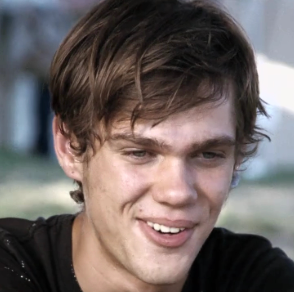
More than a decade after “Boyhood” became one of the most talked-about films of the 2010s, its star is opening up about exactly where life has taken him since the cameras stopped rolling — and it is about as far from Hollywood as it gets. Ellar Coltrane, who spent 12 years growing up on camera as Mason Evans Jr. in Richard Linklater’s groundbreaking coming-of-age drama, revealed in a new interview published this week that he has largely stepped away from acting altogether, trading film sets for manual labor, volunteer firefighting, and life “in the middle of nowhere.”
The comments, published by Variety on August 4 and picked up rapidly by outlets across the entertainment world, have reignited fascination with one of the more unusual child-star stories in modern film history. Here is everything currently being reported about what Ellar Coltrane is doing now, along with a full look back at the film that made him famous and the unconventional path his life has taken since.
What Ellar Coltrane Just Revealed
Speaking with Variety, Coltrane, now 31, described his current life in blunt, matter-of-fact terms. Asked about his relationship to acting today, he said he now lives far removed from the entertainment industry both physically and professionally, admitting he is “pretty far away from film” these days. Rather than chasing new roles or auditions, Coltrane said he has spent recent years focused on entirely different pursuits: doing manual labor, working as a volunteer firefighter, and currently training toward his EMT license.
Coltrane was careful to note that he has not abandoned acting entirely. He mentioned recently working on a handful of independent short films, including one called “El Fantasma,” shot in Mexico City, in which he plays Lee Harvey Oswald — a role he described with genuine enthusiasm despite his broader retreat from the industry. Still, when asked directly about his relationship to the business that made him famous as a teenager, Coltrane’s answer was unambiguous: he has moved on.
He also addressed why the unusual structure of “Boyhood” may have spared him some of the harsher pitfalls that have derailed other former child stars. Because the film was shot in short bursts across 12 years and wasn’t released until he was already 18, Coltrane said he was largely able to avoid the more damaging effects that early fame often has on young performers, adding that he has real compassion for people who genuinely struggle with getting famous at a young age.
Inside “Boyhood”: The Film That Defined His Childhood
To understand why Coltrane’s current life has generated so much renewed interest, it helps to revisit exactly how unusual his path to fame actually was. Director Richard Linklater cast Coltrane in 2002, when the actor was just six years old, selecting him from a long list of candidates through an audition process that involved no script and multiple rounds of callbacks. From there, Linklater committed to something no filmmaker had attempted on this scale before: shooting the same fictional story in short intervals over a period of 12 consecutive years, allowing his young cast to age in real time on camera.
The result, released in 2014 as “Boyhood,” followed Coltrane’s character, Mason Evans Jr., from age six through his first days of college, tracking his family’s divorce, several moves, and the ordinary, unglamorous texture of growing up in Texas. Ethan Hawke and Patricia Arquette played his parents, with Arquette winning the Academy Award for Best Supporting Actress for her performance and Hawke earning a nomination of his own. The film itself was nominated for six Academy Awards including Best Picture, and it remains one of the most critically acclaimed films of its decade, praised for its intimate, unforced portrayal of the passage of time.
For Coltrane, the experience meant something no other actor his age had ever really gone through: growing into adulthood essentially inside a single ongoing film project, revisited at intervals throughout his adolescence, before its release finally introduced the fully assembled version of his own childhood to audiences around the world when he was already 18 years old.
Life Immediately After “Boyhood”
In the years following the film’s release, Coltrane did continue working in the industry for a while. He appeared alongside Emma Watson and Tom Hanks in the 2017 film “The Circle,” and also took a starring role in the 2018 indie drama “Shoplifters of the World Unite.” But even in that period, Coltrane was already signaling a shift away from Hollywood’s center of gravity. Around 2021, he relocated away from Texas, moving further from the entertainment industry both geographically and professionally, a decision he has continued building on in the years since.
That period also marked a broader pattern in how Coltrane approached the projects he did choose to take on. Rather than pursuing higher-profile studio roles that his “Boyhood” recognition could plausibly have opened doors to, he gravitated toward smaller, more specific projects — work that let him engage creatively without requiring him to fully re-enter the machinery of mainstream celebrity. That instinct, evident even in his immediate post-“Boyhood” choices, appears to have only strengthened over time, eventually leading to the near-total step back from the industry he has described in his most recent comments.
Coltrane has previously discussed how disorienting it was to have such a personal, formative period of his life exist as public material available for anyone to watch. Reflecting on the film in a 2019 interview, he described the strange nature of having his adolescence captured on camera and released to the world as an unusually surreal experience, one that combined his first major exposure as an actor with an intensely personal record of his own life and growth. At the time, he suggested that stepping away from constantly revisiting the project was probably the healthiest path forward for him.
That sentiment appears to have only deepened in the years since. Rather than leaning into the built-in name recognition “Boyhood” gave him, Coltrane has spent the past several years deliberately building a life almost entirely disconnected from the industry that made him famous.
What Coltrane Is Doing Now
According to his recent comments, Coltrane’s day-to-day life today looks almost nothing like a typical career path for a former acclaimed child actor. He has taken up manual labor work, and has become a volunteer firefighter in the remote area where he now lives, a role he is actively building on by working toward earning his EMT certification. Coltrane has described this chapter of his life simply as having moved on, without expressing any apparent regret about leaving the more traditional trappings of a Hollywood career behind.
He has not shut the door on acting completely, however. Coltrane specifically pointed to his recent work on independent short films as an example of the kind of creative collaboration that still genuinely interests him, describing his ideal creative process as one where he can work closely with an artist to help express what they’re trying to express, rather than navigating large-scale studio productions. He has said he does not feel especially equipped to operate on a massive set surrounded by a large team of producers, suggesting his creative instincts are better suited to smaller, more intimate projects than to mainstream studio filmmaking.
That preference lines up with the type of work he has continued to take on since stepping back from the spotlight — small, specific, creatively driven projects rather than an attempt to sustain a conventional acting career.
Staying Connected to the “Boyhood” Family
Despite his physical and professional distance from the industry, Coltrane has remained loosely connected to some of the people involved in “Boyhood,” including his former on-screen sister, Lorelei Linklater — Richard Linklater’s real-life daughter, who played Mason’s sister Samantha in the film. Lorelei has continued acting and painting in the years since “Boyhood,” appearing in a number of independent films, and the two former child co-stars have reportedly stayed in touch periodically since the project wrapped.
That lingering connection reflects something Coltrane has spoken about before: while he has moved on from acting as a primary career, the bond formed during 12 years of shared, deeply unusual filmmaking experience isn’t something he has simply left behind entirely. Rather, it exists alongside the rest of his life now, occasionally surfacing rather than defining his day-to-day existence the way it once did during the film’s production. Coltrane has described those relationships as some of the few threads still tying him to that chapter of his life, distinct from the broader industry he has otherwise stepped away from.
Ellar Coltrane — Quick Facts
| Detail | Information |
|---|---|
| Full Name | Ellar Coltrane Kinney Salmon |
| Date of Birth | August 27, 1994 |
| Age | 31 |
| Birthplace | Austin, Texas, USA |
| Profession | Actor (largely retired from mainstream film) |
| Nationality | American |
| Known For | “Boyhood” (2014), “The Circle” (2017), “Shoplifters of the World Unite” (2018) |
| Current Occupation | Manual labor, volunteer firefighter, EMT trainee |
| Notable Recent Work | “El Fantasma” (short film, shot in Mexico City) |
| Residence | Rural, undisclosed location described as “the middle of nowhere” |
Why This Story Still Resonates
Part of what makes Coltrane’s current life such a compelling story more than a decade after “Boyhood” premiered is just how rare his particular experience of fame actually was. Most child actors either build sustained careers in the public eye or fade from the industry after a single breakout role, often navigating that transition privately. Coltrane’s situation was different from the start: his most famous role required him to be filmed intermittently throughout his entire childhood and adolescence, meaning his formative years were, in a very literal sense, both his life and his work product simultaneously.
That unusual structure appears to have given Coltrane something many former child stars never get: distance. Because the film wasn’t released until he was already 18 and had lived through the bulk of the experience it depicted, he avoided the more common scenario of becoming famous as a very young child and then having to process that fame in real time, without the benefit of maturity or perspective. Coltrane has credited that structural quirk directly with helping him step away from the industry with what he describes as relatively little lasting damage, while expressing genuine sympathy for peers whose experiences with early fame were far more difficult.
His current comments, arriving more than 12 years after “Boyhood” first hit theaters, offer a rare update on what “success” can look like for a former acclaimed child actor who simply decided that a conventional Hollywood career wasn’t the life he wanted — and who seems, by his own account, entirely at peace with that choice.
Richard Linklater’s Unprecedented Filmmaking Gamble
It’s worth remembering just how big a risk “Boyhood” represented before anyone knew whether it would work. When Richard Linklater began filming in 2002, there was no guarantee the project would ever be finished, let alone become a critical and commercial success. Committing to shoot a single narrative film across 12 real years meant betting on the continued availability, health, and willingness of an entire cast — adult and child actors alike — to return to the same roles year after year, with no reshoots possible if a young actor’s appearance changed too dramatically or if life circumstances made continuing impossible.
For Coltrane specifically, that gamble meant essentially growing up as an ongoing collaborator on a single film rather than moving between separate projects the way most child actors do. Each year, Linklater would return to check in with his young star, adjusting the unfolding story to reflect who Coltrane was actually becoming rather than forcing him into a predetermined arc. That approach gave “Boyhood” its distinctive, almost documentary-like authenticity, but it also meant that Coltrane’s actual adolescent development — his interests, his physical changes, even his personality — became raw material for the film in a way no traditional acting job ever requires.
Looking back, Coltrane has described the audition process itself as unusually unstructured for a project of this scale, involving no formal script and multiple rounds of callbacks rather than a single reading. That approach, he has suggested, was itself an early signal of just how different this project would be from a conventional child-acting gig — less a traditional casting process and more the beginning of a strange, multi-year creative partnership between a six-year-old and one of American independent film’s most respected directors.
Critical Reception and Cultural Impact
When “Boyhood” finally premiered in 2014, the response was overwhelming. Critics praised the film’s ability to capture the texture of ordinary life — the small, unremarkable moments of growing up that most coming-of-age films skip past in favor of bigger dramatic beats. Coltrane’s performance, built gradually across more than a decade rather than compressed into a single production schedule, was frequently singled out for its naturalism, a quality reviewers noted was nearly impossible to fake or accelerate through conventional filmmaking techniques.
The film went on to win numerous critics’ awards and earned six Academy Award nominations, including Best Picture, Best Director for Linklater, and acting nominations for both Hawke and Arquette, with Arquette ultimately taking home the Oscar for Best Supporting Actress. Beyond the awards, “Boyhood” became a genuine cultural touchstone, frequently cited in conversations about innovative filmmaking techniques and held up as a rare example of a film experiment that fully justified its own ambitious premise.
For Coltrane, all of that critical acclaim arrived at an unusual moment in his life: he was already 18, an adult, watching an intensely personal decade of his own life reviewed and dissected by film critics and audiences around the world. That timing, more than almost anything else, appears to explain why he has been able to reflect on the experience with the level of distance and perspective that has defined his more recent comments about the project.
A Different Definition of Success
What makes Coltrane’s story stand out from so many other former child actors isn’t dramatic scandal or a public unraveling — it’s the quiet, deliberate ordinariness of the path he has chosen instead. Rather than chasing sustained fame, additional franchise roles, or a return to the spotlight that “Boyhood” could easily have provided him, Coltrane has spent the past several years building a life defined by physical work, community service through firefighting, and a slow, steady pursuit of medical training through his EMT certification.
That choice runs against the grain of how child stardom typically gets discussed in entertainment media, where the default narrative usually swings between continued success or public struggle. Coltrane’s story offers a rarer third option: a former acclaimed young actor who simply decided, with apparent clarity and confidence, that a life largely disconnected from the industry that made him famous was the one he actually wanted to live. His comments this week suggest he has no interest in reversing that decision anytime soon, even as renewed media attention brings his name back into headlines more than a decade after “Boyhood” first introduced him to the world.
Revisiting Coltrane’s Early Reflections on Fame
This isn’t the first time Coltrane has spoken candidly about the strangeness of his path to recognition. In earlier interviews around the film’s release and in the years that followed, he repeatedly touched on the surreal nature of having such a personal chapter of his life exist as widely available public entertainment. He has described the sensation of watching audiences engage with a version of his own adolescence as something that never fully stopped feeling strange, even years after the film’s release, noting that the emotional weight of that exposure was different from anything a more conventional acting role would have created.
Those early reflections help explain why his current comments read less like a sudden reinvention and more like the continuation of a years-long process of putting deliberate distance between himself and the industry. Even at the height of “Boyhood” press cycles, Coltrane was already signaling discomfort with being defined primarily by a single project, however acclaimed it was. His current life — manual labor, firefighting, EMT training, and the occasional independent film — appears to be the natural endpoint of an instinct he was already voicing publicly more than half a decade ago.
Frequently Asked Questions
What is Ellar Coltrane doing now? As of his most recent public comments in August 2026, Coltrane is doing manual labor, working as a volunteer firefighter, and training to earn his EMT license. He has largely stepped back from mainstream acting, though he occasionally appears in independent short films.
How old was Ellar Coltrane when he filmed “Boyhood”? Coltrane was six years old when filming began in 2002 and 18 when the film was released in 2014, having been filmed intermittently across that 12-year span.
Is Ellar Coltrane still acting? Coltrane has said he has largely moved on from film, but he has continued taking on select independent projects, including a recent short film called “El Fantasma,” in which he plays Lee Harvey Oswald.
Where does Ellar Coltrane live now? Coltrane has described his current home as remote, saying he lives “in the middle of nowhere,” without disclosing a specific location.
Why did Ellar Coltrane step away from Hollywood? Coltrane has said he simply feels more drawn to his current pursuits, including manual labor and firefighting, and that working on a large studio production with many producers isn’t a setting he feels especially equipped for. He has expressed no regret about the shift.
Did “Boyhood” win any major awards? “Boyhood” was nominated for six Academy Awards, including Best Picture, with Patricia Arquette winning Best Supporting Actress for her role in the film.
Is Ellar Coltrane still in touch with his “Boyhood” co-stars? Coltrane has remained loosely in touch with Lorelei Linklater, who played his on-screen sister and is the real-life daughter of director Richard Linklater.
This article reflects publicly reported comments from Ellar Coltrane as of August 2026, including his interview published by Variety on August 4, 2026.