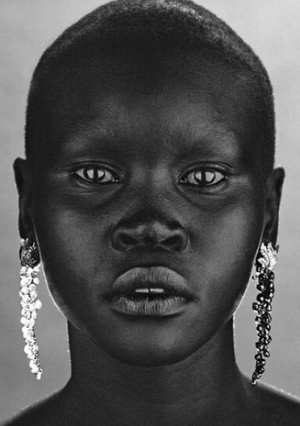
Few names carry more weight in the story of modern fashion’s reckoning with beauty standards than Alek Wek. Born in South Sudan and now a global icon based in the UK and US, Wek isn’t just the most internationally recognized celebrity to come out of South Sudan — she’s a figure whose influence reaches far beyond her home country, which is exactly why most of the search interest in her name comes from the UK, the US, and the global fashion industry rather than South Sudan itself.
Early Life: Born Into War in Wau, South Sudan
Alek Wek was born on April 16, 1977, in the town of Wau, in what was then Sudan and is now South Sudan. She was the seventh of nine children born to Akuol and Athian Wek, an education official, and grew up in a modest two-bedroom home without electricity or running water. She belongs to the Dinka ethnic group, one of South Sudan’s largest.
Wek’s childhood was shaped by the brutal Sudanese civil war. She was around nine years old when the fighting broke out near her home, and she has since spoken publicly about the trauma of those years — the sounds of gunfire, the constant fear, and the loss of the stable life her family had known. By her early teens, Wek and several of her siblings fled the country, eventually making their way to Britain as refugees in 1991. Only Wek, her mother, and one sister reached England together; her other siblings were scattered elsewhere in Europe during the escape.
Discovery and a Meteoric Rise in Fashion
Wek’s path into modeling began almost by accident. At 18, while out at a street market in London, she was approached by a scout from a top modeling agency. According to later interviews, her mother’s first reaction was alarm, assuming the industry wanted her daughter for exploitative modeling work — a fear Wek has laughed off in interviews since, joking that she wasn’t built for that kind of career at all.
Once her mother was reassured the agency was legitimate, Wek’s career took off almost immediately. Within her first year in the industry, she was booked by Ralph Lauren for a coveted opening-and-closing slot in his runway show — a position typically reserved for established names, not newcomers. Calvin Klein, Isaac Mizrahi, Todd Oldham, and Anna Sui quickly followed. In 1997, less than a year into her career, Wek became the first Black African model to appear on the cover of Elle magazine, a milestone widely regarded as a turning point for representation in high fashion.
That same year, Newsweek dubbed her “the hottest face in fashion,” and MTV named her Model of the Year — an honor later expanded, retrospectively, into Model of the Decade. She went on to walk for and appear in campaigns for Chanel, Christian Dior, Marc Jacobs, Donna Karan, and Calvin Klein, and became a favorite subject of legendary photographers including Irving Penn, Herb Ritts, Steven Meisel, and Patrick Demarchelier.
Breaking Barriers in the Fashion Industry
What made Wek’s rise significant wasn’t just her success — it was what she represented. At a time when the fashion industry’s idea of a Black supermodel was still narrow, Wek’s much darker skin tone and features stood apart from her predecessors. Her prominence forced a wider conversation in the industry about which kinds of beauty were considered marketable, and she’s widely credited with opening doors for the generation of dark-skinned models who followed, including stars like Lupita Nyong’o, who has cited Wek as a formative influence.
Wek has remained active in the industry for decades, later serving as a guest judge on America’s Next Top Model in 2011, expanding into design work, and launching her own handbag line, “Wek 1933,” a tribute named after the birth year of her late father.
Humanitarian Work and UNHCR Ambassadorship
Alongside her modeling career, Wek has built a decades-long relationship with the UN Refugee Agency (UNHCR). She began supporting the organization in 2011, was formally named a UNHCR Goodwill Ambassador in 2013, and transitioned to alumnus status in 2023 after ten years of advocacy work. In that role, she has traveled to refugee camps in South Sudan and Gabon, using her platform to draw global attention to displacement crises — a cause deeply personal to her given her own history as a refugee.
She published an autobiography in 2007, Alek: From Sudanese Refugee to International Supermodel, chronicling her journey from war-torn Wau to the world’s most famous runways. She has also run an educational nonprofit supporting children in both New York City and Sudan.
Why Alek Wek Is Searched for Outside South Sudan
Unlike most celebrities, whose search traffic concentrates in their home country, Alek Wek’s search interest is overwhelmingly international — driven by the UK and US fashion press, students researching representation in media, and younger audiences discovering her legacy through modeling retrospectives and “trailblazer” content. This is partly a reflection of South Sudan’s own media landscape: with extremely limited domestic internet access and virtually no home-grown entertainment press, there’s little local search volume to speak of. Wek’s story is instead sustained by the global institutions she’s worked with — Vogue, IMG Models, UNHCR — rather than South Sudanese outlets.
Quick Facts
- Born: April 16, 1977, Wau, South Sudan
- Ethnicity: Dinka
- Career start: 1995, age 18
- Notable firsts: First Black African model on the cover of Elle (1997)
- Awards: MTV Model of the Year, later Model of the Decade
- Humanitarian role: UNHCR Goodwill Ambassador (2013–2023), alumnus since
- Books: Alek: From Sudanese Refugee to International Supermodel (2007)
- Ventures: Wek 1933 handbag line
FAQ
Where was Alek Wek born? She was born in Wau, in what is now South Sudan, in 1977.
How did Alek Wek become a model? She was discovered by a scout at a London street market at age 18, shortly after arriving in Britain as a refugee.
Is Alek Wek still working as a model? Yes. She remains active in fashion and continues her humanitarian work, though her public role has expanded into design and advocacy.
What is Alek Wek known for besides modeling? Her long-standing work as a UNHCR Goodwill Ambassador and her advocacy for refugees, alongside her handbag line and autobiography.
This article is based on public biographical sources, UNHCR records, and fashion industry archives current as of mid-2026.