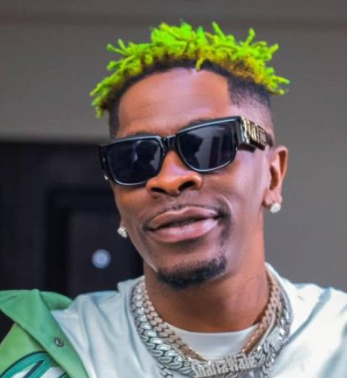
The Real Ones Studio Session: When One Don Dropped The Receipt
The recording studio was thick with the casual swagger that defines Ghanaian hip-hop royalty when Charles Nii Armah Mensah Junior settled into the guest seat. Known across the globe as Shatta Wale, the undisputed champion of African street dancehall has spent two decades building an empire upon raw unpredictability. Across the table sat Baah Peprah, the Kumasi-born rap powerhouse known professionally as YPee, hosting another session of his popular digital broadcast, The Real Ones. The conversation had wandered through the usual minefields of West African entertainment: the politics of radio play, the recurring disrespect of legacy award boards, and the relentless grind of keeping an independent music label afloat in Accra.
Then came the question of digital survival.
In an industry where African musicians routinely project billionaire lifestyles while secretly drowning in unpaid studio debts and exploitative promoter deals, Shatta Wale did what he has always done: he stripped away the decorative theater and named an exact number. Leaning toward the microphone with his signature gravelly baritone, the dancehall icon disclosed that his personal TikTok account had generated approximately forty-five thousand United States dollars purely from live stream virtual gifts sent by his devoted followers.
In the currency of Ghana, forty-five thousand dollars converts to well over seven hundred thousand Ghanaian Cedis. That is not corporate sponsorship money. That is not a royalty check from an international record conglomerate delayed by six months of administrative deductions. That is direct, liquid, mobile-to-mobile cash transferred by ordinary citizens from their digital wallets into the pockets of an artist they love, bypassing every traditional gatekeeper in the West African creative ecosystem.
The confession hit the Ghanaian media space like an earthquake. Within hours of the clip circulating across X, Instagram, and TikTok itself, entertainment analysts, financial commentators, and rival musicians were dissecting the mechanics of the disclosure. For years, older African entertainers had mocked TikTok as a trivial playground where bored teenagers mimed dance routines and performed comedic skits. Yet here was Ghana’s most celebrated street prophet, a man who shared global Billboard charts alongside Beyoncé on The Lion King: The Gift, revealing that casual bedroom conversations broadcast on a mobile telephone were out-earning the annual salary of top bank executives in West Africa.
The disclosure was not merely an exercise in financial braggadocio; it marked a profound psychological turning point in the economics of African music. For decades, artists across the continent had been conditioned to believe that wealth flowed exclusively through the patronage of multinational record labels, foreign distribution deals, or corporate concert promoters. By pulling back the curtain on his forty-five thousand dollar digital harvest, Shatta Wale exposed the quiet obsolescence of the old guard, demonstrating that an artist with an unshakeable connection to the street no longer needs an intermediary to prosper.
The Gen Z Stigma: Why African Music Royalty Resisted The ByteDance Machine
To fully appreciate the significance of Shatta Wale’s triumph on TikTok, one must first understand his deep initial resistance to the platform. For over a decade, Charles Nii Armah Mensah Junior had built his cultural dominance on Facebook. His unscripted Facebook Live broadcasts were legendary throughout Ghana and across the West African diaspora. Operating without lighting rigs, teleprompters, or public relations managers, Shatta Wale would prop his smartphone against a studio speaker or car dashboard and speak directly to his base, known collectively as the Shatta Movement.
Those Facebook broadcasts were marathon sessions of uncut street philosophy. He would preview unmastered music tracks, settle personal disputes with rival artists, interrogate government policies affecting urban youth, and mock the pompous decorum of the Accra entertainment elite. His followers gathered by the hundreds of thousands, treating his live streams like a nightly community town hall. To Shatta Wale, Facebook was home ground: broad, accessible to older fans, and firmly rooted in the working-class neighborhoods of Korle Gonno, Nima, and Jamestown.
TikTok, by contrast, appeared alien, frivolous, and dangerously youth-obsessed.
When the short-form video application created by ByteDance exploded across West Africa during the early 2020s, established African artists viewed it with polite condescension. It was dismissed as a platform where teenagers performed hyper-kinetic choreographed dances and comedic skits to fifteen-second audio clips. To an artist who had cut his teeth in the competitive dancehall sound clashes of early-two-thousands Accra, the idea of lip-syncing for algorithms felt undignified.
As Shatta Wale recounted on The Real Ones, his initial reaction to the platform was steeped in generational skepticism. He openly wondered what a grown man, an established music icon with dozens of street anthems and stadium concerts under his belt, was supposed to do in a digital room populated by teenagers. In his own blunt words, he remembered thinking, what am I doing with TikTok? I am not a Gen Z.
This psychological barrier was not unique to Shatta Wale. Across the African continent, veteran artists had grown accustomed to polished promotional cycles: shoot an expensive music video, hire radio pluggers to pay off disc jockeys, schedule television interviews, and wait for event organizers to offer a December festival booking. TikTok challenged the core of that top-down model. On TikTok, pedigree meant nothing. The algorithm did not care if you had won awards in 2004 or performed for international dignitaries. It demanded raw immediacy, consistent presence, and intimate participation.
For months, Shatta Wale kept his distance, watching from the sidelines while younger content creators amassed millions of impressions. He remained tethered to his familiar digital channels, confident that his established star power had no need for juvenile dance challenges. Yet the digital winds in West Africa were shifting at breathtaking speed. The urban youth who made up the core of his musical army were spending less time browsing Facebook timelines and dedicating their daily mobile data bundles to the endless scroll of TikTok. The platform was no longer just an entertainment app; it had quietly transformed into the primary public square of African youth culture.
The Persuasion of Jackline Mensah: How Ghana’s TikTok Queen Convinced A King
The breakthrough came through the relentless advocacy of a young woman who understood the new digital terrain far better than the music industry veterans. Her name is Jackline Mensah.
Rising from modest beginnings, Jackline Mensah had turned herself into an undisputed digital powerhouse in Ghana through sheer comedic ingenuity. While legacy media was still debating whether internet comedians were legitimate entertainers, Mensah was using TikTok to craft viral caricatures of everyday Ghanaian life: the overbearing market mother, the stern church deaconess, the confused school pupil. Her impeccable facial expressions, razor-sharp comedic timing, and fearless character acting earned her the unofficial title of Ghana’s Queen of TikTok, amassing millions of followers and lucrative commercial brand endorsements while still in her early twenties.
Mensah recognized something that the veteran music executives had missed: Shatta Wale’s raw, unvarnished personality was tailor-made for the TikTok format.
As Shatta Wale revealed to YPee, Mensah refused to let him languish in generational comfort. She observed his Facebook Live broadcasts and saw enormous untapped value leaking away. On Facebook, fans could hit like buttons, leave comments, and share video links, but the platform offered limited avenues for immediate direct micro-monetization from viewer to creator during live streams. TikTok, through its innovative virtual gifting system, had created a frictionless pipeline for audiences to reward creators in real time.
Mensah began lobbying the dancehall king with persistent urgency. Every time they crossed paths or spoke, she delivered the same gospel: take your live streams to TikTok. Stop giving away your cultural energy for free on platforms that do not reward your presence, and step onto the platform where your audience actually lives.
At first, Shatta brushed off her advice. The idea of jumping into an unfamiliar ecosystem felt unnecessary for an artist who could already fill the Accra Sports Stadium to capacity. But Mensah was persistent. She understood that Shatta Wale did not need to perform choreographed dances or follow teenage trends; he simply needed to bring his authentic, unfiltered self to a platform built for community engagement.
Eventually, the weight of her arguments broke through his skepticism. Other trusted voices within his inner circle echoed her counsel, pointing out that top global creators were turning daily livestreams into substantial financial operations. Convinced that checking out the platform could do no harm, Shatta Wale finally opened his TikTok application, set up his live credentials, and tapped the broadcast button.
What happened next astonished even the seasoned street survivor.
Within moments of going live, tens of thousands of viewers flooded the room. The chat stream accelerated into an unreadable blur of flame emojis, custom flags, and ecstatic greetings from Ghanaian fans in Kumasi, London, Atlanta, and Frankfurt. And then the screen began to explode with digital animations: fluttering roses, spinning coins, roaring lions, and celestial galaxies. The Shatta Movement had arrived on TikTok, and they brought their financial resources with them. What began as a skeptical experiment sparked by a persistent young comedian had transformed, almost overnight, into one of the most lucrative direct-to-consumer digital channels in West African music history.
Comprehensive Master Breakdown of TikTok Virtual Gifts, Coin Economics, and Shatta Wale’s Revenue
The financial mechanics behind Shatta Wale’s forty-five thousand dollar disclosure represent a fascinating case study in micro-transaction platform economics. On TikTok, viewers do not hand physical cash to creators during live broadcasts. Instead, they purchase virtual currency known as TikTok Coins using localized payment channels such as mobile money wallets, debit cards, or regional banking applications.
These coins are then exchanged for animated digital stickers or gifts, which appear dynamically on the streamer’s screen during live broadcasts. Each gift carries an assigned coin value, ranging from a single coin for a modest red rose to tens of thousands of coins for elaborate animations like the TikTok Universe or Falcon.
Once a creator receives these virtual gifts, the platform automatically converts them into internal units called Diamonds. Each Diamond represents half the value of the coins spent by the viewer, meaning ByteDance retains approximately fifty percent of the total transaction value as a platform commission. The creator can subsequently withdraw their accrued Diamonds as liquid United States dollars through international payment processors such as PayPal, Payoneer, or direct international wire transfers, which can then be converted into local currency like the Ghanaian Cedi.
To understand how Shatta Wale accumulated forty-five thousand dollars in net earnings, one must examine the specific virtual gifts sent by his supporters, their technical specifications, and their real-world economic value.
| Virtual Gift Name | TikTok Coin Purchase Cost | Gross Dollar Value Paid by Fan | Creator Net Dollar Value Received | Ghanaian Cedi Equivalence Net | Screen Animation Description | Shatta Movement Fan Culture and Context |
|---|---|---|---|---|---|---|
| TikTok Universe | 34999 Coins | $500.00 USD | $250.00 USD | 3900 to 4100 GHS | Swirling cosmic galaxies, rotating planetary systems, and exploding constellations engulfing the entire mobile screen | The ultimate display of devotion; sent by wealthy diaspora supporters in London or New York to demonstrate unshakeable loyalty to the One Don throne |
| Lion or Golden Lion | 29999 Coins | $420.00 USD | $210.00 USD | 3300 to 3500 GHS | Regal golden lion stepping majestically onto the glass screen, shaking its mane, and letting out a mighty audio roar | Symbolizes kingly authority in Ghanaian chieftaincy culture; fans send it whenever Shatta Wale issues a fierce proclamation against music industry critics |
| Falcon or Eagle | 10999 Coins | $150.00 USD | $75.00 USD | 1150 to 1250 GHS | Metallic predatory bird soaring from the background, circling the stream, and diving toward the center frame | Represents swift flight and visionary foresight; frequently sent during studio previews of upcoming hit dancehall singles |
| Diving Whale | 2150 Coins | $30.00 USD | $15.00 USD | 230 to 250 GHS | Magnificent blue humpback whale breaching out of crashing ocean foam across the creator face | A favorite gift among mobile money subscribers who want a dramatic, high-visibility visual splash without spending thousands |
| Dragon Fire | 26999 Coins | $380.00 USD | $190.00 USD | 2950 to 3150 GHS | Fire-breathing mythical serpentine dragon coiling around the perimeter of the screen and spewing animated flame torrents | Resonates with the fiery, combative energy of the dancehall genre; dropped whenever Shatta Wale delivers passionate spoken-word commentary |
| Interstellar Cruiser | 10000 Coins | $140.00 USD | $70.00 USD | 1050 to 1150 GHS | Sleek science-fiction starship warping through hyper-space with blazing cyan thruster trails | Sent by tech-savvy young creators who celebrate Shatta Wale’s willingness to embrace futuristic digital business models |
| Money Gun | 500 Coins | $7.00 USD | $3.50 USD | 55 to 60 GHS | Stylized golden pistol firing endless fluttering stacks of paper banknotes across the broadcast | The classic hip-hop and street salute; sent in rapid continuous volleys by dozens of viewers simultaneously to create a shower of digital cash |
| Magic Fireworks | 1088 Coins | $15.00 USD | $7.50 USD | 115 to 125 GHS | Spectacular multi-colored pyrotechnic display exploding into brilliant celebratory starbursts | Triggered when Shatta Wale plays a newly recorded chorus or announces an upcoming international tour date |
| Paper Crane or Origami | 99 Coins | $1.40 USD | $0.70 USD | 10 to 12 GHS | Delicate folded paper bird gliding gracefully across the screen before transforming into soft sparkles | An accessible gift for working-class university students and apprentices who want to contribute their modest token of appreciation |
| Red Rose or Single Flower | 1 Coin | $0.014 USD | $0.007 USD | 0.10 to 0.12 GHS | Single red rose petal floating softly from the bottom of the comment stream | Sent in massive coordinated waves of thousands by street fans across Nima, Ashaiman, and Jamestown as a continuous digital pulse of love |
This master economic matrix illustrates why Shatta Wale’s revenue accelerated so rapidly. Unlike conventional streaming services, where an artist must generate hundreds of thousands of individual song plays to earn a modest sum, a single dedicated supporter dropping a TikTok Universe injects two hundred and fifty dollars into the artist’s digital wallet in five seconds. When multiplied across hundreds of live sessions attended by tens of thousands of passionate fans, the accumulation of forty-five thousand dollars becomes not an anomaly, but the logical mathematical outcome of direct digital patronage.
Inside The Shatta Movement: The Fiercest Street Army in African Music
The sheer volume of financial contributions pouring into Shatta Wale’s TikTok broadcasts cannot be understood without examining the unprecedented cultural phenomenon that powers his career: the Shatta Movement.
In modern African popular culture, many musicians boast dedicated fan bases. There are the Wizkid FC faithful in Nigeria, the Burna Boy partisans, and the SarkoNation loyalists in Ghana. But none of these groups possesses the sociological intensity, the communal discipline, or the almost religious fervor of the Shatta Movement. It is not merely a fan club; it is a sprawling, decentralized socio-economic brotherhood rooted in the working-class coastal slums and zongo communities of Greater Accra.
To walk through Korle Gonno, Jamestown, Nima, Chorkor, or Ashaiman is to enter a territory where Shatta Wale’s face and symbols are painted onto barber shop walls, plastered across commercial minibus tro-tros, and tattooed onto the skin of young men and women. For these youth, who battle severe economic inflation, youth unemployment, and the indifference of the political class, Shatta Wale is not just an entertainer; he is the living proof that a boy from the gutters of Accra can outsmart the elites, defy the establishment, and conquer the world on his own terms.
When these fans tune into his TikTok live streams, they are not acting as passive spectators watching a celebrity. They view their participation as a sacred duty to sustain their general.
In urban Ghana, purchasing internet data bundles requires deliberate financial calculation. Mobile network operators sell prepaid data in small gigabyte packages that represent a meaningful percentage of a daily wage. Yet hundreds of thousands of young Ghanaians willingly allocate their scarce data to watch Shatta Wale hold court for two, three, or four hours at a stretch.
More remarkably, they dig into their personal Mobile Money accounts—funds that might otherwise purchase a meal, transport fare, or mobile airtime—to purchase TikTok coins and shower their idol with virtual gifts. Why would a working-class youth in Accra send twenty Cedis, fifty Cedis, or a hundred Cedis to a multimillionaire music star who lives in a gated mansion in East Legon and drives exotic sports cars?
The answer lies in the deep psychology of public recognition and communal pride.
When a fan in Nima sends a Money Gun or a Diving Whale, their username flashes across the mobile screens of fifty thousand simultaneous viewers. In that electric moment, Shatta Wale pauses his monologue, looks directly down the camera lens, and shouts their name in his booming voice: “Yes! Big up my brother Kwame from Jamestown! God bless your hustle! One Don see you!”
For a young person who has spent their entire life feeling invisible to society, ignored by politicians, and shut out of formal economic opportunity, that ten-second personal shout-out from the most famous man in the country is priceless. It validates their existence. It confers immense street credibility among their peers. It binds them into a shared brotherhood where they are not merely consumers of culture, but active financial shareholders in the kingdom of African dancehall.
Furthermore, the Shatta Movement diaspora across the United Kingdom, the United States, Canada, and Western Europe functions as a formidable economic engine. Ghanaian expatriates working long shifts in London or healthcare facilities in North America use TikTok Live as a direct cultural lifeline back home. For an expatriate earning foreign currency, dropping a fifty-dollar or two-hundred-dollar virtual gift is a painless gesture that connects them directly to the sound, humor, and resilience of their homeland. This fusion of domestic street passion and diaspora liquidity created the perfect financial engine that propelled Shatta Wale to forty-five thousand dollars in digital earnings.
The Death of The Middleman: Bypassing Radio Pluggers, Labels, and Event Promoters
To understand the full revolutionary impact of Shatta Wale’s forty-five thousand dollar revelation, one must confront the predatory architecture of the traditional Ghanaian music industry.
For decades, the West African entertainment business has been governed by an entrenched network of gatekeepers. If an artist wished to achieve commercial success in Accra, they were forced to endure a humiliating gauntlet of intermediaries. There were the radio pluggers and influential disc jockeys who demanded heavy cash envelopes, known locally as payola, simply to spin a record on the airwaves. There were the television producers who determined which music videos received regular rotation. And above all, there were the corporate concert promoters and corporate event organizers who held a monopoly on live performance revenues.
These corporate festival organizers, most notably Charterhouse, the producers of the annual Vodafone Ghana Music Awards, operated with near-monopolistic power. They dictated performance fees, imposed unilateral contract conditions, and routinely underpaid talent while reaping massive corporate sponsorship checks from telecommunications companies and beverage conglomerates. Artists who dared to question this exploitative structure were systematically blacklisted, stripped of nominations, and barred from major festival stages.
Shatta Wale has spent over a decade waging an unsparing public war against this exact machinery.
His public battles with Charterhouse and the Ghana Music Awards board are legendary in African pop culture history. He has repeatedly rejected their award ceremonies, boycotted their red carpets, and publicly challenged their business ethics. In one of his most famous public declarations, Shatta Wale captured the fundamental tragedy of the African recording artist: “They make the money, and they give the artiste a piece of wood.”
His point was devastatingly accurate. Promoters and event organizers would generate millions of Cedis in ticket sales, television broadcast rights, and corporate sponsorship, only to hand the performing musicians an ornamental plaque made of glass or wood, expecting them to survive on prestige while the executives pocketed the liquid wealth.
By monetizing TikTok Live to the tune of forty-five thousand dollars, Shatta Wale has effectively executed an end-run around this entire predatory system.
Consider the cold financial mathematics. To earn forty-five thousand dollars—over seven hundred thousand Ghanaian Cedis—through traditional live performances in Ghana, an artist must endure grueling contract negotiations, rehearse for weeks, rent equipment, manage sound crews, appease event sponsors, and perform in high-risk outdoor venues, often waiting months to receive their final balance from stubborn promoters.
On TikTok Live, Shatta Wale achieved that identical financial return sitting comfortably in his private home studio in East Legon, wearing a simple cotton vest, joking with his friends, sipping a cold drink, and talking directly to his fans through a handheld smartphone. He required no sound engineer, no security detail, no corporate sponsor approval, no radio disc jockey endorsement, and no permission from any award board committee.
This represents the absolute democratization of African music monetization. When an artist establishes a direct, frictionless, peer-to-peer financial channel with their audience, the middleman becomes functionally irrelevant. The promoter cannot threaten to cancel a booking because the artist can generate a festival-sized fee from their bedroom. The radio station manager cannot demand payola because the artist’s new single has already achieved viral saturation on TikTok before the radio station even receives the promotional audio file.
Shatta Wale did not just discover a clever way to earn extra cash; he demonstrated the blueprint for total financial sovereignty in post-colonial African media.
The Economy of Reciprocity: Following Back and Funding Fan Businesses
One of the most profound and overlooked elements of Shatta Wale’s interview on The Real Ones podcast was his detailed explanation of how he maintains and honors the relationship with his digital financial contributors. Many mainstream celebrities operate under an aristocratic illusion of detachment: they collect fan adulation, accept gifts, and maintain an austere wall of separation, following zero accounts on social media and rarely acknowledging individual supporters.
Shatta Wale operates on the exact opposite philosophical framework. His business model is rooted in the sacred African principle of economic reciprocity.
During his conversation with YPee, Shatta Wale revealed that he actively monitors the accounts of the everyday fans who gift him on TikTok. Whenever he notices a follower who consistently uses his music tracks in the background of their promotional videos—whether they are selling hand-sewn dresses in Makola Market, running a mobile phone repair stall in Circle, offering mobile barbering services, or delivering street food—he makes it a priority to follow their account, repost their content, and publicly patronize their trade.
“If a fan is playing my song to sell his clothes or promote his small business, why shouldn’t I support him?” Shatta Wale reflected. “I follow them back. I comment on their business posts. If I need clothes or shoes, I call them and buy from them directly. When they see that their general is wearing their product, their business grows. Then when I go live, they are happy to come and support me with gifts because they know the money is circulating back into the community.”
This is not superficial celebrity public relations; it is the organic mechanics of communal street capitalism.
In developing economies where formal banking credit is scarce, youth rely on informal mutual aid networks and trust-based commerce. By inserting himself directly into this network as both a beneficiary and a benefactor, Shatta Wale transformed his social media following into an economic cooperative. His followers do not feel exploited when they send digital coins during a live stream. They recognize that their financial contributions are acknowledged, respected, and often redirected into supporting grassroots enterprises within their own neighborhoods.
This reciprocal loop builds an impenetrable moat of fan loyalty that corporate marketing campaigns cannot buy. A multinational telecommunications company or beverage brand can spend millions of Cedis on billboards and polished television advertisements, but they cannot replicate the genuine emotional bond created when an international music star buys a pair of handcrafted sneakers from a roadside artisan and proudly displays them to millions of followers on a live stream.
Sermon to The Next Generation: Drop The Pride and Push Your Own Product
Beyond recounting his personal financial milestones, Shatta Wale used his appearance on The Real Ones to deliver an unsparing, urgent lecture aimed directly at the emerging generation of African musicians and creative entrepreneurs.
In contemporary West Africa, a dangerous culture of artistic entitlement has taken root among many young performers. Seduced by the glossy aesthetics of international music videos and the curated luxury of Instagram feeds, aspiring artists often assume that their only responsibility is to look glamorous, record a catchy vocal hook in a rented studio, and wait for an international record label executive or wealthy benefactor to discover them and finance their rise to global stardom.
Shatta Wale dismantled that fantasy with ruthless street logic.
“So anyone who wants to be in the music business, he or she has to be consistent in promoting his or her products,” Shatta Wale insisted, leaning into the camera with absolute seriousness. He noted that false pride has ruined more promising talents in Ghana than lack of musical ability. Young artists frequently feel that it is beneath their dignity to go live every single day, to sell their songs directly to strangers on the internet, or to answer direct messages from ordinary fans. They view self-promotion as a badge of desperation rather than the lifeblood of business survival.
To Shatta Wale, music is not an ethereal, divine mystery reserved for an elite artistic aristocracy; it is a manufactured product that must be sold with the same relentless, shameless vigor that an open-air market trader applies to selling fresh tomatoes or fabric.
He challenged young creators to examine their daily routines. Why spend six hours a day aimlessly scrolling through social media feeds, consuming other people’s content and complaining about the lack of government support for the arts, when those same hours could be spent broadcasting live, engaging potential supporters, building an intimate brand community, and harvesting digital revenue?
He pointed out that he, an established international superstar with hundreds of classic hits, twenty years of continuous relevance, and a personal net worth running into millions of dollars, still finds the discipline to log onto TikTok, interact with his audience for hours, and earn forty-five thousand dollars from live gifts. If a living legend with nothing left to prove is willing to humble himself and harvest digital coins from the internet, what excuse does an upcoming artist have to sit in a bedroom waiting for a miracle?
This sermon struck a powerful chord across the Ghanaian creative community. It reframed digital content creation not as a side hobby or a distraction from serious art, but as the central economic engine of modern creative enterprise. In the brutal reality of the twenty-first-century music market, the artist who refuses to sell their own product will inevitably find themselves owned by someone who will.
From Bandana to Beyoncé: The Unfiltered Odyssey of Charles Nii Armah Mensah Junior
The credibility that allows Shatta Wale to command forty-five thousand dollars in virtual gifts does not come from a marketing agency. It was forged in the furnace of one of the most astonishing, agonizing resurrections in the history of African popular music.
To understand the reverence that the Ghanaian public accords to Shatta Wale, one must travel back to 2004. At that time, a youthful, energetic reggae-dancehall vocalist performing under the stage name Bandana burst onto the Ghanaian national consciousness with a infectious street anthem titled Moko Hoo, featuring the legendary Ga rapper Tinny. The record dominated national radio frequencies, earning Bandana a coveted nomination at the Ghana Music Awards. He appeared destined for immediate commercial stardom.
Then, the floor collapsed beneath his feet.
A combination of exploitative management disputes, industry betrayal, and financial exhaustion swallowed the young artist whole. The commercial success of Moko Hoo failed to translate into financial stability. Within a couple of short years, Bandana had vanished completely from television screens, festival lineups, and radio rotations.
What followed was a brutal, decade-long exile in the economic wilderness.
For nearly ten years, Charles Nii Armah Mensah Junior wandered the rough, unforgiving streets of Accra, forgotten by the mainstream media and written off as a tragic one-hit wonder by the entertainment elite. He lived in cramped rooms, worked menial odd jobs, survived the cutthroat underworld of urban Accra, and learned firsthand what it felt like to be abandoned by friends, promoters, and peers who had once smiled in his presence.
Most artists would have broken under that weight. Many would have abandoned music entirely to seek whatever modest employment was available. But Charles Nii Armah Mensah Junior used those ten years in the shadows to study the inner mechanics of the music industry and to observe the deep psychological frustrations of the urban Ghanaian working class.
In 2013, he executed the most audacious re-branding in African entertainment history.
Discarding the name Bandana, he re-emerged from the slums of Korle Gonno as Shatta Wale: harder, louder, unapologetically aggressive, and deeply connected to the vernacular rhythms of the street. He unleashed Dancehall King, a thunderous, defiant declaration of creative independence that tore through the country like a hurricane. When the gatekeepers of the Ghana Music Awards attempted to ignore his resurgence at the 2013 ceremony, Shatta Wale did not weep in private; he launched a furious public counter-attack, smashing conventions, insulting the award board, and declaring that he would build his own kingdom without their blessing.
The youth of Ghana heard his defiance and recognized their own struggle in his voice. The Shatta Movement was born.
Over the next decade, Shatta Wale embarked on an unprecedented run of commercial dominance. He released hit after hit: Taking Over, Ayoo, My Level, Melissa, Gringo, and Hosanna. His music became the universal soundtrack of Ghanaian life, blaring from market stalls, construction sites, church conventions, and university dormitories.
The ultimate vindication of his street-level persistence arrived in 2019, when global music icon Beyoncé Knowles-Carter personally selected Shatta Wale to co-star on the centerpiece track Already for her historic album project, The Lion King: The Gift. When the accompanying cinematic visual film Black Is King debuted worldwide, audiences across the globe watched the former homeless street kid from Accra standing side by side with the world’s biggest female pop star, crowned with royal symbols and commanding international respect.
Yet, despite reaching the absolute summit of global entertainment, Shatta Wale never severed his umbilical cord to the street. He did not relocate to Beverly Hills or London. He remained in Accra, driving his cars through the neighborhoods where he once walked barefoot, arguing with street boys, eating roadside food, and hosting unvarnished live streams on social media. That unbroken continuity from Bandana’s poverty to Beyoncé’s palace to TikTok Live is why his followers trust him implicitly. They know that when they gift forty-five thousand dollars to One Don, they are not funding a manufactured corporate puppet; they are supporting a survivor who carried the dignity of the Ghanaian street to the world stage.
The Parallel Empire: Shaxi, Real Estate, and The Business of Street Capitalism
Shatta Wale’s revelation regarding his forty-five thousand dollar TikTok earnings must also be viewed within the broader context of his extraordinary entrepreneurial evolution. Unlike many of his contemporaries who remain trapped in the cycle of relying on single performance fees to fund their daily expenses, Shatta Wale has systematically built a diversified, self-sustaining business conglomerate rooted in the urban economy of Ghana.
Perhaps the most ambitious manifestation of his business vision is Shaxi, an independent digital ride-hailing company he launched to compete directly with global tech giants like Uber and Bolt in the Ghanaian market.
The origin story of Shaxi captures Shatta Wale’s practical street capitalism. Observing that multinational ride-hailing platforms were extracting twenty to twenty-five percent commissions from struggling Ghanaian drivers while offering little long-term security, Shatta Wale mobilized his personal capital and software engineers to develop a localized alternative. Shaxi was designed specifically to provide employment for the young men of the Shatta Movement, offering fairer commission splits, localized customer support, and a direct economic lifeline to urban youth who already possessed commercial driving licenses but lacked access to vehicle fleets.
During its initial launch across Greater Accra, Shatta Wale did not simply lend his celebrity endorsement to the brand; he personally took to the streets, drove vehicles, demonstrated the mobile application on his live streams, and purchased fleets of cars to distribute to disciplined drivers on hire-purchase agreements. Shaxi proved that a street-level cultural movement could be channeled into formal transportation infrastructure, creating real-world wealth and mobility for working-class families.
Beyond digital transportation, Shatta Wale has quietly established a formidable real estate footprint across Ghana. Recognizing early in his comeback that cash in hand depreciates rapidly in the face of local currency inflation, he channeled his concert fees and endorsement earnings into prime land acquisitions and residential development across affluent enclaves such as East Legon, Trasacco, and the scenic coastal corridors of Ada.
His palatial residential mansion in East Legon, equipped with a state-of-the-art commercial recording studio, swimming facilities, and custom vehicle garages, stands as an unshakeable monument to what independent music ownership can achieve. In addition, his commercial brand enterprises, including Reign Jewelry and custom Shatta Movement apparel, generate steady merchandising revenue that operates entirely outside the streaming ecosystem.
When Shatta Wale sits on TikTok Live harvesting virtual gifts, he is not doing so out of financial desperation. He is operating from a position of profound financial security. His diversified corporate portfolio allows him to treat social media monetization not as an emergency survival mechanism, but as an optimization tool. He understands that every revenue stream, no matter how small or unconventional, must be maximized to build generational economic sovereignty. By proving that a modern music artist can simultaneously operate a ride-hailing company, manage a commercial real estate portfolio, and harvest forty-five thousand dollars from smartphone live gifts, Shatta Wale has rewritten the textbook on African celebrity entrepreneurship.
The Platform Arithmetic: How TikTok Takes Half and Creators Still Win
To gain a truly forensic understanding of Shatta Wale’s financial disclosure, one must examine the balance sheets and revenue algorithms of the platform itself. When an artist announces that they have pocketed forty-five thousand dollars from TikTok Live, they are describing net take-home earnings. The gross financial reality behind that number is twice as staggering.
Under the standard operational terms of ByteDance, the parent company of TikTok, the platform levies an aggressive fifty percent service commission on all virtual gifts exchanged during live broadcasts.
When a passionate member of the Shatta Movement in London or Accra purchases a virtual gift for one hundred dollars, TikTok immediately deducts fifty dollars at the source to cover its server bandwidth, global data centers, financial transaction processing, and corporate profit margins. The remaining fifty dollars is credited to the creator’s account in the form of digital Diamonds.
This means that for Shatta Wale to withdraw forty-five thousand dollars in liquid earnings, his global fan base actually spent a minimum of ninety thousand United States dollars on the platform.
In Ghanaian currency, ninety thousand dollars represents an astonishing gross expenditure of approximately one point four million Ghanaian Cedis. That is nearly one and a half million Cedis generated not through ticket sales at a national stadium or corporate marketing sponsorships, but through voluntary digital micro-donations sent from handheld mobile devices.
Furthermore, the process of extracting these funds into the local banking system of a developing West African economy involves managing complex cross-border financial rails.
Unlike content creators in the United States or Western Europe, who can link a domestic checking account directly to the platform for automated automated clearing house transfers, African creators must utilize international financial bridges such as PayPal or Payoneer. From these intermediary accounts, funds are wired into foreign-currency bank accounts in Accra or converted through authorized digital foreign exchange brokers into mobile money accounts.
Despite these regulatory hurdles and the steep fifty percent corporate toll extracted by ByteDance, African artists are finding that TikTok Live remains drastically more profitable than traditional music distribution channels.
Why would an artist accept a platform that claims half of their earnings? Because in the legacy recording industry, the middleman does not take fifty percent; the middleman routinely takes eighty-five, ninety, or even ninety-five percent of the artist’s gross earnings. When a musician signs a standard record distribution agreement with a major label, the company deducts recording costs, marketing budgets, video production expenses, playlisting fees, and legal retainers before the artist sees a single penny. By comparison, a platform that takes fifty percent, provides a global real-time video distribution network for free, handles all credit card processing, and deposits the net cash into an account within days feels like absolute freedom.
The African Streaming Crisis: Why Spotify and Apple Music Cannot Feed The Streets
Shatta Wale’s pivot toward live digital micro-monetization also highlights the deepening structural crisis facing the African music industry in the era of streaming platforms.
Over the past decade, international tech corporations have aggressively expanded their footprints across the African continent. Platforms like Spotify, Apple Music, YouTube Music, and Audiomack have marketed themselves as the modern savior of African musicians, promising that global digital distribution would finally eliminate piracy and deliver fair compensation to songwriters and performers.
For ninety-nine percent of working African artists, that promise has proven to be an economic illusion.
The underlying math of international music streaming is fundamentally hostile to artists operating outside wealthy Western economies. On average, major streaming platforms pay between zero point zero zero three dollars and zero point zero zero five dollars per individual stream. This means an artist must generate roughly three hundred thousand streams just to earn one thousand dollars.
In West Africa, generating three hundred thousand streams is an immense logistical challenge.
First, the vast majority of music consumers in Ghana, Nigeria, and Kenya do not possess paid monthly subscriptions to streaming services. Monthly subscription fees of ten or eleven dollars are prohibitively expensive for working-class citizens whose average monthly income may hover around two hundred or three hundred dollars. While platforms have introduced discounted regional pricing—such as local currency plans costing two or three dollars a month—this dramatic reduction in subscription costs directly depresses the royalty payout pool for African artists. A stream originating from an IP address in Accra or Kumasi pays significantly less than a stream originating from New York or Oslo.
Second, the structural barrier of internet data costs cannot be overstated. Streaming high-fidelity audio or high-definition music videos on mobile phones consumes precious data bundles. For an urban commuter or university student, burning data on Spotify when an uncompressed audio file can be shared for free via Bluetooth or downloaded from an informal peer-to-peer website is an irrational financial choice.
This is why African music stars with millions of social media followers frequently complain of receiving royalty checks that barely cover the cost of a single studio recording session.
TikTok Live completely scrambles this broken paradigm.
On TikTok, an artist does not need hundreds of thousands of people to listen to a three-minute song thirty times. They only need fifty dedicated supporters who possess the financial capacity and emotional willingness to drop virtual gifts during an engaging two-hour conversation. A single loyal diaspora supporter sending a TikTok Universe injects two hundred and fifty dollars into an artist’s pocket instantly. To earn that identical two hundred and fifty dollars on Spotify, an artist would need to accumulate over seventy-five thousand individual song streams.
By demonstrating that forty-five thousand dollars can be harvested directly through live engagement, Shatta Wale has exposed the fundamental flaw of the global streaming model for African musicians. He has shown that for artists in the Global South, direct-to-fan relationship monetization is infinitely more viable than waiting for the crumbs of Silicon Valley streaming algorithms.
Unscripted and Unfiltered: Why Studio Polished Content Loses to Raw Bedroom Rants
A central secret to Shatta Wale’s unmatched engagement on TikTok Live lies in his total rejection of polished celebrity etiquette.
In the contemporary entertainment industry, most celebrity social media output is suffocatingly managed. High-profile performers employ social media managers, public relations consultants, professional lighting crews, and brand safety advisors. Every photograph is color-graded and airbrushed; every caption is scrutinized by committee; every live video feels like an orchestrated commercial press release.
Audiences, particularly the hyper-discerning youth of Generation Z, have developed an acute immunity to this manufactured perfection. They scroll past glossy, sterile promotional posts without a second thought.
Shatta Wale offers the exact cultural antidote: pure, unadulterated reality.
When Shatta Wale goes live on TikTok, there is zero pretense. He does not sit in front of a ring light in designer runway couture reading from a prepared script. More often than not, he is lounging in an unbuttoned cotton vest in his private living room or recording studio, eating a hot bowl of traditional Ga kenkey with fried fish and hot pepper, laughing uproariously with his childhood friends, or shouting playful insults at his sound engineer.
His live streams are theatrical masterclasses in Ghanaian street comedy and authentic human vulnerability.
He will spend twenty minutes passionately analyzing the socio-economic challenges facing youth in Jamestown, suddenly break into an acoustic freestyle over an unreleased dancehall beat, stop to take an impromptu phone call from a family member, and then launch into a hilarious twenty-minute impersonation of an Accra entertainment journalist.
There is a thrilling unpredictability to his broadcasts. Viewers understand that anything can happen. A live session might witness the spontaneous creation of a national catchphrase, the announcement of a massive charitable donation, or a fierce, unsparing critique of government bureaucracy.
This absence of public relations curation creates profound psychological intimacy. Viewers do not feel like consumers watching an untouchable, distant superstar; they feel like trusted members of an extended family sitting in the living room with their rebellious, brilliant, and deeply protective older brother.
When a fan sends a virtual gift on a Shatta Wale live stream, they are not paying for content; they are paying for communion. They are contributing to an unscripted, communal cultural experience that cannot be found on national television or polished corporate radio. In an era dominated by artificial corporate branding, raw human authenticity is the rarest and most valuable commodity on earth, and Shatta Wale has mastered its monetization like no one else in African entertainment.
The Continental Ripple: How Nigerian, Kenyan, and South African Creators Are Watching
While Shatta Wale’s disclosure originated in the specific media environment of Accra, its reverberations are currently reshaping creative strategies across the entire African continent.
In Lagos, Nairobi, Johannesburg, and Dar es Salaam, artists and managers are closely analyzing the implications of the forty-five thousand dollar benchmark. For years, the Nigerian music industry—powered by the global juggernaut of Afrobeats stars like Burna Boy, Wizkid, and Davido—has set the commercial standard for African entertainment. Yet even in Nigeria, where streaming numbers are astronomical, the vast majority of mid-tier and emerging artists struggle to generate consistent liquid income between performance seasons.
Shatta Wale’s success has sparked a continental reassessment of digital live streaming as a core business vertical.
In Nigeria, prominent content creators and street-pop artists are increasingly adopting the marathon livestream format, turning TikTok Live into interactive digital night clubs and comedy arenas where fans tip virtual gifts in exchange for song requests, custom dance demonstrations, and real-time interaction. In Kenya, creators in Nairobi’s dynamic urban music scene are utilizing live gifting to finance independent music video productions and home studio equipment, circumventing the restrictive corporate requirements of legacy broadcasting stations.
In South Africa, where the infectious sound of Amapiano has captured global dance floors, producers and disc jockeys are discovering that streaming live studio production sessions on TikTok allows them to monetize the creative process itself, earning hundreds of dollars in virtual gifts while simply composing basslines and drum patterns in front of their audiences.
What Shatta Wale proved on The Real Ones podcast is that African artists do not need to wait for Western approval, international record deals, or foreign touring circuits to achieve substantial financial independence. The tools of direct economic empowerment are already in their hands, embedded inside the same mobile devices they use to browse social media.
By openly discussing his numbers and demystifying the revenue potential of virtual gifts, Shatta Wale has performed a monumental service for the African creative community. He has shifted the continental conversation away from vanity metrics—such as follower counts, viral likes, and vanity awards—and redirected it toward the only metric that truly guarantees artistic freedom: sustainable, direct, and uncompromised cash flow.
Comprehensive Profiles and Biographies of The Central Figures
To fully understand the cultural gravity and human dynamics behind Shatta Wale’s TikTok revelation, one must examine the diverse cast of personalities, creators, mentors, and collaborators who inhabit his world.
Charles Nii Armah Mensah Junior (Shatta Wale)
Born on October 17, 1984, in Accra, Ghana, Charles Nii Armah Mensah Junior stands as the defining cultural figure of modern Ghanaian street music. Performing under the revered moniker Shatta Wale—and affectionately hailed by his followers as One Don, Champion, and African Dancehall King—he stands approximately five feet eleven inches tall, weighing an athletic one hundred and seventy-five pounds. Raised between the tough coastal quarters of Korle Gonno and the commercial streets of Accra, he attended Winneba Secondary School before dedicating his life entirely to music. After achieving early fame in 2004 under the alias Bandana with the breakthrough single Moko Hoo, he endured nearly ten years of commercial exile before staging his legendary 2013 comeback with Dancehall King. Over the subsequent decade, he released landmark studio albums including After The Storm, Reign, Wonder Boy, and Maali. His historic international collaboration with Beyoncé on the 2019 anthem Already cemented his status on global music charts. With an estimated personal net worth exceeding ten million United States dollars, Shatta Wale has built a diversified business conglomerate encompassing prime real estate holdings in East Legon, the Shaxi ride-hailing company, and independent media operations.
Baah Peprah (YPee)
Born on June 18, 1996, in Kumasi, Ghana, Baah Peprah is an acclaimed Ghanaian rapper, songwriter, and media entrepreneur known professionally as YPee. Standing five feet ten inches tall and weighing roughly one hundred and sixty-five pounds, YPee represents the raw, unapologetic energy of the Ashanti Region’s contemporary hip-hop movement. Educated in Kumasi, he rose to national prominence through fiery street anthems including Mey3 Guy, Baah, and Botega, establishing himself as a formidable voice in Ghanaian drill and hip-hop. As the creator and host of the digital talk broadcast The Real Ones, YPee has carved out an essential platform for uncut, long-form conversations with the country’s most influential cultural icons. His sharp interviewing style, mutual respect with industry veterans, and refusal to rely on sensationalist tabloid framing have made The Real Ones one of the most widely watched digital interview programs in West Africa, boasting an estimated personal net worth of roughly five hundred thousand dollars.
Jackline Mensah
Born on May 24, 2001, in Accra, Ghana, Jackline Mensah is an award-winning digital creator, actress, and comedian widely celebrated as Ghana’s undisputed Queen of TikTok. Standing five feet four inches tall and weighing approximately one hundred and twenty-five pounds, Mensah rose from challenging financial circumstances through her extraordinary natural talent for character mimicry and observational comedy. Gaining viral fame during the global lockdowns of 2020, her uncanny ability to portray multiple caricatures—ranging from stern market traders to bewildered schoolteachers—earned her millions of followers across social platforms. Her deep intuitive understanding of digital monetization, algorithmic distribution, and community retention made her the catalyst who persuaded Shatta Wale to migrate his live broadcasting from Facebook to TikTok. With an estimated net worth of roughly two hundred and fifty thousand dollars derived from corporate brand partnerships, acting roles, and digital content production, Mensah represents the vanguard of young West African digital entrepreneurs who are transforming online visibility into sustainable corporate success.
Charles Nii Akramah Mensah (Shatta Capo)
Charles Nii Akramah Mensah, widely recognized in Ghanaian public life as Shatta Capo, is an esteemed business executive, legal advocate, and the father of Shatta Wale. Standing six feet tall and possessing a commanding oratorical presence, Shatta Capo played a foundational role in shaping his son’s fierce independence, disciplined work ethic, and uncompromising business instincts. A veteran entrepreneur with extensive commercial interests spanning transport, logistics, and commodity trading across West Africa, he also served as an outspoken advocate for artists’ rights during the formative years of his son’s resurgence. His steadfast support during Shatta Wale’s decade-long wilderness years provided the psychological anchor that allowed the artist to persevere through industry blacklisting and commercial neglect, standing as a lasting symbol of paternal mentorship in African entertainment.
Diamond Michelle Gbagonah (Michy)
Born on May 6, 1994, in Norway and raised in Ghana, Diamond Michelle Gbagonah, popularly known as Michy, is a versatile Ghanaian media personality, entrepreneur, actress, and recording artist. Standing five feet six inches tall and weighing approximately one hundred and thirty-five pounds, Michy attended the Wisconsin International University College where she pursued studies in public administration. For nearly a decade, she was the high-profile partner of Shatta Wale and the mother of their son, Majesty. During the critical resurgence of the Shatta Movement between 2013 and 2018, Michy served as a central pillar of the brand, appearing in music videos, performing on stadium stages, and managing community initiatives. Following their amicable separation, she successfully established her own independent commercial footprint, hosting high-profile television programs, launching the Chopius culinary business, and starring in major theatrical film releases, boasting an estimated net worth of roughly four hundred thousand dollars.
Beyoncé Knowles-Carter
Born on September 4, 1981, in Houston, Texas, Beyoncé Knowles-Carter is a global cultural icon, recording artist, filmmaker, and entrepreneur whose influence spans across global music history. Standing five feet seven inches tall, Beyoncé has earned thirty-two Grammy Awards, establishing the all-time record for any individual artist. In 2019, while curating the official soundtrack album The Lion King: The Gift, Beyoncé deliberately bypassed corporate music brokers to personally reach out to Shatta Wale, selecting him to co-write and star on the high-energy Afro-dancehall anthem Already. Their historic creative partnership, immortalized in the visual masterpiece Black Is King, shattered Western stereotypes regarding African artists, presenting Shatta Wale as an equal monarch on the global stage and introducing his sound to tens of millions of new listeners worldwide.
Nii Addo Quaynor (Tinny)
Born on January 19, 1982, in Osu, Accra, Nii Addo Quaynor, renowned across the continent by his stage name Tinny, is a pioneer of Ghanaian hip-life and indigenous Ga rap music. Standing five feet nine inches tall, Tinny emerged in the early two thousands as a revolutionary linguistic innovator, proving that indigenous languages like Ga could be delivered with slick international hip-hop flow. In 2004, Tinny extended an essential commercial lifeline to a young, unknown artist named Bandana, collaborating on the classic street anthem Moko Hoo. The song became a national sensation and laid the foundation for everything Shatta Wale would subsequently accomplish. Tinny remains revered as one of the founding fathers of modern Ghanaian rap music, commanding immense respect across generations of West African lyricists.
Samuel Adu Frimpong (Medikal)
Born on April 5, 1993, in Sowutuom, Greater Accra, Samuel Adu Frimpong, known professionally as Medikal, is an award-winning Ghanaian hip-hop artist and businessman. Standing five feet ten inches tall and weighing roughly one hundred and seventy pounds, Medikal is a close artistic brother and long-time creative collaborator of Shatta Wale. Emerging from the tough streets of Sowutuom, Medikal achieved national stardom through viral hits such as Omo Ada, Ayekoo, and Too Risky. United by their shared background in urban working-class neighborhoods and their mutual commitment to total artistic independence, Medikal and Shatta Wale formed the celebrated collective known as DTB (Deeper Than Blood), frequently appearing on each other’s live streams and headlining sold-out stadium concerts together across Ghana and the diaspora, with Medikal holding an estimated personal net worth of roughly one point two million dollars.
Frequently Asked Questions Regarding Shatta Wale and His TikTok Live Earnings
Exactly how much did Shatta Wale reveal he earned from TikTok Live gifts?
During his in-depth appearance on rapper YPee’s podcast The Real Ones in October 2026, Shatta Wale stated that his personal TikTok account had generated approximately forty-five thousand United States dollars purely from virtual gifts sent by fans during his live broadcasts. At current foreign exchange rates, this sum exceeds seven hundred thousand Ghanaian Cedis.
Who persuaded Shatta Wale to join TikTok after he initially refused?
Shatta Wale credited popular Ghanaian content creator, comedian, and actress Jackline Mensah for persistently pressuring him to transition his regular live broadcasts from Facebook Live to TikTok. Shatta Wale admitted he was initially skeptical, believing TikTok was reserved strictly for Generation Z and teenagers, until Mensah’s repeated arguments convinced him to test the platform.
How do virtual gifts on TikTok Live convert into real-world cash?
Viewers on TikTok purchase virtual coins using local payment methods, credit cards, or mobile money wallets. During a live stream, viewers exchange these coins for animated gifts ranging from one coin for a rose to nearly thirty-five thousand coins for a TikTok Universe. TikTok automatically converts these received gifts into Diamonds for the creator. ByteDance retains roughly fifty percent of the total value as a platform commission. The creator can then withdraw the remaining fifty percent as United States dollars through processors like PayPal or Payoneer and transfer the funds to local bank accounts or mobile money wallets.
What was Shatta Wale’s core advice to upcoming music artists regarding social media?
Shatta Wale urged emerging musicians to abandon false pride, stop waiting for wealthy record label saviors or event promoters, and consistently promote their own products online. He stressed that an artist who refuses to market their own work every single day will inevitably fail, pointing out that even established superstars with millions of dollars must actively engage their digital communities to maintain relevance and income.
How does Shatta Wale practice economic reciprocity with his followers?
Shatta Wale revealed that he regularly follows back and monitors everyday fans who use his songs to market their small businesses, including tailors, phone repairers, market traders, and food vendors. He frequently comments on their posts, buys clothes and shoes directly from them, and wears their products on his live streams, ensuring that the financial support he receives from the street circulates back into the grassroots economy.
Why does Shatta Wale’s TikTok earnings matter for the African music industry?
His disclosure highlights the limitations of traditional music streaming platforms like Spotify and Apple Music, which pay fractions of a cent per stream and are hindered by high mobile data costs and low subscription rates in Africa. By generating over seven hundred thousand Cedis through direct mobile-to-mobile virtual gifts, Shatta Wale demonstrated a viable model for complete financial sovereignty, bypassing exploitative concert promoters, radio payola systems, and corporate gatekeepers.
The Sovereign King of African Street Culture: Why Independence Always Wins
When the history of modern African entertainment is written by future scholars, Charles Nii Armah Mensah Junior will not merely be remembered as a hitmaker who shared a billboard with Beyoncé. He will be studied as the visionary street general who dismantled the psychological chains of artistic servitude in West Africa.
For over a century, the creative genius of the African continent has been systematically harvested, repackaged, and profited upon by external gatekeepers. From the early colonial record collectors who paid indigenous highlife composers a few pennies for master recordings, to the modern multinational corporations that extract massive profits while returning fractions of a cent in streaming royalties, the African artist has too often been treated as a laborer on their own plantation.
Shatta Wale’s entire public existence has been a ferocious, unrelenting rejection of that dynamic.
His forty-five thousand dollar disclosure on The Real Ones podcast is not a trivial celebrity headline about social media vanity. It is a profound declaration of economic independence. It proves that when an artist builds an authentic, reciprocal, and unshakeable brotherhood with the ordinary working-class citizens of their nation, they become genuinely untouchable.
No corporate event promoter can humble a king who can generate a festival-sized purse from his living room sofa. No corrupt award board can silence an artist whose community stands ready to shower his smartphone screen with golden lions and celestial galaxies. And no multinational streaming platform can dictate terms to a creator whose fans bypass Silicon Valley entirely to deposit their love directly into his digital wallet.
In an age where so much of the global music industry is defined by corporate conformity and polished timidity, Shatta Wale remains what he has always been: a fearless street warrior from the alleys of Korle Gonno, holding a smartphone like a scepter, laughing at the gatekeepers, and proving to every young child in Africa that true sovereignty is not something you beg for—it is something you take with your own hands.