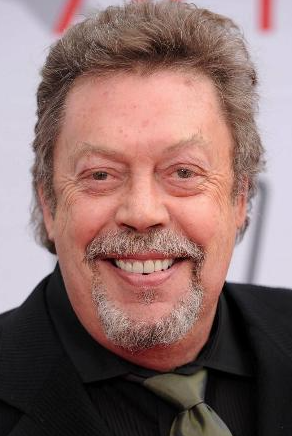
Tim Curry, the actor whose turn as Dr. Frank-N-Furter in “The Rocky Horror Picture Show” turned him into a permanent fixture of cult cinema, has died at his home in Los Angeles. He was 80. His longtime manager, Marcia Hurwitz, confirmed the news, saying he passed peacefully at his house in Toluca Lake on Tuesday, August 25. A cause of death hasn’t been made public.
For anyone who grew up quoting “Sweet Transvestite” at midnight screenings, being genuinely terrified of Pennywise in the 1990 TV version of “It,” or laughing at his suspicious concierge in “Home Alone 2: Lost in New York,” the news landed hard this week. Here’s what’s actually known about his death, along with a full look back at a career that few actors have ever matched for sheer range.
Quick Facts: Tim Curry
| Category | Details |
|---|---|
| Full Name | Timothy James Curry |
| Date of Birth | April 19, 1946 |
| Place of Birth | Grappenhall, Cheshire, England |
| Date of Death | Tuesday, August 25, 2026 |
| Place of Death | Toluca Lake, Los Angeles |
| Age at Death | 80 |
| Profession | Actor, singer, voice actor |
| Best Known For | “The Rocky Horror Picture Show,” “It” (1990), “Clue,” “Home Alone 2” |
| Breakthrough Role | Dr. Frank-N-Furter, “The Rocky Horror Show” (1973 stage), later the 1975 film |
| Education | University of Birmingham |
| Marital Status | Never married, no children |
| Health History | Major stroke in 2012; lived with its effects for over a decade |
| Memoir | “Vagabond,” published 2025 |
| Net Worth | Estimated between $8 million and $20 million, depending on the source |
How Tim Curry Died
Curry died Tuesday night, August 25, at his home in Toluca Lake, according to his manager. Police responded to the residence around 11:23 p.m., and law enforcement sources say no foul play is suspected. No official cause of death has been released, and Newsweek reported it had reached out to both the LAPD and the Los Angeles County Medical Examiner’s office for more information.
What is well documented is the health battle that preceded it. In July 2012, Curry suffered a massive stroke at age 66 that left him unable to walk and significantly limited his ability to work for the rest of his life. Speaking about the incident in 2025, he recalled that he’d been getting a massage when the person working on him noticed something was wrong and called an ambulance, over his own objections at the time. That stroke reshaped the last fourteen years of his life and career, pushing him away from the physical, in-person acting work that had defined his early decades and toward voice work, which he could still do from a wheelchair.
By most accounts, Curry remained mentally sharp and engaged with fans right up until his final years, continuing to appear at Rocky Horror anniversary events and giving interviews about his career, including a lengthy reflection tied to the 2025 release of his memoir.
An Eerie Coincidence
Curry’s death came on the same day the entertainment world lost Dolly Parton, who died in Nashville after a brief cancer battle, also at age 80. The two stars were born just three months apart in 1946 and built careers in almost entirely different corners of entertainment, which made the timing of their deaths feel especially jarring to fans and commentators processing both losses within hours of each other. Several outlets noted the coincidence directly, with social media reflecting genuine disbelief that two towering, era-defining performers had left the stage on the very same day.
Who Was Tim Curry? A Career Built on Playing the Unforgettable
Timothy James Curry was born on April 19, 1946, in Grappenhall, in Cheshire, England, into a military family. His father, James Curry, was a Methodist chaplain in the Royal Navy who died of a stroke when Tim was just 12 years old, leaving him and his older sister, Judith, to be raised by their mother, who Curry believed struggled with a serious mental illness for much of his childhood. Judith Curry died in 2001.
He studied at the University of Birmingham, and shortly after graduating in 1968, he landed his first professional acting job in the original West End production of “Hair.” It was during that run that he crossed paths with Richard O’Brien, a fellow cast member who was quietly working on a strange, glam-rock stage musical of his own — one that would go on to change both of their lives.
Building Dr. Frank-N-Furter From Scratch
O’Brien’s original concept for the mad scientist at the center of what became “The Rocky Horror Show” was reportedly a fairly straightforward lab-coat-wearing German villain. Working alongside O’Brien during the show’s early development, Curry helped reshape the character into something far stranger and more subversive — a gender-bending alien scientist in platform heels, fishnet stockings, and a sparkly black corset, delivering lines in a clipped, theatrical accent that became instantly iconic.
Curry originated the role in a tiny upstairs venue at London’s Royal Court Theatre in 1973, and stuck with the production as it grew into larger London venues, then Broadway, then finally the screen. The 1975 film adaptation, “The Rocky Horror Picture Show,” became one of the defining cult movies of all time, famous for the raucous, costume-filled midnight screenings that turned watching it into as much of a performance as the film itself. Belting out numbers like “Sweet Transvestite” in full, unapologetic drag, Curry’s performance became a rare and important beacon of visibility for LGBTQ audiences at a time — the pre-internet 1970s — when very little mainstream entertainment offered anything close to it.
The film didn’t make Curry rich overnight. Low-budget by design, it paid its cast modestly; co-stars Barry Bostwick and Susan Sarandon reportedly earned $15,000 and $20,000 for their roles. Curry, however, had negotiated a small percentage of the producers’ profits, a decision that paid off many times over as the film’s cult afterlife turned it into one of the longest and most profitable theatrical runs in cinema history.
A Slow-Burn Cult Phenomenon
“The Rocky Horror Picture Show” wasn’t an immediate hit when it opened in 1975. Early theatrical runs were unremarkable, and the film could easily have disappeared the way most low-budget genre movies of that era did. What changed its trajectory was the midnight-movie circuit, where a small but growing audience began returning again and again, eventually developing the elaborate ritual of dressing as characters, shouting call-back lines at the screen, and bringing props like rice, toast, and water pistols to throw and spray during specific scenes. That grassroots, audience-driven culture turned the film into arguably the most successful theatrical run in movie history by some measures, still playing in theaters decades after its release.
At the center of all of it was Curry’s performance — a character built to be quoted, imitated, and celebrated by generations of fans who never got to see the original stage production. For many of those fans, particularly LGBTQ audiences who found something rare and validating in the film’s gleeful rejection of convention, Curry’s Frank-N-Furter wasn’t just a great performance. It was one of the first times mainstream — or at least mainstream-adjacent — entertainment had ever handed them something to see themselves in.
Beyond Frank-N-Furter: A Genuine Character Actor
What kept Curry’s career alive and thriving for another five decades wasn’t nostalgia for one role — it was range. He followed “Rocky Horror” with a string of wildly different parts across film, television, and stage that showcased just how far his talent could stretch.
In 1985 alone, he played two roles that couldn’t have been more different: the towering, red-skinned Lord of Darkness in the fantasy film “Legend,” and the twitchy, motor-mouthed butler Wadsworth in the ensemble comedy “Clue” — a performance that’s since become one of the most quoted comedic turns of the decade among fans of the film’s now-beloved cult afterlife. Five years later, he became the stuff of childhood nightmares for an entire generation as Pennywise the Dancing Clown in the 1990 television adaptation of Stephen King’s “It,” a performance still regularly cited as one of the most unsettling clown portrayals ever put on screen.
His filmography kept expanding through the 1990s: the suspicious hotel concierge in “Home Alone 2: Lost in New York,” Rooster Hannigan in “Annie,” a submarine officer in “The Hunt for Red October,” Long John Silver in “Muppet Treasure Island” — a role he reportedly counted among his personal favorites — and parts in “The Three Musketeers” and “The Shadow.” On stage, he earned Tony Award nominations for his work in productions including “Amadeus” and “Spamalot,” where he played King Arthur, along with acclaim for “My Favorite Year.”
The Clown That Defined a Generation’s Nightmares
If “Rocky Horror” made Curry a cult icon, “It” introduced him to millions of viewers who had never seen him in anything else, and it did so by terrifying them. His portrayal of Pennywise the Dancing Clown in the 1990 television miniseries adapted from Stephen King’s novel became an instant pop-culture touchstone, credited by an entire generation with a lasting, genuine fear of clowns. What made the performance work wasn’t just makeup or a memorable design — it was Curry’s ability to shift, almost instantly, from playful and inviting to something genuinely predatory, often within the same scene, without ever losing the character’s twisted sense of showmanship.
That range — comfortably playing a seductive alien scientist, a scenery-chewing comedic butler, and a nightmarish supernatural killer clown, all within roughly fifteen years of each other — is part of why so many tributes this week have specifically singled out his versatility rather than any single role. Very few actors could move between those registers convincingly. Curry did it repeatedly, across five decades, without ever appearing to strain for any of them.
The Voice Behind the Later Career
After his 2012 stroke limited his ability to take on physically demanding, in-person roles, Curry leaned into voice acting, a shift that ended up introducing him to an entirely new, younger generation of fans who had no idea they were listening to the same actor behind Frank-N-Furter and Pennywise. He voiced Nigel Thornberry in “The Wild Thornberrys,” Emperor Palpatine in “Star Wars: The Clone Wars,” Captain Hook in various Peter Pan projects, and characters across shows including “Duckman,” “Wonder Pets!,” the “Addams Family” franchise, and “Wreck-It Ralph,” along with numerous video game roles.
That pivot mattered more than it might sound. Rather than fading from view after the stroke, Curry found a way to keep working almost continuously for another decade, using the one instrument that hadn’t been affected by his health crisis: a voice fans have described as instantly recognizable, whether they’d first heard it delivering a rock number in fishnets or narrating a children’s cartoon.
Tim Curry’s Private Life: Why He Never Married
One of the most searched questions since news of his death broke has been about his personal life, and the answer, according to Curry’s own longtime public statements, is straightforward: he never married and had no children.
Curry addressed the subject directly in his 2025 memoir, “Vagabond,” confirming he’d been in love at least once in his life but had little interest in discussing the details. He explained his reasoning plainly in the book, writing that talking about a relationship is fine when things are going well, but can turn painfully awkward once they aren’t — and that he simply didn’t think it was anyone else’s business. Asked once in an interview why he’d never married, Curry replied, only half-joking, that no one had ever actually asked him.
His own official website addressed the same question just as directly for years, describing him as a remarkably private man who may or may not have had a partner, noting there was no public reference to one from Curry himself or from any other source. That consistency — deflecting the question the same way for decades rather than offering a shifting story — suggests it was a deliberate boundary rather than simple secrecy.
Some confusion arose over the years around his relationship with Marcia Hurwitz, his longtime manager, agent, and close friend, who represented him for decades and became a familiar name to fans for providing updates on his health following the 2012 stroke. The two were never romantically involved or married; their bond was professional and personal in the way a decades-long working friendship can be, and it was Hurwitz who confirmed his death to the press this week.
Curry’s decision to keep this part of his life almost entirely private stands out given how much of his on-screen work leaned into sexuality, romance, and flamboyant performance. As he put it himself, the characters he played — most famously Dr. Frank-N-Furter — were roles. The person behind them, he made clear again and again over five decades, was his own business.
Tim Curry’s Net Worth
Exact figures for Curry’s estate have never been officially confirmed, and estimates from different celebrity finance trackers vary fairly widely, ranging anywhere from around $8 million up to roughly $20 million depending on the source and when the estimate was calculated. Given that these numbers come from unofficial trackers rather than any public filing, they should be treated as informed estimates rather than confirmed fact.
What’s well documented is where that wealth came from. Curry built his fortune over more than five decades through film and television salaries, stage work including multiple Tony-nominated Broadway runs, an extensive and increasingly lucrative voice-acting career following his 2012 stroke, and residuals from “Rocky Horror” itself, a film whose ongoing cult popularity has continued generating income for its cast for half a century. He also released several solo music albums in the late 1970s and early 1980s, adding a recording career to an already sprawling résumé.
Real estate made up another notable piece of his financial picture. Curry bought and sold several Los Angeles properties over the years, including a home he purchased in 2004 for roughly $3.3 million and later sold to actor Robert Pattinson in 2011 for over $6 million, and a Los Feliz house he bought from actor David Hyde Pierce in 2006 and sold in 2014 for a solid profit.
Career Highlights at a Glance
- 1973–75: Originates Dr. Frank-N-Furter on stage in “The Rocky Horror Show,” then reprises the role in the 1975 film “The Rocky Horror Picture Show,” a role that would define his public identity for the rest of his life
- 1985: Stars as the Lord of Darkness in “Legend” and as Wadsworth in “Clue” — two of the most distinct roles of his career, released the same year
- 1990: Plays Pennywise the Dancing Clown in the TV adaptation of Stephen King’s “It,” a performance still regarded as one of the most frightening clown portrayals in television history
- 1992: Appears as the suspicious hotel concierge in “Home Alone 2: Lost in New York”
- 2012: Suffers a major stroke that leaves him unable to walk and reshapes the rest of his career
- 2012–2026: Builds an extensive voice-acting career across animation and video games, introducing his work to a new generation
- 2025: Publishes his memoir, “Vagabond,” offering fans the most personal look at his life he’d ever given publicly
- 2026: Dies at his Los Angeles home at age 80, on the same day as fellow entertainment icon Dolly Parton
Tributes and Reaction
Tributes have poured in from across the entertainment world and from generations of fans who encountered Curry’s work in completely different ways — some through midnight “Rocky Horror” screenings, others through nightmares about Pennywise, others through hearing his voice narrate a Saturday-morning cartoon without ever realizing who was behind it. That range is exactly why the reaction to his death has felt so broad: very few actors manage to be a horror icon, a comedic favorite, a Broadway-nominated stage performer, and a beloved children’s-entertainment voice, all within a single career.
Coverage of his passing has consistently returned to the same idea: that Curry redefined what a “character actor” could be, playing both heroes and villains with a level of nuance and genuine understanding of human darkness that few of his peers ever matched, and leaving behind an body of work that reached children and adults alike across five decades.
Frequently Asked Questions
How did Tim Curry die? His manager confirmed he died peacefully at his Los Angeles home on August 25, 2026. No official cause of death has been released.
How old was Tim Curry when he died? He was 80, having been born on April 19, 1946.
Did Tim Curry have health problems before his death? Yes. He suffered a major stroke in July 2012 that left him unable to walk and significantly limited his work for the rest of his life.
Was Tim Curry married? No. Curry never married and had no children, a fact he addressed directly and consistently throughout his life and in his 2025 memoir, “Vagabond.”
What is Tim Curry’s most famous role? He’s best known for playing Dr. Frank-N-Furter in “The Rocky Horror Picture Show,” though he’s also widely remembered for playing Pennywise in the 1990 TV adaptation of “It” and Wadsworth in “Clue.”
What was Tim Curry’s net worth? Estimates vary by source, ranging from around $8 million to roughly $20 million, based on unofficial celebrity finance trackers rather than any confirmed public filing.
Did Tim Curry keep acting after his 2012 stroke? Yes. While the stroke limited his physical, in-person acting work, he built an extensive voice-acting career afterward, appearing in numerous animated shows, films, and video games over the following decade.
Is it true Tim Curry died the same day as Dolly Parton? Yes. Both stars, each born in 1946, died on the same day, a coincidence that struck many fans and commentators as an extraordinary loss for entertainment in a single 24-hour period.
Key Takeaways
- Tim Curry died Tuesday, August 25, 2026, at his home in Toluca Lake, Los Angeles, at age 80. No official cause of death has been released.
- He’d lived with the lasting effects of a major stroke since 2012, which limited his physical acting work but didn’t end his career — he pivoted heavily into voice acting for the next decade-plus.
- He’s most remembered for originating Dr. Frank-N-Furter in “The Rocky Horror Picture Show,” but his range spanned horror (“It”), comedy (“Clue”), family films (“Home Alone 2”), and Broadway.
- Curry never married and had no children, a private-life boundary he maintained consistently and by choice throughout his public life, addressing it directly in his 2025 memoir, “Vagabond.”
- His death came on the same day as Dolly Parton’s, a coincidence that struck fans as an extraordinary single-day loss for entertainment.
- Unofficial estimates place his net worth anywhere between $8 million and $20 million, built across five decades of film, television, stage, and voice work.
Tim Curry’s family and representatives have not announced funeral or memorial arrangements as of this writing. This article will be updated with confirmed details as they become available.