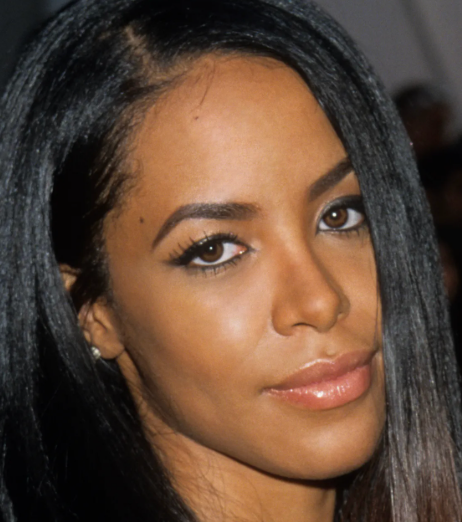
Updated: June 29, 2026 | August 25, 2026 marks exactly 25 years since the world lost the Princess of R&B. She was 22. She had just filmed her last music video. And the plane should never have taken off. Here is the complete story — and why a quarter century later, the world is grieving all over again.
Twenty-five years is a long time. Long enough for a whole generation of music fans to be born, grow up, discover her music for the first time, and feel the same gut-punch of loss that their parents felt on the morning of August 25, 2001.
That is what makes Aaliyah Dana Haughton unlike almost any other artist in history. She did not just leave behind music. She left behind a wound that never fully healed — a feeling, shared by hundreds of millions of people across decades and continents, that the world was robbed of something irreplaceable before it even fully understood what it had.
On August 25, 2026, that wound turns exactly 25 years old. And the outpouring of love, grief, tribute and remembrance already building across social media, concert stages and streaming platforms suggests that a quarter century has done nothing to diminish it.
This is the complete story. Every chapter of a life that lasted only 22 years but somehow filled more space than most people fill in a lifetime.
Before The Music: Detroit’s Little Girl With the Biggest Voice
Aaliyah Dana Haughton was born on January 16, 1979 in Brooklyn, New York, but grew up in Detroit, Michigan, raised in a home where music was not just entertainment — it was air. Her mother Diane was a singer. Her uncle Barry Hankerson had deep roots in the music industry, having managed artists at the highest level since the 1970s.
From the very beginning, it was clear that Aaliyah was different.
At age 10, she appeared on the television show Star Search — one of the most celebrated talent competitions of its era, the precursor to what would later become American Idol and The X Factor. She did not win. The judges preferred another contestant. But anyone who watched knew they had seen something extraordinary.
That same year, she performed in concert alongside Gladys Knight — a living legend of American music. She was ten years old. She held the stage like she had been doing it her whole life. Because, in a sense, she had.
At age 12, she signed with Jive Records through her uncle’s Blackground label. She was not yet in high school. Most children her age were worried about homework and sleepovers. Aaliyah was signing record contracts.
The Albums: Three Records That Changed Everything
Age Ain’t Nothing But a Number (1994) — She Was 15
Her debut album arrived when she was fifteen years old. Produced by R. Kelly — a partnership that would later reveal itself to be something far darker than a creative collaboration — the album announced a fully formed artist to the world.
Back and Forth reached number one on the Billboard R&B chart. At Your Best (You Are Love) — a Isley Brothers cover — became one of the most recognisable ballads of the decade. The album sold more than two million copies in the United States alone.
She was fifteen.
The R. Kelly involvement, which seemed like a straightforward industry mentorship at the time, would later be revealed as something deeply sinister. Court documents and FBI investigations would eventually establish that Kelly had forged Aaliyah’s age on documents to secretly marry her when she was just 15 — making her appear 18 on the marriage certificate. The marriage was quickly annulled when her parents discovered it.
For years, the public narrative framed Aaliyah as a participant in a mutual relationship. The truth — which R. Kelly’s conviction on federal sex trafficking charges in 2021 has made impossible to dispute — is that she was a victim. One of the first. And arguably the one who got out.
She cut ties with Kelly after the album, severed the professional relationship, and never spoke about it publicly. She chose her music over the scandal. She chose the future over the wound.
One in a Million (1996) — She Found Her Sound
The second album is where Aaliyah became Aaliyah.
Working with two then-unknown producers — Timbaland and Missy Elliott — she created a sound that nobody had heard before. Futuristic. Cool. Spare and spacious, with beats that felt like they arrived from somewhere slightly ahead of where music was supposed to be.
One in a Million. If Your Girl Only Knew. Hot Like Fire. 4 Page Letter. Are You That Somebody? — the last of which appeared on the Doctor Dolittle soundtrack a year after the album and became one of the defining songs of the entire decade.
The album sold 8 million copies worldwide. It established Timbaland and Missy Elliott as the most innovative production duo in R&B. And it established Aaliyah as not just a talented singer but a genuine artist — someone with a vision, a sound and an identity entirely her own.
Missy Elliott, reflecting on the anniversary of Aaliyah’s death, said: “Your IMPACT on music is still being felt and studied by the generations behind you! They LOVE seeing your STYLE and MUSIC — it was different over 20 years ago and til this day you are still that TRENDSETTER.”
She was not wrong. The artists who have cited Aaliyah as a direct influence include Beyoncé, Rihanna, Ciara, Tinashe, FKA Twigs, SZA, Summer Walker and virtually every significant female R&B artist of the past two decades. The sound Timbaland and Aaliyah invented in 1996 is still being imitated today. Nobody has fully replicated it.
Aaliyah (2001) — The Album She Never Got to See
Her third and final self-titled album was released on July 17, 2001. She was 22. It debuted at number two on the Billboard 200. Try Again — the lead single — won Best Female Video at the 2000 MTV VMAs, beating out Britney Spears and Christina Aguilera.
We Need a Resolution. More Than a Woman. Rock the Boat.
Rock the Boat would be the last song she ever filmed a music video for. The video was shot in the Bahamas in August 2001. It was completed. She was satisfied with it.
On August 25, 2001, she boarded a plane to go home.
August 25, 2001: The Night the Music Stopped
The facts of what happened are documented, investigated and ultimately heartbreaking in the specific, preventable way that only true tragedies can be.
After filming the Rock the Boat music video in the Bahamas, Aaliyah and eight other people boarded a twin-engine Cessna 402 operated by Blackhawk International Airways at Marsh Harbour Airport in Abaco, Bahamas. The plane was bound for Opa-Locka Airport in Florida.
Moments after takeoff, the plane crashed. It came down close to the airport. All nine people aboard — Aaliyah, her creative director and four members of her video crew, two security guards, and the pilot — were killed.
The subsequent investigation by aviation authorities established a cause that made the tragedy even more devastating: the plane was overloaded by approximately 700 pounds. Luggage had been stuffed into the aircraft beyond its rated capacity. The pilot, Luis Morales III, had been caught with cocaine in his vehicle just 18 days before the crash. He had been hired by Blackhawk International Airways only two days before the flight.
The plane should never have taken off. The overloading was negligent. The pilot was unqualified for the conditions. Eight people died alongside Aaliyah because of decisions made by people who had no business making them.
Her parents, Michael and Diane Haughton, later filed a lawsuit against the plane’s operator, owners and flight broker. The case settled for an undisclosed amount.
None of it brought their daughter back.
The World That Night — And the Days After
The news broke on a Saturday night. By Sunday morning, every entertainment outlet in the world had run the story. Radio stations interrupted their regular programming. Record stores began selling out of her albums. MTV and BET ran tribute programming for days.
The grief was immediate, global and genuine in a way that felt different from the curated, managed celebrity mourning that had become familiar by 2001. People who had never met Aaliyah felt they had lost someone they knew. Because in a very real sense, they had. She had been in their headphones, in their living rooms, in the background of every significant moment of their late teenage years.
At the 2001 MTV Video Music Awards — held just weeks after her death — Janet Jackson, Missy Elliott, Timbaland, Ginuwine and her brother Rashad paid tribute to her on one of music’s biggest stages. The audience, filled with the biggest names in the industry, sat in genuine silence as they watched the tribute unfold.
The Film Career That Never Got to Happen
By 2001, Aaliyah had already established herself as a credible film actress — not just a musician dabbling in movies, but a genuine on-screen presence.
Her debut film role in Romeo Must Die (2000) opposite Jet Li opened at number one at the US box office. She had already filmed scenes for Queen of the Damned (2002) — which was released posthumously and saw her playing the vampire queen Akasha, a role she had prepared for with characteristic dedication.
Before her death, she had been signed for several more films — including a romantic film called Some Kind of Blue, a Whitney Houston-produced remake of Sparkle, and most significantly: two Matrix sequels.
Aaliyah had filmed scenes as the character Zee for The Matrix Reloaded and The Matrix Revolutions. Those unused scenes were eventually included in the tribute section of the Matrix Ultimate Collection. The role was recast for the released films.
The career that would have followed — an artist who could move seamlessly between music and film the way no female artist of her generation had yet managed — remains the greatest unanswered question in popular culture. What would she have become by 2026, had she lived? What would a 47-year-old Aaliyah have created, influenced, built?
Nobody knows. And that not-knowing is its own particular kind of grief.
2026: The Year the World Remembers Harder Than Ever
This year — 2026 — is not just any anniversary. It is the 25th. A quarter century. A milestone that has galvanised the music industry, Aaliyah’s estate, and the global fan community into a wave of tribute activity unlike anything since the 20th anniversary in 2021.
The Essence Festival Tribute — July 5, 2026
Aaliyah’s legacy takes centre stage at the 2026 Essence Festival of Culture, with a star-powered tribute led by her longtime friend and collaborator Missy Elliott. The performance takes place on July 5 at the Caesars Superdome in New Orleans, commemorating both the 30th anniversary of One in a Million and the 25th anniversary of Aaliyah’s self-titled final studio album.
The tribute is being presented with the blessing of Aaliyah’s mother Diane Haughton and her brother Rashad Haughton — a significant detail, given the family’s historically protective stance toward their daughter’s legacy.
Elliott wrote and co-produced several of Aaliyah’s signature records, including One in a Million, Hot Like Fire and Best Friends, while frequently referring to Aaliyah as her “little sister.” Their relationship extended well beyond the studio, developing into one of the defining creative partnerships of the late 1990s.
August 25, 2026 — The Anniversary Itself
Mark the date. On August 25, Aaliyah’s name will trend globally across every social media platform simultaneously. Fan communities across the USA, UK, Nigeria, Ghana, Jamaica, the Philippines, India and every country where R&B has ever been loved will post, share, remember and stream.
Her music — which took nearly 20 years to become fully available on streaming platforms after a bitter family dispute with her uncle Barry Hankerson over the masters — is now available on Spotify, Apple Music and Tidal. A new generation will hear One in a Million and Try Again for the first time on August 25, 2026. And they will understand immediately what all the grief has always been about.
25 Things You Need to Know About Aaliyah — For the 25th Anniversary
1. She was born on January 16, 1979, in Brooklyn, New York. 2. She grew up in Detroit, Michigan. 3. She performed on Star Search at age 10 — and did not win. 4. She performed alongside Gladys Knight at age 10 in Las Vegas. 5. She signed her first record deal at age 12. 6. Her debut album Age Ain’t Nothing But a Number went double platinum in the US. 7.She secretly married R. Kelly at age 15 with a forged marriage certificate. The marriage was annulled. 8. She worked with Timbaland and Missy Elliott from age 17 — before either was famous. 9. One in a Million sold 8 million copies worldwide. 10. Are You That Somebody? was recorded in just 20 minutes. 11. She opened Romeo Must Die at number one at the US box office. 12. She beat Britney Spears and Christina Aguilera for Best Female Video at the 2000 MTV VMAs.13. She had filmed scenes for both Matrix sequels before her death. 14. Her self-titled album debuted at number two on the Billboard 200. 15. She was signed to star in a Whitney Houston-produced remake of Sparkle. 16. She was 22 years old when she died. 17. The plane that crashed was overloaded by 700 pounds. 18. The pilot had been caught with cocaine 18 days before the flight. 19. She was returning home from filming the Rock the Boat music video. 20. Her father Michael Haughton died in 2012 and was buried beside her. 21. Timbaland revealed in 2011 that he was in love with her but never acted on his feelings. 22. Her music was kept off streaming platforms for nearly 20 years due to a dispute between her estate and her uncle. 23. Try Again was the first video to win an MTV VMA based purely on internet airplay. 24. She had planned to launch a clothing line called Dolly Pop with best friend Kidada Jones. 25. She once had a dream she described as a premonition of her death — “Someone’s following me and I don’t know why. I’m scared. Then suddenly I lift off. Far away. As if I’m swimming in the air. Nobody can reach me. Nobody can touch me.”
The Artists She Made Possible
Perhaps the most enduring measure of Aaliyah’s legacy is not her own catalogue — extraordinary as it is — but the catalogue of every artist who came after her.
Beyoncé has cited her directly. Rihanna grew up with One in a Million as a formative musical experience. Ciara’s entire early style was constructed in conscious dialogue with Aaliyah’s look and sound. FKA Twigs, SZA, Summer Walker, Tinashe — the lineage runs unbroken from a Detroit teenager’s 1996 album to the cutting edge of contemporary R&B today.
Her unique style of blending smooth R&B melodies with hip-hop beats, pioneered alongside Timbaland, paved the way for future stars such as Beyoncé and Rihanna, who have cited her as a major influence in their careers.
She did not just make music. She made the template for what female R&B artistry could look like — cool, effortless, entirely in control, entirely itself. The one eye hidden beneath a sweep of black hair. The midriff-baring, baggy-jeans aesthetic that Tommy Hilfiger’s brother called “a whole new look” that was “classy but sexy” simultaneously. The way she moved on stage — dancer first, singer simultaneously, always in complete command.
Nobody has fully replaced her. Nobody has been able to. And 25 years later, nobody has stopped trying.
The Final Word: Baby Girl
Her closest collaborators called her Baby Girl. Her fans still do. Twenty-five years after her death, millions of people around the world have tattoos of her face, her name, her lyrics. They name their daughters after her — the United States Social Security Administration ranked Aaliyah as one of the 100 most popular names for newborn girls in 2001, the year she died, and it has remained a popular name ever since.
That is a legacy. Not the streams, not the MTV VMAs, not the box office numbers. The fact that parents who loved her music chose to give their daughters her name. The fact that those daughters will grow up, find their mother’s old records, put on headphones and hear for the first time exactly why.
August 25, 2026. Twenty-five years.
Rest in peace, Baby Girl. The world never stopped listening.
Sources: Wikipedia, Complex, Hot97, HipHopDX, Entertainment Tonight, Billboard, BET, Fox News, NPR, W Magazine, Rolling Stone, Music Ally